
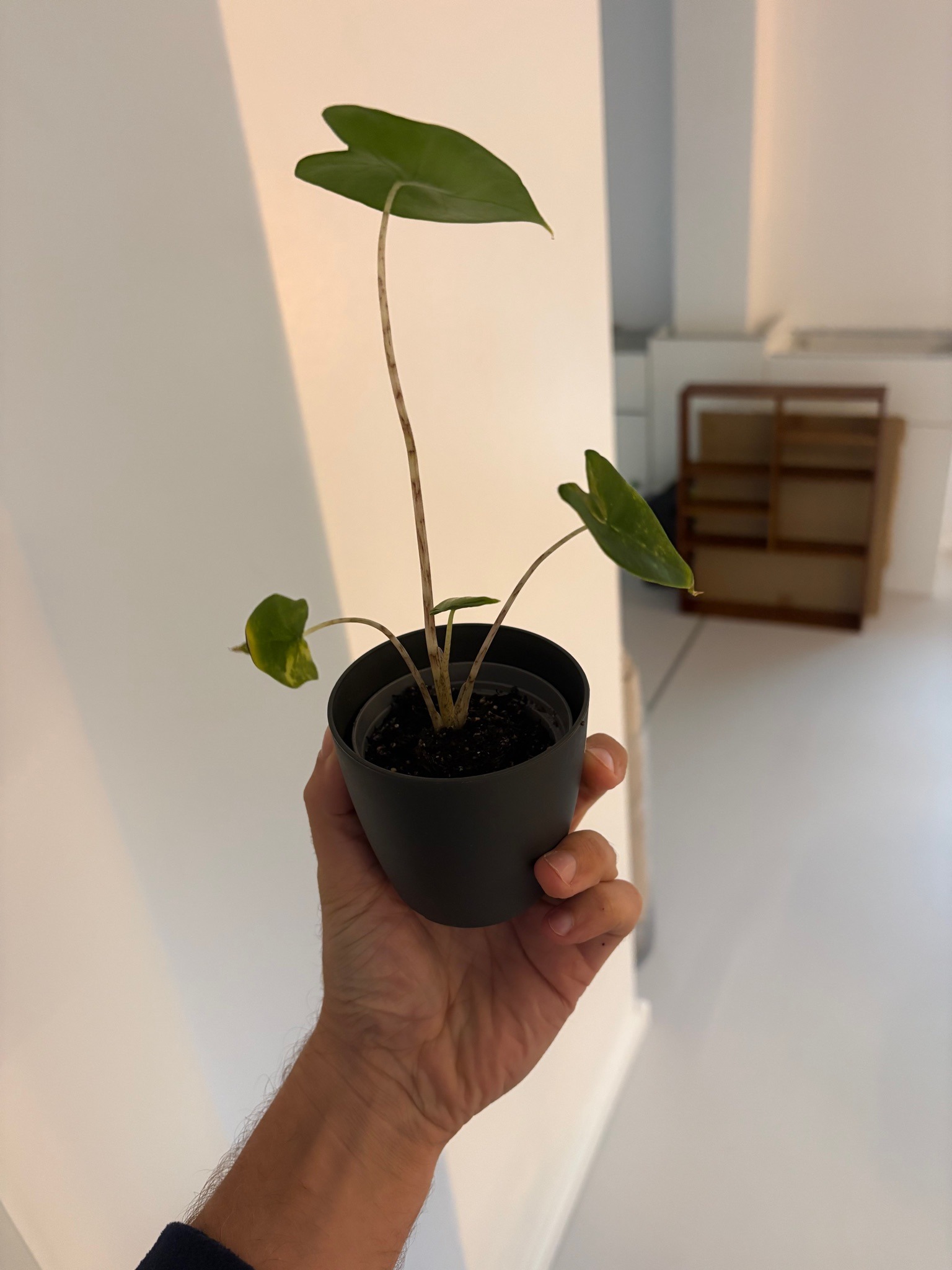
Jewel Alocasia
Alocasia scalprum
Alocasia scalprum is a striking tropical plant characterized by its arrow-shaped, deep green leaves with prominent veining and distinctive textured, mottled brown or purple-streaked petioles.
- Light
- Bright, indirect light for 6 to 8 hours daily; avoid direct harsh sunlight to prevent leaf scorching.
- Water
- Keep the soil evenly moist but never waterlogged. Allow the top layer of soil to dry slightly between waterings. Reduce watering frequency during the winter dormancy period.
- Growth
- Perennial tropical evergreen with an upright clumping growth habit, reaching mature indoor heights of 1 to 2 feet with a similar spread, growing at a moderate rate.
Care instructions
Provide bright, indirect sunlight and maintain high humidity. Water when the top inch of soil is dry, using a well-draining, nutrient-rich potting mix. Feed lightly with a balanced liquid fertilizer during the active growing season.
Growing details
Sunlight
Bright, indirect light for 6 to 8 hours daily; avoid direct harsh sunlight to prevent leaf scorching.
Watering
Keep the soil evenly moist but never waterlogged. Allow the top layer of soil to dry slightly between waterings. Reduce watering frequency during the winter dormancy period.
Soil
Well-draining, highly porous aroid soil mix rich in organic matter, with an ideal pH range between 5.5 and 6.5.
Hardiness zone
USDA Hardiness Zones 10 through 12; grown primarily as an indoor houseplant in cooler temperate climates.
Growth habit
Perennial tropical evergreen with an upright clumping growth habit, reaching mature indoor heights of 1 to 2 feet with a similar spread, growing at a moderate rate.
Bloom season
Rarely blooms indoors; produces typical aroid inflorescences featuring a spadix enclosed by a pale green spathe when mature.
Propagation
Propagated primarily through the separation of rhizomatous offsets or tubers during repotting in the spring months.
Common pests & issues
Susceptible to spider mites, mealybugs, and fungus gnats. Root rot can occur if soil drainage is inadequate or if overwatered.
Similar species
Alocasia zebrina and Alocasia micholitziana, distinguished by unique petiole patterns, leaf blade proportions, and surface textures.