
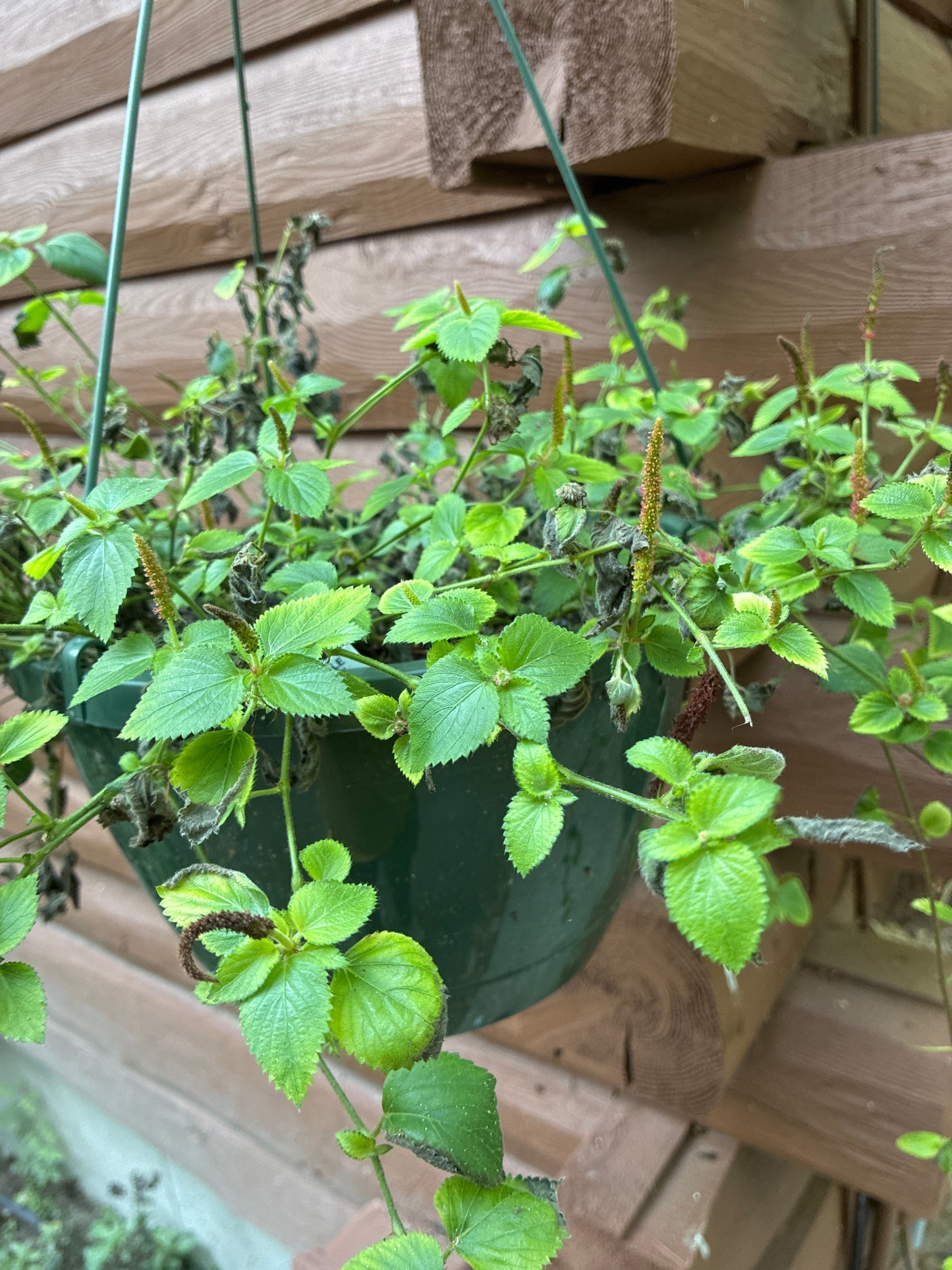
Joyweed
Alternanthera ficoidea
A low-growing perennial herb often cultivated as an ornamental foliage plant, featuring opposite leaves with serrated margins and small, densely packed spikes of tiny flowers.
- Light
- Bright indirect light to partial sun, ideally 4 to 6 hours of filtered sunlight per day.
- Water
- Water regularly to keep the soil evenly moist. Allow the top inch of soil to dry slightly between waterings, avoiding complete drying out or waterlogged conditions.
- Growth
- Trailing or low-spreading herbaceous perennial, reaching a height of 6 to 12 inches and spreading up to 18 inches with a moderate growth rate.
Care instructions
Provide bright indirect light or partial sun, keep the soil consistently moist but well-drained, and apply a balanced liquid fertilizer monthly during the active growing season.
Growing details
Sunlight
Bright indirect light to partial sun, ideally 4 to 6 hours of filtered sunlight per day.
Watering
Water regularly to keep the soil evenly moist. Allow the top inch of soil to dry slightly between waterings, avoiding complete drying out or waterlogged conditions.
Soil
Rich, well-draining loamy soil with a neutral to slightly acidic pH range between 6.0 and 7.0.
Hardiness zone
USDA Hardiness Zones 9 through 11, typically grown as an annual in cooler climates.
Growth habit
Trailing or low-spreading herbaceous perennial, reaching a height of 6 to 12 inches and spreading up to 18 inches with a moderate growth rate.
Bloom season
Summer to early autumn, producing small, inconspicuous white or greenish flower spikes.
Propagation
Easily propagated through stem cuttings rooted in water or moist potting mix during the spring or summer months.
Common pests & issues
Prone to root rot if overwatered. May occasionally attract aphids or spider mites, which can be managed with insecticidal soap.
Similar species
Alternanthera dentata, which generally features darker, more deeply colored purple foliage compared to the brighter green or variegated leaves of Alternanthera ficoidea.