
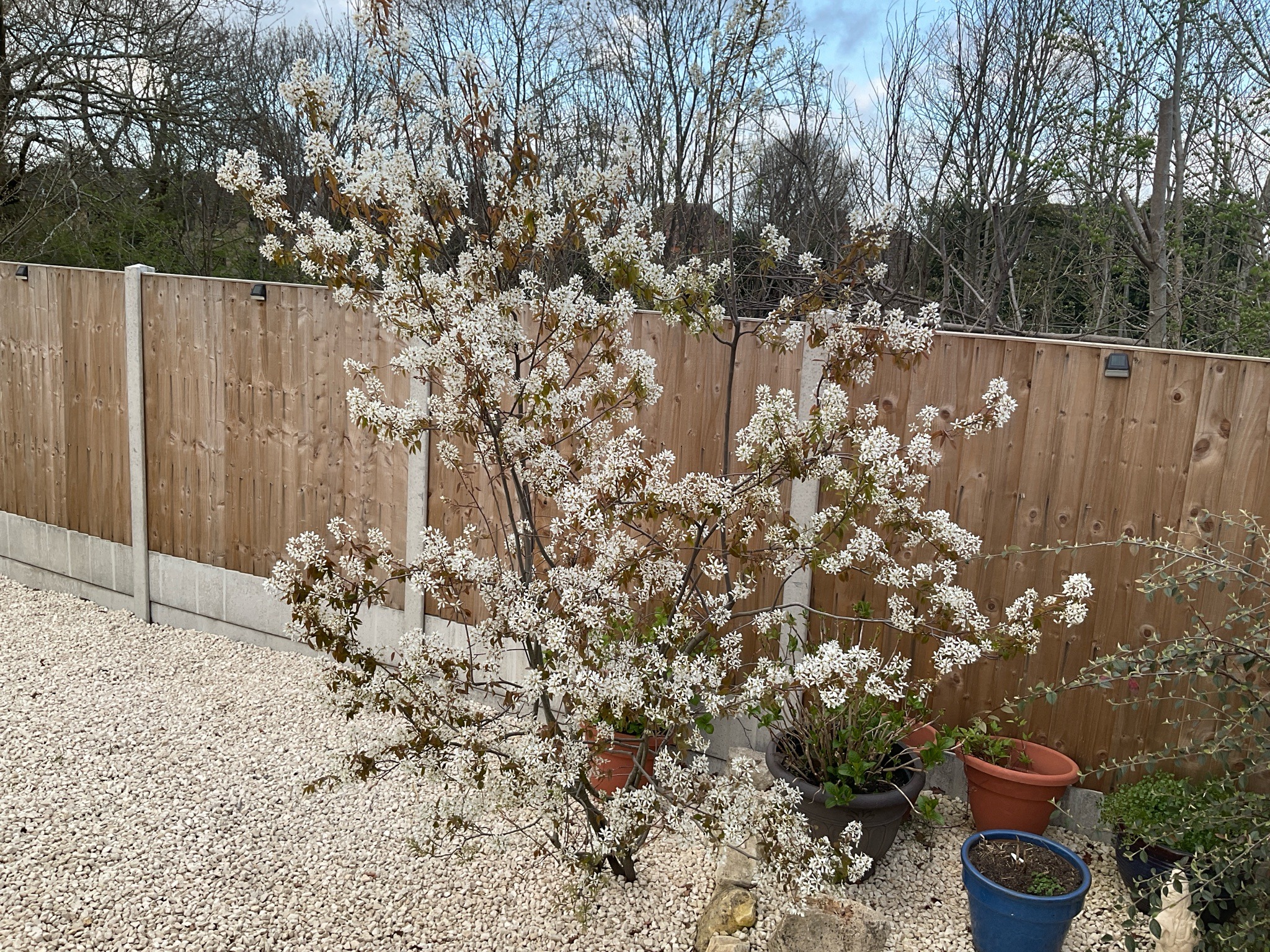
Juneberry
Amelanchier lamarckii
A large deciduous shrub or small multi-stemmed tree characterized by abundant clusters of star-shaped white flowers appearing alongside emerging bronze-tinted leaves in spring.
- Light
- Full sun to partial shade, requiring at least 6 hours of direct sunlight daily for optimal flowering.
- Water
- Moderate water needs; water deeply during dry spells, allowing the top layer of soil to dry between waterings. Highly drought-tolerant once fully established.
- Growth
- Perennial multi-stemmed shrub or small tree growing up to 15 to 25 feet in height with a moderate growth rate.
Care instructions
Plant in full sun to partial shade in well-draining, moderately fertile soil. Water regularly during establishment and provide mulch to retain moisture. Prune lightly after flowering to maintain shape.
Growing details
Sunlight
Full sun to partial shade, requiring at least 6 hours of direct sunlight daily for optimal flowering.
Watering
Moderate water needs; water deeply during dry spells, allowing the top layer of soil to dry between waterings. Highly drought-tolerant once fully established.
Soil
Prefers loamy, sandy, or well-draining clay soils with a slightly acidic to neutral pH range of 5.5 to 7.0.
Hardiness zone
USDA zones 4 through 9, exhibiting strong cold tolerance.
Growth habit
Perennial multi-stemmed shrub or small tree growing up to 15 to 25 feet in height with a moderate growth rate.
Bloom season
Spring, producing masses of upright racemes featuring small, five-petaled white flowers.
Propagation
Propagated via softwood cuttings in early summer, or by stratification and sowing of seeds in autumn.
Common pests & issues
Generally resilient, but can occasionally be affected by leaf spot, rust, aphids, or powdery mildew, managed through proper air circulation and fungicide if necessary.
Similar species
Amelanchier arborea and Amelanchier canadensis, which can be distinguished by subtle variations in leaf hairiness, petal length, and exact timing of leaf emergence relative to flowering.