
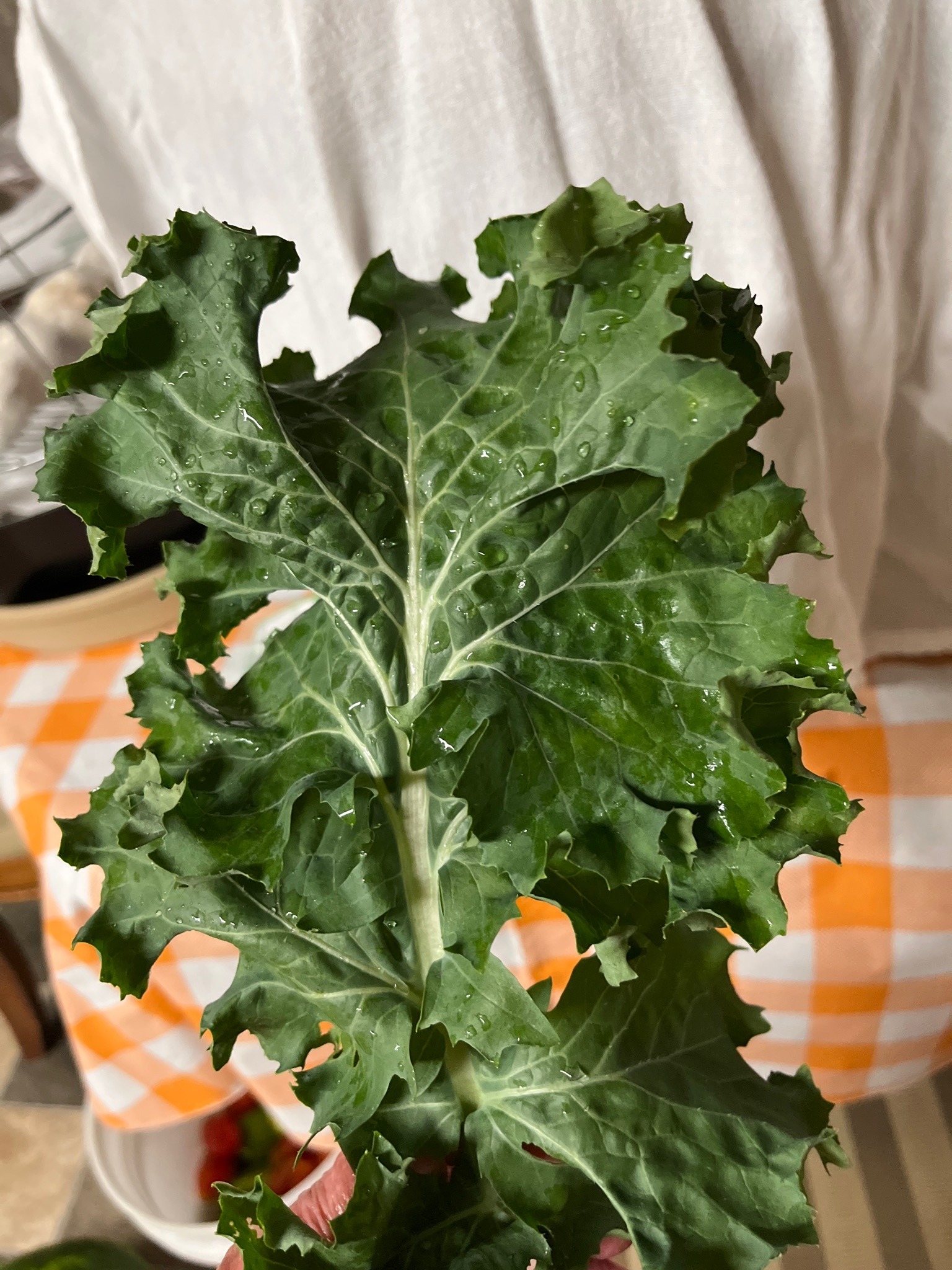
Kale
Brassica oleracea var. acephala
Kale is a leafy green herbaceous plant characterized by its robust, crinkled, or curly leaves attached to a central stalk, featuring prominent white or pale green venation.
- Light
- Full sun to partial shade, requiring at least 6 hours of direct sunlight per day.
- Water
- Requires regular watering to maintain consistently moist soil. Tolerates brief dry spells once established, but drought stress can alter leaf texture. Avoid overhead watering to prevent moisture-related fungal issues.
- Growth
- Biennial or annual herbaceous plant featuring an upright, rosette-like growth habit reaching a mature height of 1 to 2 feet and a spread of 1 to 1.5 feet with a moderate growth rate.
Care instructions
Provide full sun to partial shade, keep the soil evenly moist without waterlogging, use rich, well-draining soil with a neutral pH, and apply a balanced fertilizer during the active growing season.
Growing details
Sunlight
Full sun to partial shade, requiring at least 6 hours of direct sunlight per day.
Watering
Requires regular watering to maintain consistently moist soil. Tolerates brief dry spells once established, but drought stress can alter leaf texture. Avoid overhead watering to prevent moisture-related fungal issues.
Soil
Prefers fertile, loamy, well-draining soil rich in organic matter with a pH range of 6.0 to 7.5.
Hardiness zone
USDA hardiness zones 7 through 10, often grown as an annual in colder climates.
Growth habit
Biennial or annual herbaceous plant featuring an upright, rosette-like growth habit reaching a mature height of 1 to 2 feet and a spread of 1 to 1.5 feet with a moderate growth rate.
Bloom season
Spring of the second year, producing tall racemes of four-petaled yellow flowers; often harvested before the flowering stage occurs.
Propagation
Propagated primarily from seeds sown directly into the soil or started indoors 4 to 6 weeks before the final frost date.
Common pests & issues
Susceptible to pests such as aphids, cabbage loopers, and flea beetles, as well as fungal issues like powdery mildew and black rot, which can be managed with row covers, proper spacing, and appropriate cultural practices.
Similar species
Collard greens and mustard greens. Collard greens feature smoother, flatter leaves without the intense crinkling or curling, while mustard greens often possess a more distinct leaf shape and a sharper leaf margin profile.