
Kale
Brassica oleracea var. acephala
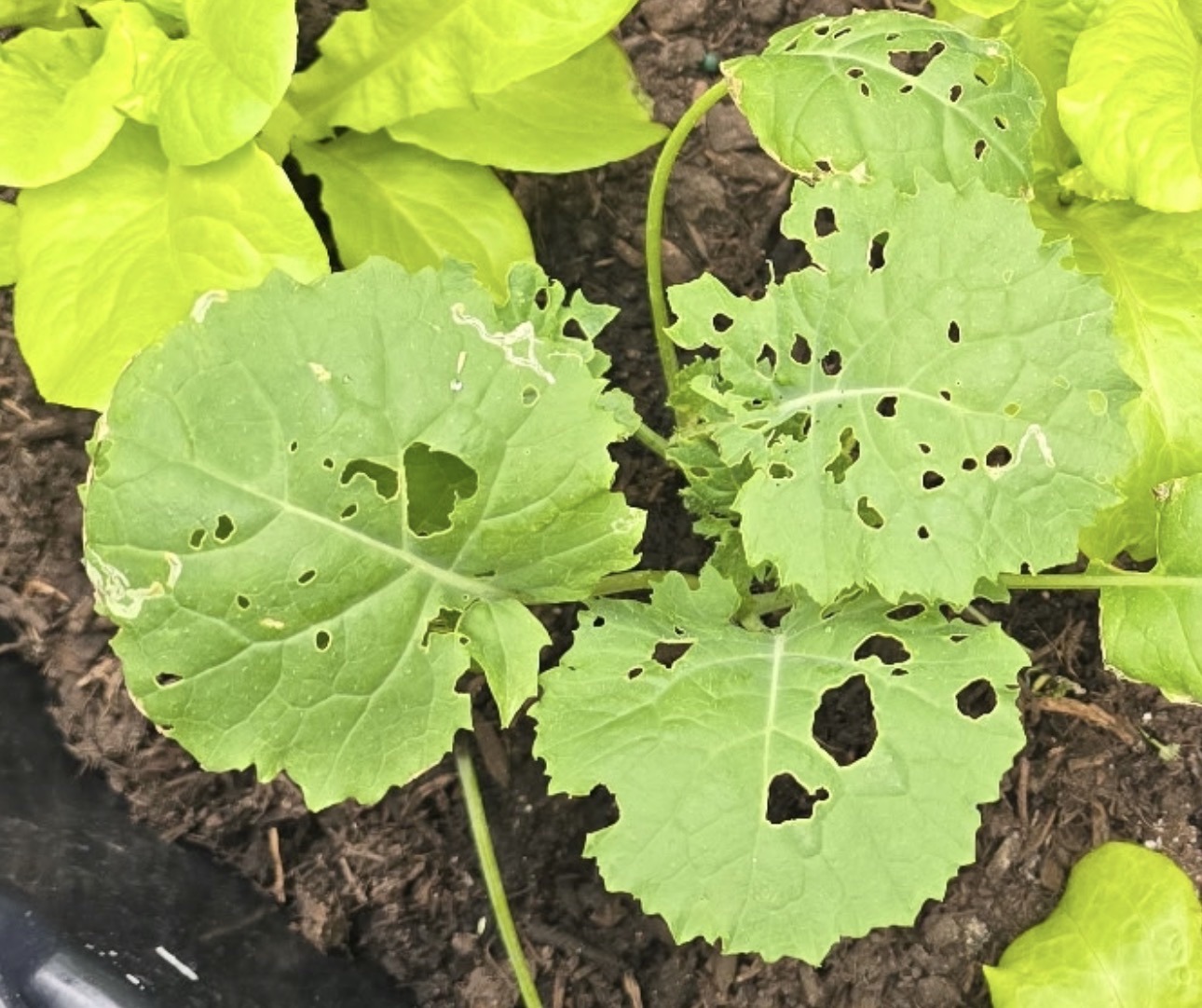
An herbaceous biennial grown as an annual, featuring large, lobed, or smooth green leaves arranged in a central rosette. The specimen shown exhibits leaf damage typical of garden pests.
- Light
- Full sun to partial shade (at least 4 to 6 hours of direct sunlight daily).
- Water
- Requires regular watering to maintain consistently moist soil. Water about 1 to 1.5 inches per week.
- Growth
- Herbaceous biennial grown as a cool-season annual forming an upright rosette of leaves, typically 1 to 3 feet tall and 1 to 2 feet wide.
Care instructions
Provide full sun to partial shade in cooler climates. Keep soil consistently moist but well-drained. Fertilize regularly with a nitrogen-rich plant food to support foliage growth.
Growing details
Sunlight
Full sun to partial shade (at least 4 to 6 hours of direct sunlight daily).
Watering
Requires regular watering to maintain consistently moist soil. Water about 1 to 1.5 inches per week.
Soil
Rich, organic, well-draining soil with a pH between 6.0 and 7.5.
Hardiness zone
USDA zones 2 through 11 (grown as an annual, cold hardy to zone 7 as a biennial).
Growth habit
Herbaceous biennial grown as a cool-season annual forming an upright rosette of leaves, typically 1 to 3 feet tall and 1 to 2 feet wide.
Bloom season
Spring of its second year; produces small, four-petaled yellow flowers arranged in terminal racemes.
Propagation
Propagated primarily by seed sown directly outdoors or started indoors 4-6 weeks before the last spring frost.
Common pests & issues
Flea beetles, cabbage worms, and slugs commonly cause shot-hole damage in leaves. Powdery mildew and clubroot can also affect plant health. Protect using row covers or insecticidal soaps.
Similar species
Collard greens (Brassica oleracea var. acephala) have broader, smoother leaves, while Wild Mustard (Sinapis arvensis) has distinct hairy leaves and different growth structure.