
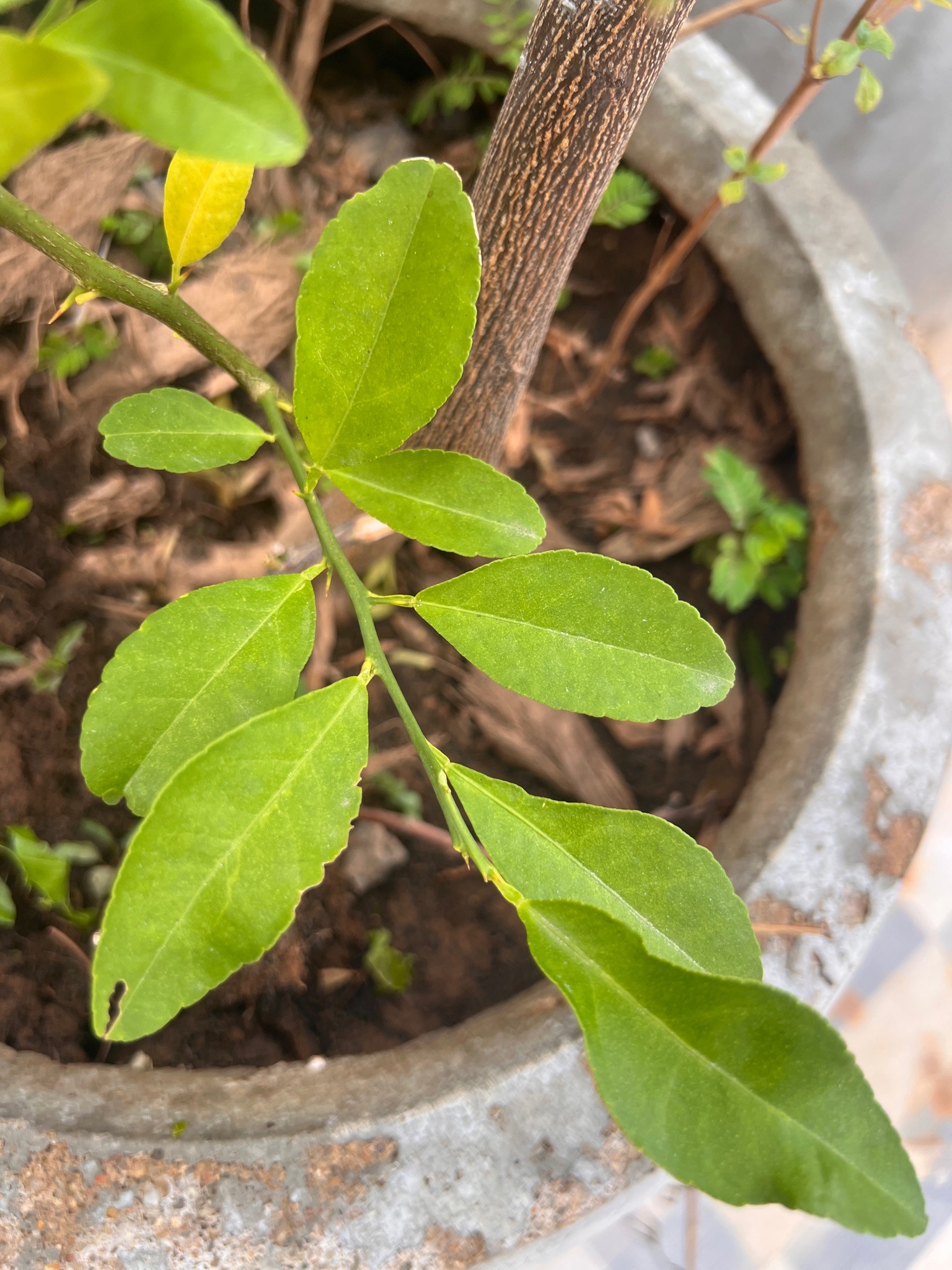
Key Lime
Citrus aurantiifolia
A dense, thorny shrub or small tree featuring glossy, green, alternate leaves with winged petioles, small white fragrant flowers, and spherical globose fruits.
- Light
- Full sun, requiring 6 to 8 hours of direct sunlight daily.
- Water
- Water thoroughly whenever the top 2 to 3 inches of soil become dry. Avoid waterlogged conditions to prevent root rot, and reduce watering frequency during winter months.
- Growth
- Perennial woody shrub or small tree growing to a mature height of 6 to 15 feet with a rounded, spreading canopy and moderate growth rate.
Care instructions
Provide full sun exposure for at least six to eight hours daily. Water deeply when the top few inches of soil dry out, ensuring excellent drainage. Maintain a warm environment and fertilize during the active growing season with a balanced citrus formula.
Growing details
Sunlight
Full sun, requiring 6 to 8 hours of direct sunlight daily.
Watering
Water thoroughly whenever the top 2 to 3 inches of soil become dry. Avoid waterlogged conditions to prevent root rot, and reduce watering frequency during winter months.
Soil
Well-draining sandy loam or loamy soil with a slightly acidic to neutral pH range of 6.0 to 7.0.
Hardiness zone
USDA zones 9 through 11; requires frost protection in cooler climates.
Growth habit
Perennial woody shrub or small tree growing to a mature height of 6 to 15 feet with a rounded, spreading canopy and moderate growth rate.
Bloom season
Blooms intermittently throughout the year, peaking in spring, with small, fragrant white flowers.
Propagation
Propagated primarily through semi-hardwood stem cuttings or grafting onto suitable rootstocks, as well as by seed.
Common pests & issues
Susceptible to aphids, scale insects, citrus leaf miners, and root rot from overwatering. Manage with appropriate horticultural oils, insecticidal soaps, and proper watering practices.
Similar species
Persian lime (Citrus x latifolia), which features larger leaves, larger fruits, and fewer or no thorns compared to the Key lime.