
Key Lime
Citrus aurantiifolia
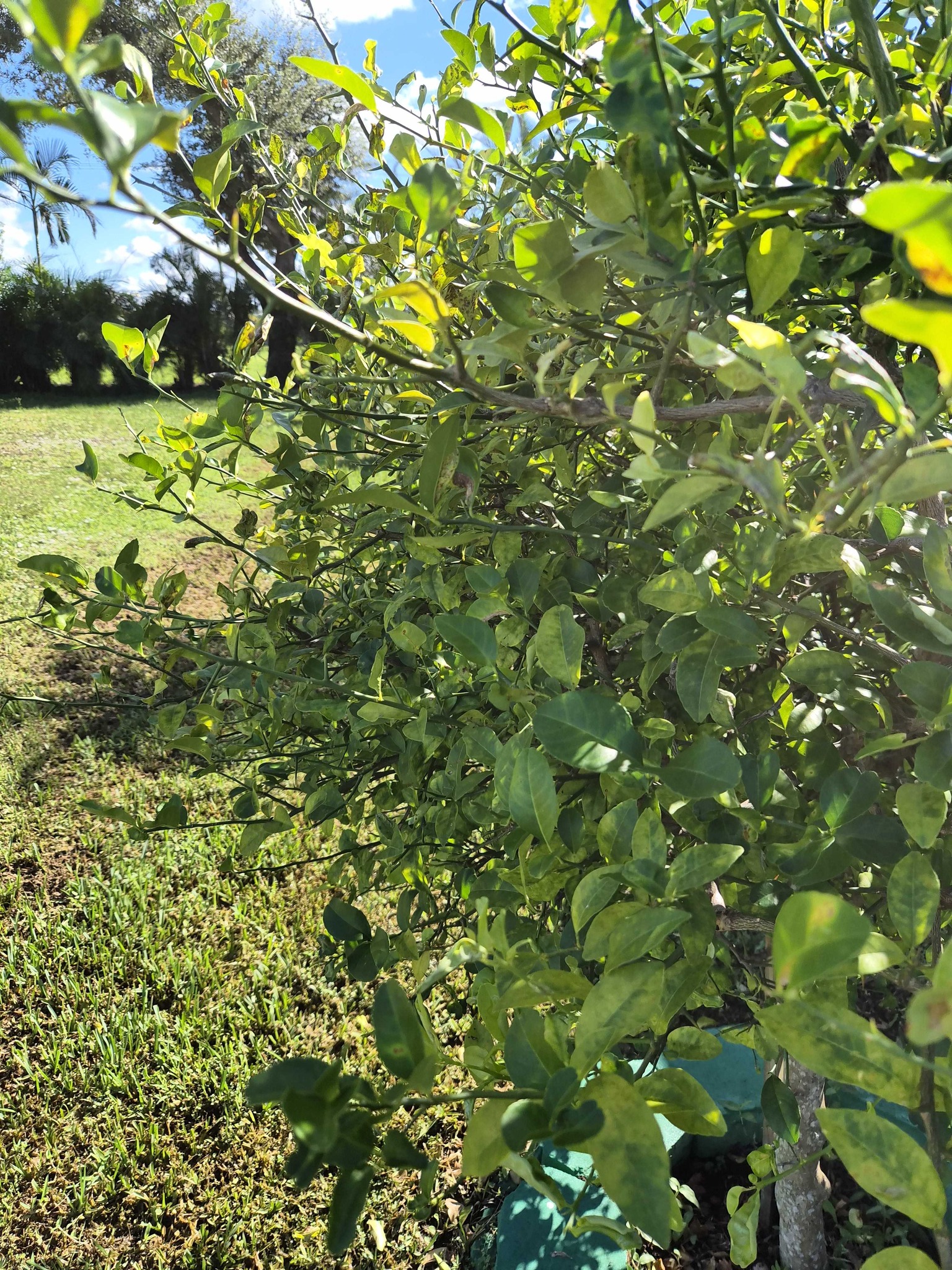
A dense, thorny, evergreen shrub or small tree with alternating, oval-shaped green leaves, highly aromatic foliage, and smooth green-to-yellow spherical or oval globes.
- Light
- Full sun, requiring a minimum of 6 to 8 hours of direct sunlight daily.
- Water
- Moderate watering needs. Water deeply when the top 2 to 3 inches of soil feel dry. Drought tolerant once established, but sensitive to prolonged waterlogged conditions which lead to root rot.
- Growth
- Perennial evergreen shrub or small tree. Grows with a dense, branching, often irregular canopy featuring sharp thorns on the twigs. Typically reaches mature heights of 6 to 13 feet with a similar spread.
Care instructions
Requires full sun for at least six to eight hours daily, well-draining soil, regular watering allowing the top few inches to dry out between sessions, and balanced citrus fertilizers applied during the active growing season.
Growing details
Sunlight
Full sun, requiring a minimum of 6 to 8 hours of direct sunlight daily.
Watering
Moderate watering needs. Water deeply when the top 2 to 3 inches of soil feel dry. Drought tolerant once established, but sensitive to prolonged waterlogged conditions which lead to root rot.
Soil
Prefers rich, loamy, or sandy, well-draining soils with a slightly acidic to neutral pH range of 6.0 to 7.0.
Hardiness zone
USDA Hardiness Zones 9 through 11. Highly sensitive to frost and freezing temperatures.
Growth habit
Perennial evergreen shrub or small tree. Grows with a dense, branching, often irregular canopy featuring sharp thorns on the twigs. Typically reaches mature heights of 6 to 13 feet with a similar spread.
Bloom season
Blooms intermittently throughout the year, primarily in spring. Produces small, fragrant, white flowers with five petals.
Propagation
Propagated through seed, stem cuttings, or grafting onto hardy rootstocks. Spring and early summer are ideal times for taking semi-hardwood cuttings.
Common pests & issues
Susceptible to aphids, scale insects, citrus leaf miners, and spider mites. Fungal issues like root rot can occur in poorly draining soils. Proper air circulation and avoiding overhead watering help prevent fungal diseases.
Similar species
Persian lime (Citrus x latifolia), which features larger leaves, larger fruits, and fewer or no thorns compared to the Key lime.