
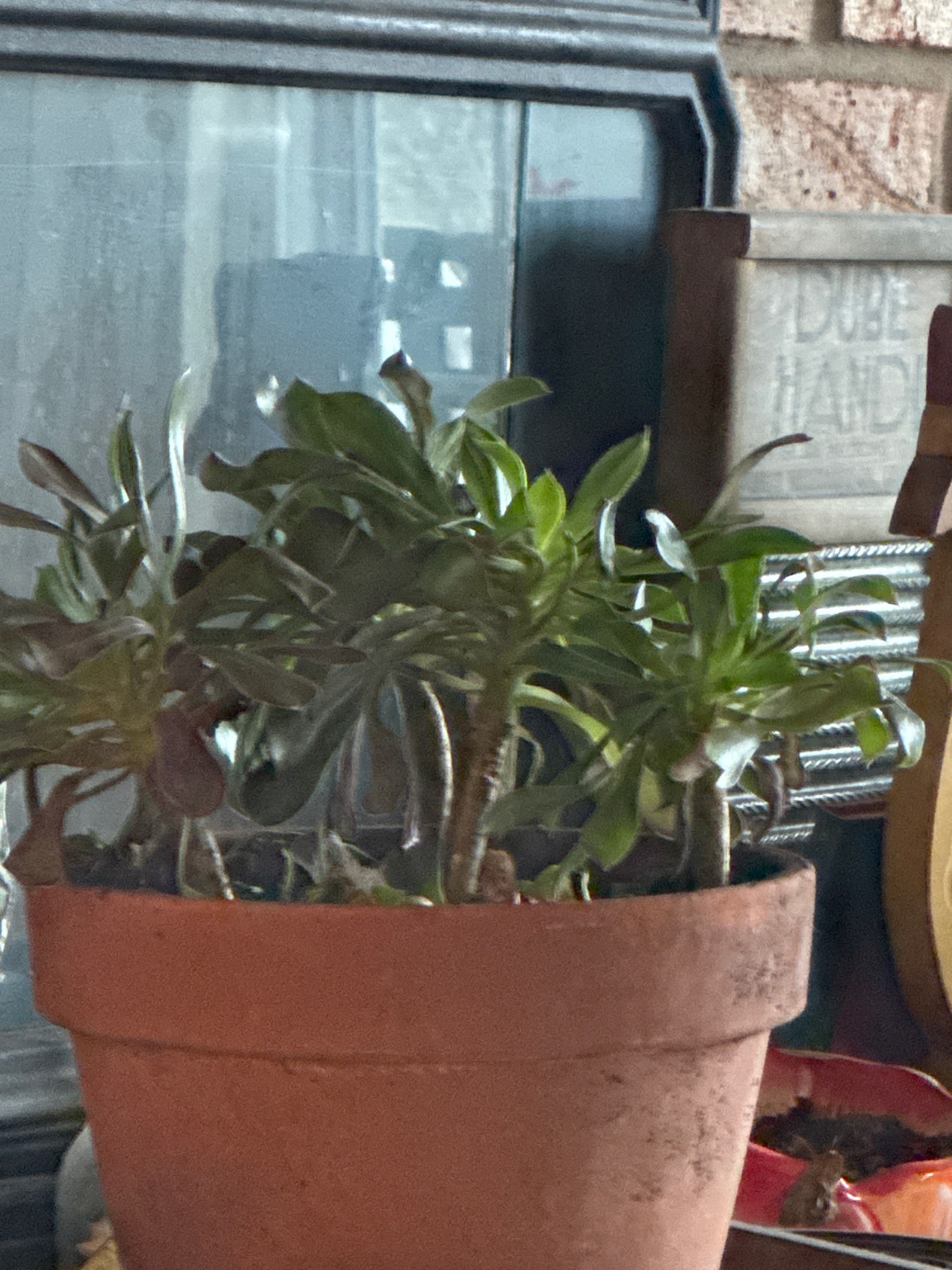
Kiwi Aeonium
Aeonium haworthii 'Kiwi'
A succulent subshrub featuring multiple woody stems topped by compact, spoon-shaped rosettes with variegated green, yellow, and reddish-pink leaf margins.
- Light
- Full sun to partial shade, requiring approximately 6 hours of bright light daily.
- Water
- Water thoroughly when the soil is completely dry. Drought tolerant once established. Avoid letting the roots sit in standing water to prevent rot, and reduce watering significantly during the summer dormancy period.
- Growth
- Perennial succulent subshrub forming branching woody stems with tight rosettes, reaching 1 to 2 feet in height and spread with a moderate growth rate.
Care instructions
Provide bright indirect to direct sunlight for at least 6 hours daily. Water deeply only when the soil has dried out completely. Plant in well-draining succulent or cactus potting mix. Fertilize lightly with a balanced, diluted liquid fertilizer once a month during the active growing season in spring and autumn.
Growing details
Sunlight
Full sun to partial shade, requiring approximately 6 hours of bright light daily.
Watering
Water thoroughly when the soil is completely dry. Drought tolerant once established. Avoid letting the roots sit in standing water to prevent rot, and reduce watering significantly during the summer dormancy period.
Soil
Fast-draining sandy or gritty cactus/succulent potting mix with an ideal pH range of 6.0 to 7.5.
Hardiness zone
USDA Hardiness Zones 9 through 11. Sensitive to freezing temperatures and frost.
Growth habit
Perennial succulent subshrub forming branching woody stems with tight rosettes, reaching 1 to 2 feet in height and spread with a moderate growth rate.
Bloom season
Late spring to early summer, producing cone-shaped panicles of small, star-shaped yellow or pale pink flowers from mature rosettes.
Propagation
Propagated easily through stem cuttings or individual rosettes allowed to callus for a few days before planting in dry, well-draining soil.
Common pests & issues
Susceptible to mealybugs and aphids, particularly in sheltered indoor environments. Root rot can occur if overwatered or planted in poorly draining soil.
Similar species
Aeonium arboreum, which generally grows larger with deeper purple or green leaves and lacks the distinct multi-colored pastel leaf margins of the 'Kiwi' cultivar.