
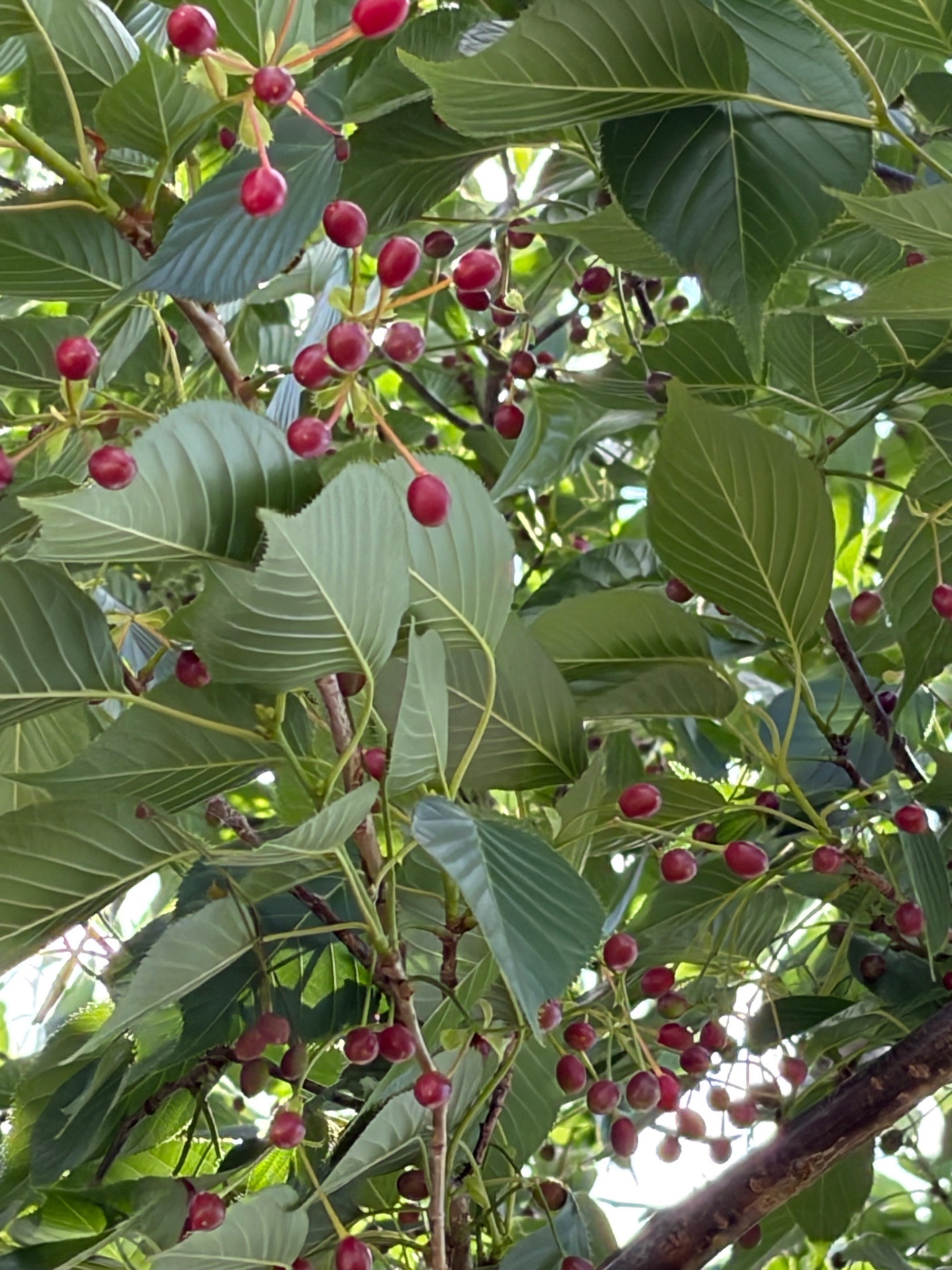
Korean hill cherry
Prunus maximowiczii
A deciduous tree characterized by finely serrated ovate-elliptic leaves with prominent veins and drooping clusters of small, globose red fruit structures hanging on slender stems.
- Light
- Full sun to partial shade, requiring at least 6 hours of direct sunlight daily
- Water
- Moderate watering needs, preferring evenly moist, well-draining soil and regular hydration during establishment and dry periods
- Growth
- Perennial deciduous tree reaching mature heights of 25 to 40 feet with a moderate growth rate and a spreading canopy
Care instructions
Plant in full sun to partial shade with well-draining, moderately fertile soil. Water regularly during dry spells to maintain consistent moisture, and apply a balanced fertilizer in early spring.
Growing details
Sunlight
Full sun to partial shade, requiring at least 6 hours of direct sunlight daily
Watering
Moderate watering needs, preferring evenly moist, well-draining soil and regular hydration during establishment and dry periods
Soil
Well-draining loamy or sandy soils with a neutral to slightly acidic pH range between 6.0 and 7.0
Hardiness zone
USDA Hardiness Zones 5 through 8
Growth habit
Perennial deciduous tree reaching mature heights of 25 to 40 feet with a moderate growth rate and a spreading canopy
Bloom season
Spring, featuring small white flowers followed by spherical green structures that mature to bright red
Propagation
Propagated through seeds, softwood cuttings taken in summer, or grafting onto compatible rootstocks
Common pests & issues
Susceptible to aphids, scale insects, leaf spot, and powdery mildew, which can be managed with good air circulation and appropriate horticultural treatments
Similar species
Prunus serrulata and other Asian ornamental cherries, distinguished by leaf texture, serration patterns, and fruit maturation color