
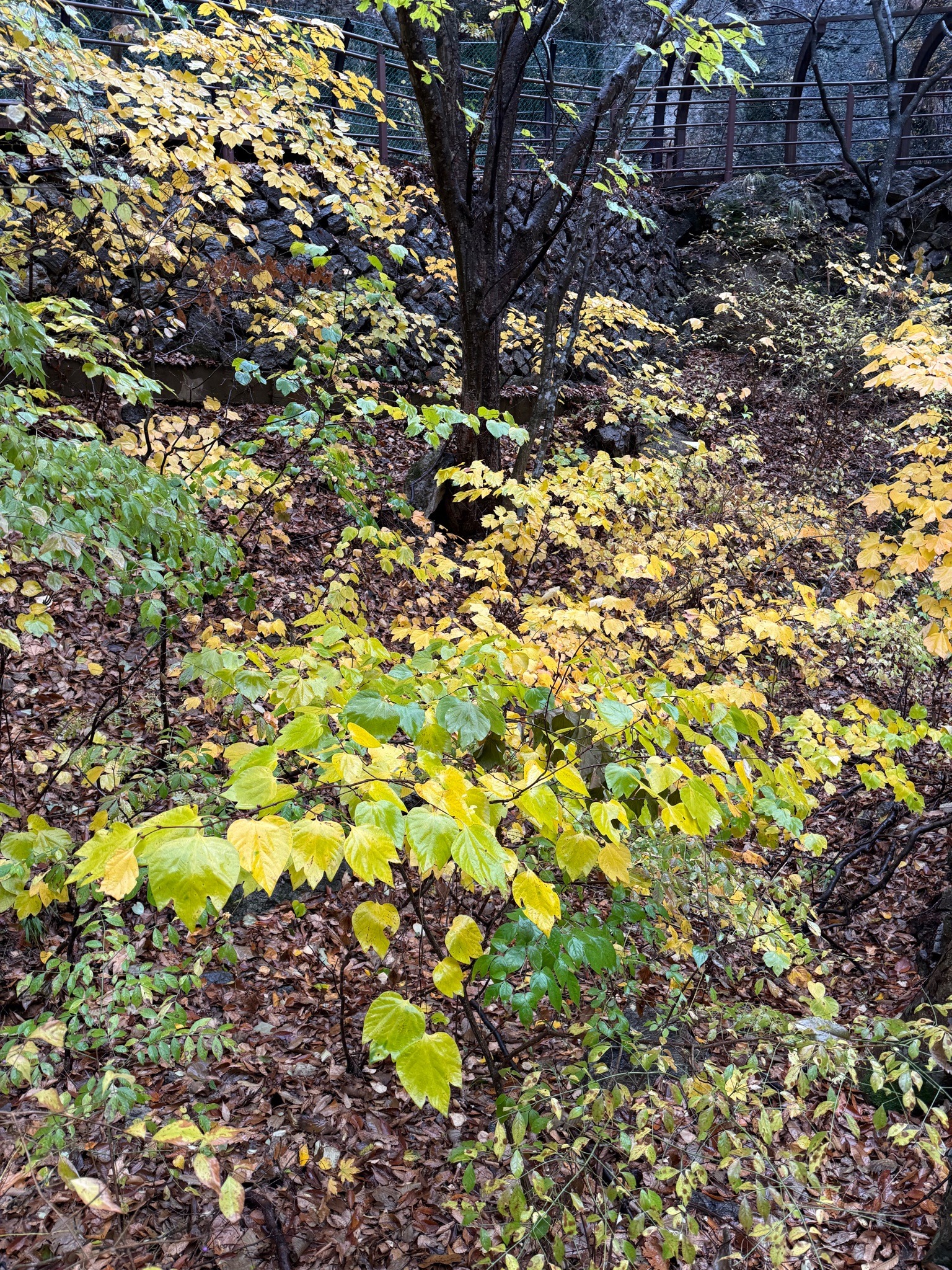
Korean Maple
Acer pseudosieboldianum
A small deciduous tree or large shrub featuring palmate leaves with multiple lobes that transition to brilliant yellow, orange, and red shades in autumn.
- Light
- Full sun to partial shade, ideally receiving 4 to 6 hours of direct sunlight daily.
- Water
- Requires regular watering to keep the soil evenly moist. It appreciates deep weekly soakings during dry summer months and is sensitive to prolonged drought.
- Growth
- A multi-stemmed deciduous shrub or small tree growing to mature heights of 15 to 25 feet with a comparable spread, featuring a moderate growth rate.
Care instructions
Provide full sun to partial shade with consistently moist, well-draining soil. Water deeply during dry periods and apply a balanced, slow-release fertilizer in early spring.
Growing details
Sunlight
Full sun to partial shade, ideally receiving 4 to 6 hours of direct sunlight daily.
Watering
Requires regular watering to keep the soil evenly moist. It appreciates deep weekly soakings during dry summer months and is sensitive to prolonged drought.
Soil
Prefers rich, organically amended, well-draining soils with a slightly acidic to neutral pH range of 6.0 to 7.0.
Hardiness zone
USDA zones 5 through 8, demonstrating good cold tolerance.
Growth habit
A multi-stemmed deciduous shrub or small tree growing to mature heights of 15 to 25 feet with a comparable spread, featuring a moderate growth rate.
Bloom season
Flowers in mid-spring with small, inconspicuous purplish-red or yellowish flowers.
Propagation
Propagated primarily through stratified seeds or by softwood cuttings taken in early summer.
Common pests & issues
Generally resilient, but may occasionally encounter issues with aphids, scale insects, powdery mildew, or leaf scorch during intense summer heat.
Similar species
Often compared to Japanese Maple (Acer palmatum) and Siebold's Maple (Acer sieboldianum), but can be distinguished by its distinct leaf lobe count and textured pubescence along the leaf veins.