
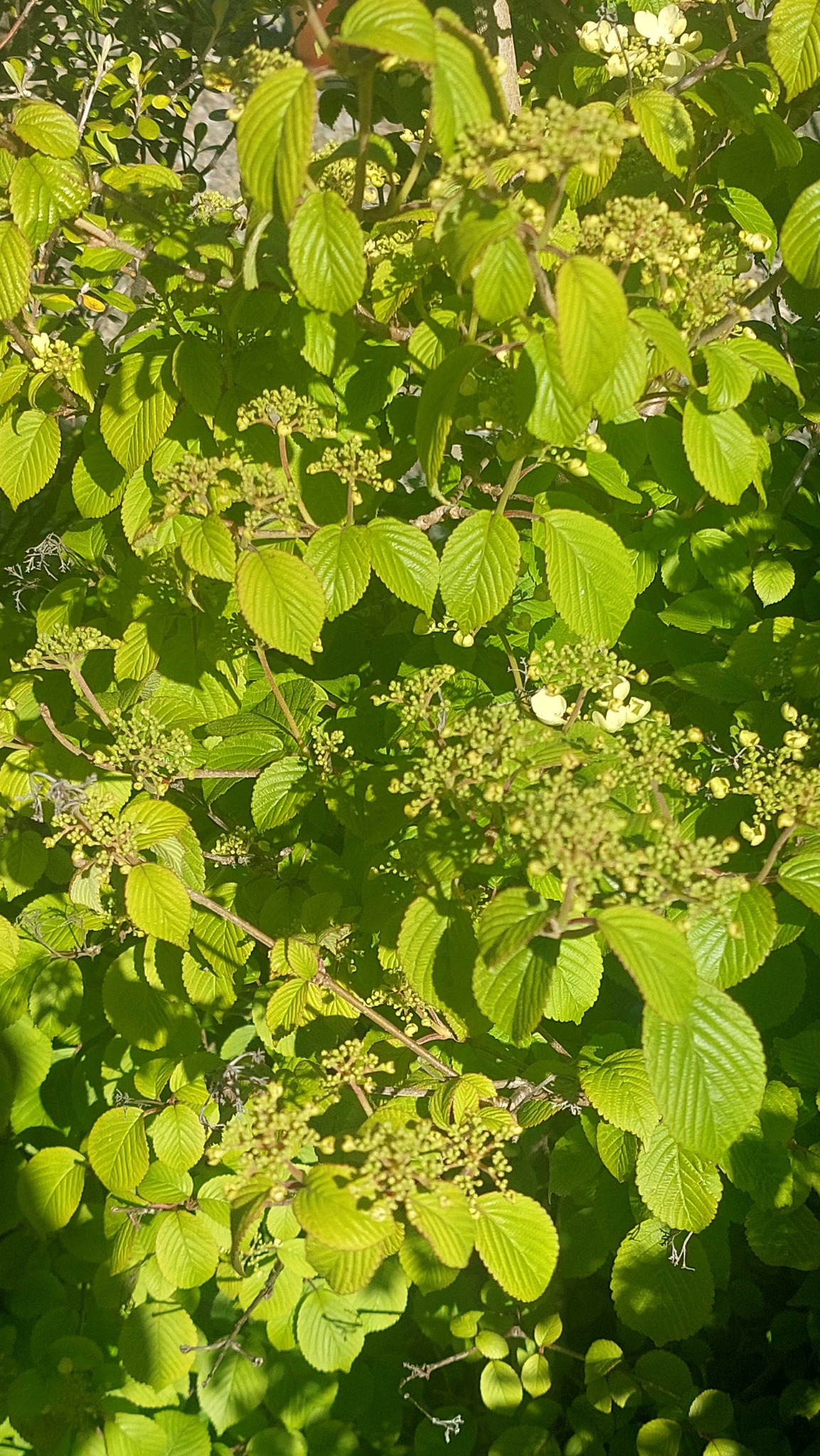
Koreanspice Viburnum
Viburnum carlesii
A deciduous shrub known for its rounded, dense growth habit, strongly fragrant pink-to-white flower clusters, and dark green leaves with prominent veining that turn shades of red and purple in autumn.
- Light
- Full sun to partial shade, requiring at least 6 hours of direct sunlight daily for optimal flowering.
- Water
- Water deeply once a week during dry periods; allow the soil to dry slightly between waterings. Avoid waterlogged conditions.
- Growth
- Deciduous shrub with a rounded, multi-stemmed habit, growing typically 4 to 8 feet in height and 4 to 8 feet in spread at a slow to moderate rate.
Care instructions
Provide full sun to partial shade in moderately fertile, well-draining soil. Water deeply and regularly during the first growing season to establish a deep root system. Once established, it has moderate drought tolerance. Apply a balanced, slow-release fertilizer in early spring before new growth begins.
Growing details
Sunlight
Full sun to partial shade, requiring at least 6 hours of direct sunlight daily for optimal flowering.
Watering
Water deeply once a week during dry periods; allow the soil to dry slightly between waterings. Avoid waterlogged conditions.
Soil
Prefers rich, evenly moist, well-draining loamy soils with a slightly acidic to neutral pH range of 6.0 to 7.0.
Hardiness zone
USDA Hardiness Zones 4 through 7.
Growth habit
Deciduous shrub with a rounded, multi-stemmed habit, growing typically 4 to 8 feet in height and 4 to 8 feet in spread at a slow to moderate rate.
Bloom season
Blooms in mid-spring, producing rounded cymes of pink buds that open to intensely fragrant, white star-shaped flowers.
Propagation
Propagated primarily through softwood cuttings taken in late spring or semi-hardwood cuttings in summer, treated with rooting hormone.
Common pests & issues
Generally resilient, but can occasionally be affected by powdery mildew, leaf spot, aphids, and viburnum leaf beetle. Prevent by ensuring good air circulation and cleaning up fallen debris.
Similar species
Viburnum x juddii, which is a hybrid with similar fragrant blooms but features slightly glossier leaves and a somewhat looser growth habit.