
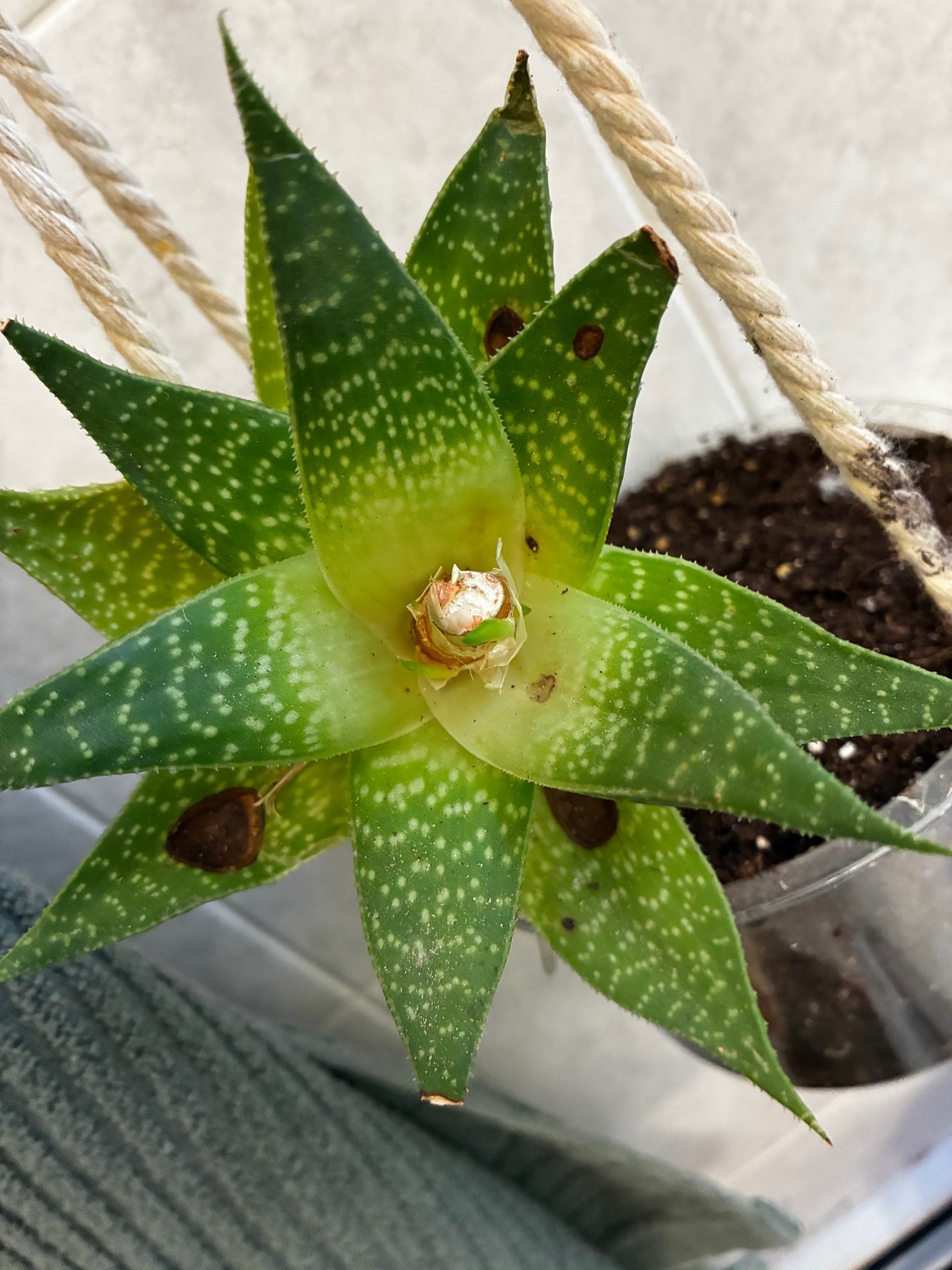
Lace Aloe
Aristaloe aristata
A compact succulent featuring dark green, triangular leaves arranged in a dense rosette. The leaves are heavily adorned with small white bumps and marginal teeth, terminating in a soft, hairlike bristle at the apex.
- Light
- Bright, indirect light to partial sun, ideally 4 to 6 hours of bright light per day.
- Water
- Allow the soil to dry out completely between waterings. Water deeply until it runs out of the drainage holes, reducing frequency significantly during the winter months.
- Growth
- Perennial evergreen succulent forming a low-growing rosette, typically reaching 6 to 12 inches in diameter and spreading slowly by producing offsets.
Care instructions
Provide bright, indirect to direct sunlight for several hours daily. Water thoroughly only when the soil is completely dry, and ensure excellent drainage. Feed with a balanced, diluted succulent fertilizer during the active growing season in spring and summer.
Growing details
Sunlight
Bright, indirect light to partial sun, ideally 4 to 6 hours of bright light per day.
Watering
Allow the soil to dry out completely between waterings. Water deeply until it runs out of the drainage holes, reducing frequency significantly during the winter months.
Soil
Well-draining cactus and succulent potting mix with coarse sand or perlite added. Ideal soil pH is slightly acidic to neutral, around 6.0 to 7.0.
Hardiness zone
USDA zones 9 through 11, grown primarily indoors or in protected outdoor locations in cooler climates.
Growth habit
Perennial evergreen succulent forming a low-growing rosette, typically reaching 6 to 12 inches in diameter and spreading slowly by producing offsets.
Bloom season
Spring to early summer, producing tubular, orange-red flowers on tall, slender stalks.
Propagation
Easily propagated by separating and replanting offsets or pups that form around the base of the parent plant during the active growing season.
Common pests & issues
Susceptible to root rot if overwatered or kept in poorly draining soil. Mealybugs and scale insects may occasionally affect the foliage.
Similar species
Haworthia species, which generally lack the distinct hairlike bristle at the leaf tips and the rough marginal teeth found on Aristaloe aristata.