
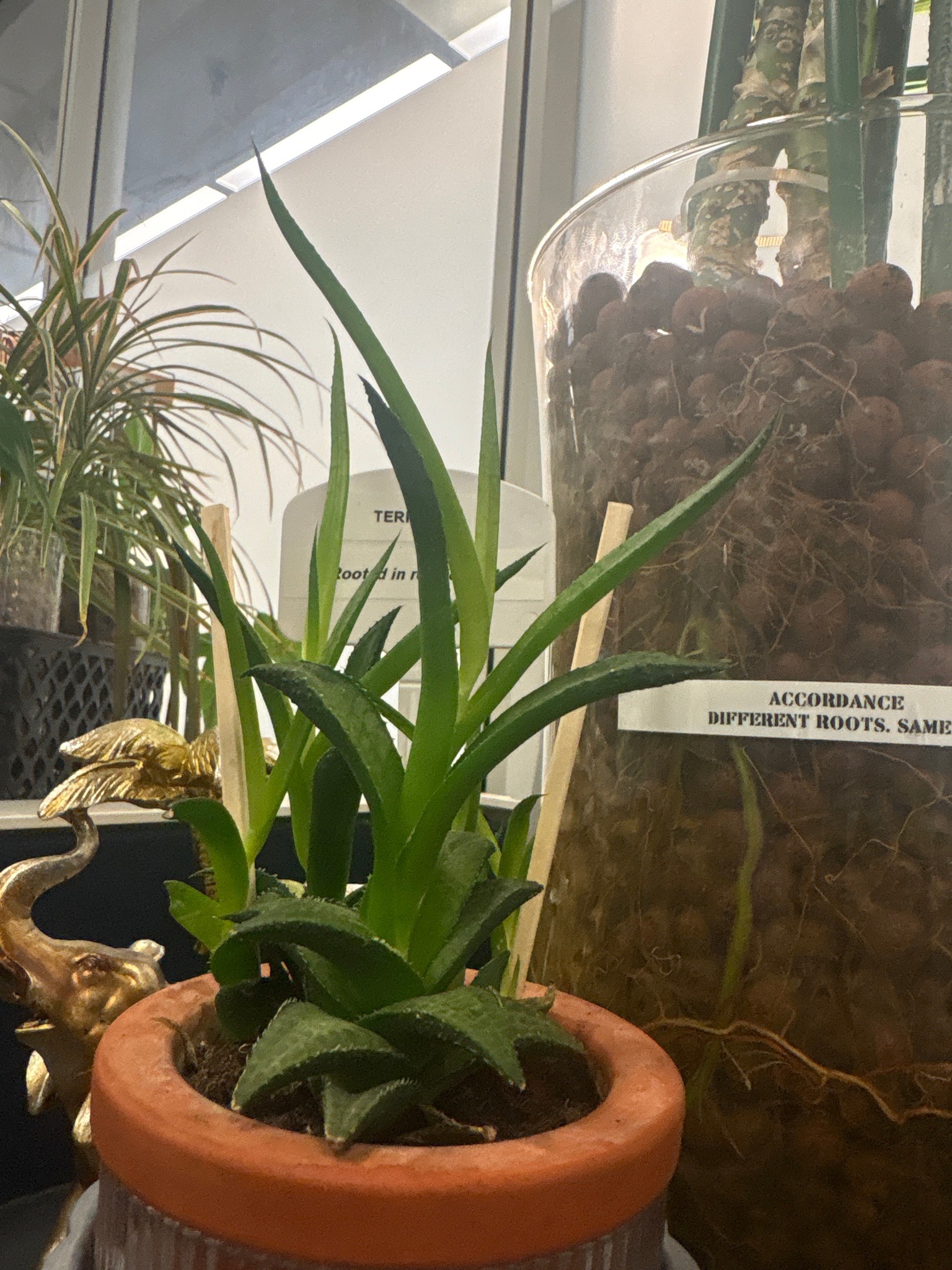
Lace Aloe
Aloe aristata
A small, stemless succulent forming dense rosettes of fleshy, dark green leaves adorned with soft white teeth along the margins and distinctive white spots, terminating in a soft hair-like tip.
- Light
- Bright indirect light to partial direct sun, ideally 4 to 6 hours of sunlight per day.
- Water
- Water deeply but infrequently, allowing the potting mix to dry out completely between waterings. Reduce watering frequency during the winter months.
- Growth
- Perennial succulent forming low-growing rosettes, reaching a mature height of 6 to 12 inches and spreading up to 12 inches wide through the production of offsets.
Care instructions
Provide bright indirect to direct sunlight for several hours a day. Allow the soil to dry completely between thorough waterings. Plant in a well-draining cactus or succulent soil mix and feed sparingly with a balanced liquid fertilizer during the active growing season.
Growing details
Sunlight
Bright indirect light to partial direct sun, ideally 4 to 6 hours of sunlight per day.
Watering
Water deeply but infrequently, allowing the potting mix to dry out completely between waterings. Reduce watering frequency during the winter months.
Soil
Fast-draining sandy or gravelly succulent potting mix with a neutral to slightly acidic pH range between 6.0 and 7.0.
Hardiness zone
USDA Hardiness Zones 9 through 11, requiring frost protection if kept outdoors.
Growth habit
Perennial succulent forming low-growing rosettes, reaching a mature height of 6 to 12 inches and spreading up to 12 inches wide through the production of offsets.
Bloom season
Late spring to summer, producing tubular, orange-red flowers on tall, slender racemes.
Propagation
Propagated easily by removing and replanting offsets (pups) that form around the base of the parent plant during the spring or summer growing season.
Common pests & issues
Prone to root rot if overwatered or planted in poorly draining soil. Mealybugs and scale insects may occasionally infest the foliage.
Similar species
Often confused with Haworthia species due to similar rosette shapes, but distinguished by the hair-like tips on the leaves and vibrant orange-red tubular flowers.