
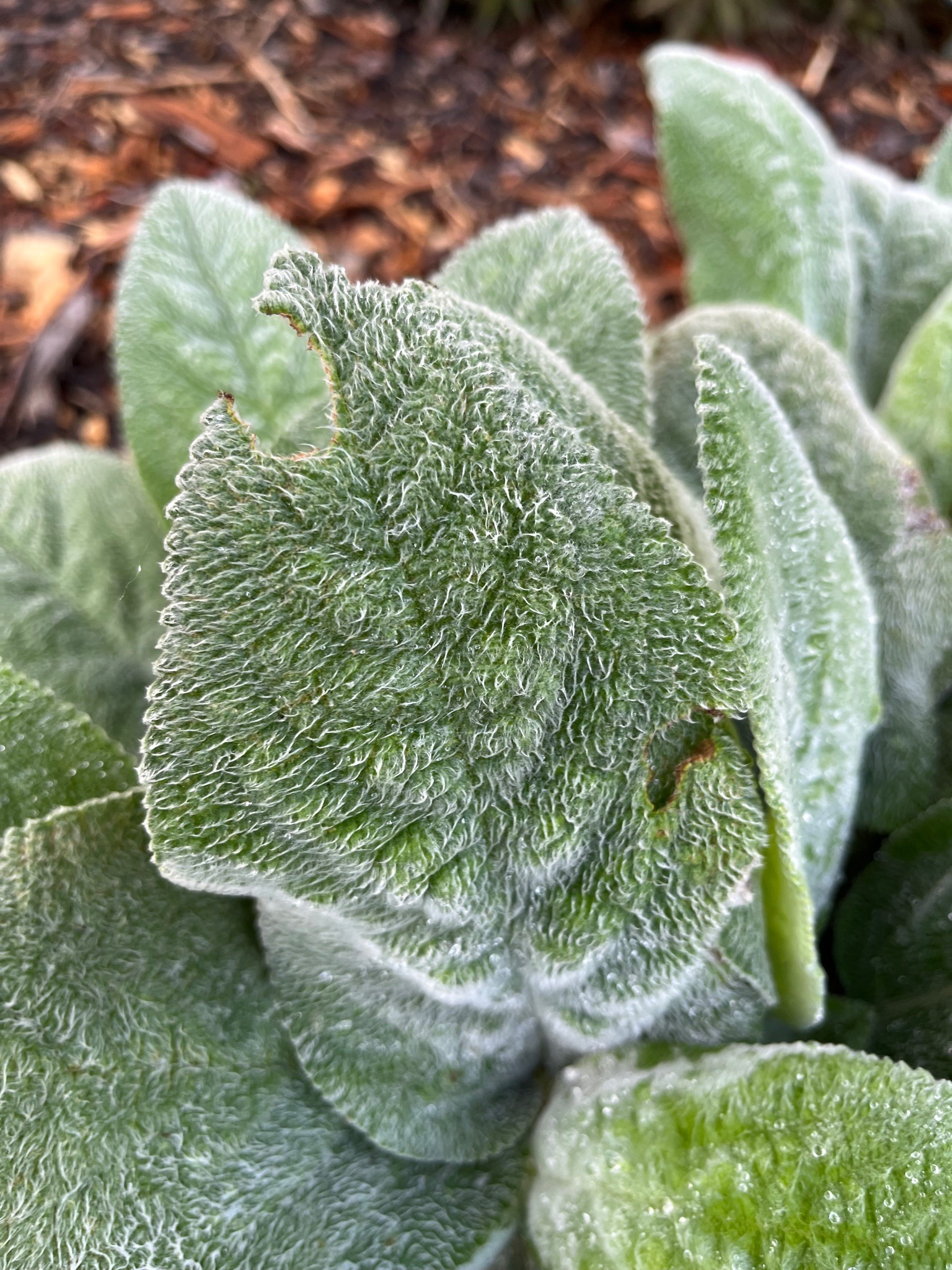
Lamb's Ear
Stachys byzantina
A low-growing perennial herb distinguished by its thick, soft, velvety, silver-gray foliage that resembles the ears of a lamb due to a dense covering of fine white hairs.
- Light
- Full sun to partial shade, approximately 6 hours or more of direct sunlight daily.
- Water
- Low water requirements once established. Highly drought tolerant. Water deeply but infrequently, allowing the soil to dry out completely between waterings. Avoid overhead watering to protect the velvety leaf texture from moisture retention.
- Growth
- Herbaceous perennial forming a dense, spreading groundcover mat via creeping rhizomes. Typically reaches a height of 6 to 12 inches with a spread of 12 to 24 inches or more, exhibiting a moderate growth rate.
Care instructions
Provide full sun to partial shade, well-draining soil, and infrequent watering directly at the base of the plant to keep the foliage dry and prevent moisture-related fungal issues.
Growing details
Sunlight
Full sun to partial shade, approximately 6 hours or more of direct sunlight daily.
Watering
Low water requirements once established. Highly drought tolerant. Water deeply but infrequently, allowing the soil to dry out completely between waterings. Avoid overhead watering to protect the velvety leaf texture from moisture retention.
Soil
Well-draining, gritty, or sandy loam soil with a neutral to slightly alkaline pH ranging from 6.0 to 7.5. Poor to average fertility is preferred; overly rich soil can lead to lax growth.
Hardiness zone
USDA zones 4 through 10, demonstrating strong winter cold hardiness and adaptability to various summer heat levels.
Growth habit
Herbaceous perennial forming a dense, spreading groundcover mat via creeping rhizomes. Typically reaches a height of 6 to 12 inches with a spread of 12 to 24 inches or more, exhibiting a moderate growth rate.
Bloom season
Blooms in late spring to mid-summer, producing upright flower spikes bearing small, whorled, purplish-pink to violet flowers.
Propagation
Easily propagated by division of established clumps in spring or early autumn, or by rooting basal cuttings. Can also be grown from seeds sown in spring.
Common pests & issues
Prone to root rot or fungal leaf spots if grown in excessively humid conditions or poorly draining soil with too much moisture trapped against the leaves.
Similar species
Stachys macrantha (Big Betony) has larger, greener, less woolly leaves and more prominent flowers, easily distinguished by the lack of dense silvery-white felt characteristic of Stachys byzantina.