
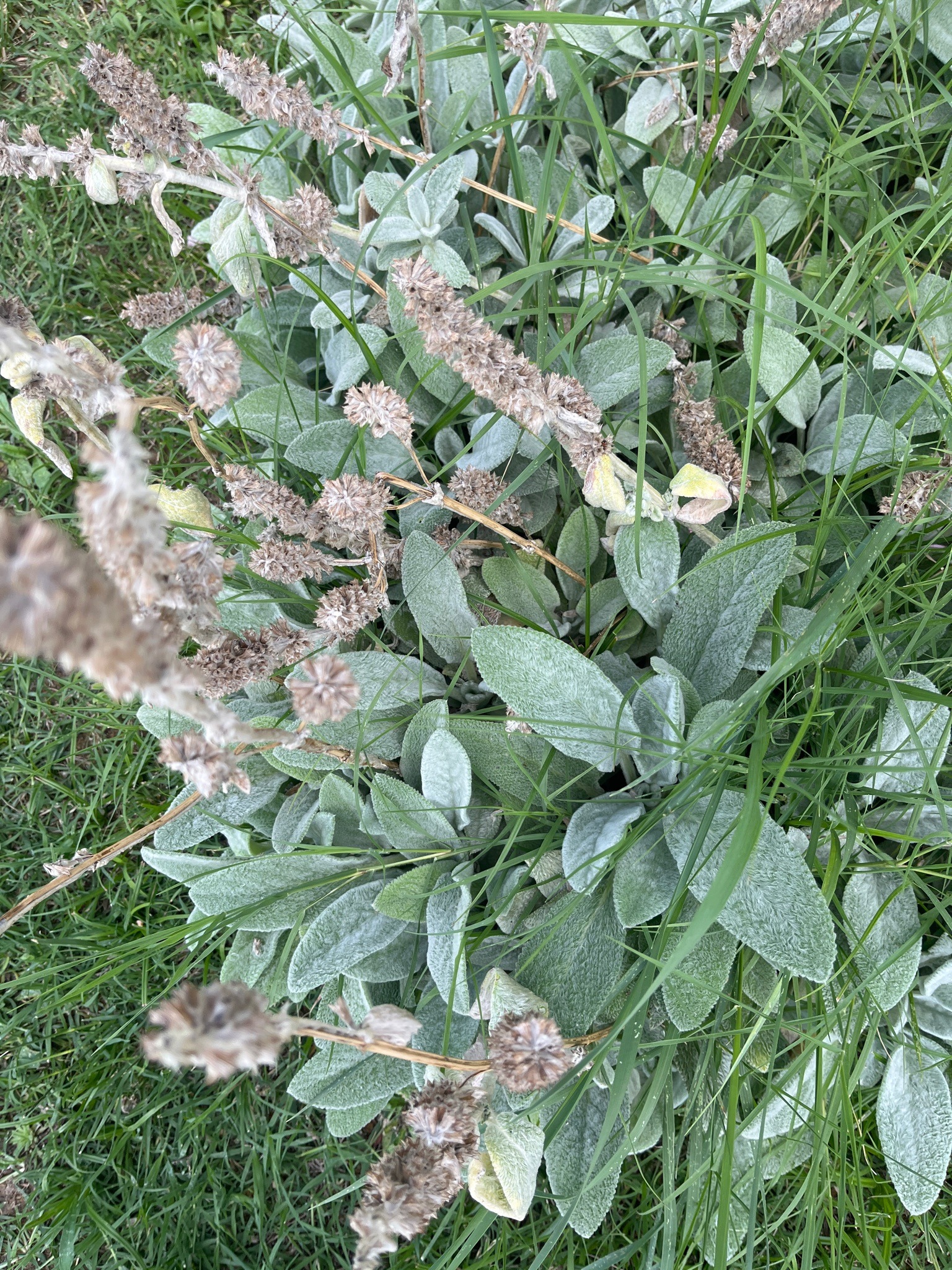
Lamb's Ear
Stachys byzantina
Lamb's ear is a low-growing herbaceous perennial known for its distinctly soft, velvety, silver-gray foliage that resembles the ears of a lamb. It forms dense carpets of woolly leaves and produces upright flowering spikes with small, inconspicuous blooms.
- Light
- Full sun to partial shade, requiring at least 6 hours of direct sunlight daily for best foliage coloration.
- Water
- Low water needs once established. Highly drought tolerant. Water deeply but infrequently, allowing soil to dry out thoroughly between waterings to prevent root rot.
- Growth
- Mat-forming herbaceous perennial with a slow to moderate spread. Grows 6 to 12 inches tall in foliage height, with flowering stems reaching 18 to 24 inches tall, spreading outward indefinitely via runners.
Care instructions
Grow in full sun to partial shade in well-draining soil. Water sparingly once established, allowing the soil to dry out completely between waterings. Avoid overhead watering to keep the woolly leaves dry and prevent moisture-related fungal issues. Fertilization is generally unnecessary and can lead to weak, floppy growth.
Growing details
Sunlight
Full sun to partial shade, requiring at least 6 hours of direct sunlight daily for best foliage coloration.
Watering
Low water needs once established. Highly drought tolerant. Water deeply but infrequently, allowing soil to dry out thoroughly between waterings to prevent root rot.
Soil
Prefers gritty, sandy, or loamy well-draining soil with a neutral to slightly alkaline pH range between 6.0 and 7.5. Poor drainage will quickly cause the plant to decline.
Hardiness zone
USDA Hardiness Zones 4 through 9, demonstrating strong winter cold tolerance and moderate heat resilience.
Growth habit
Mat-forming herbaceous perennial with a slow to moderate spread. Grows 6 to 12 inches tall in foliage height, with flowering stems reaching 18 to 24 inches tall, spreading outward indefinitely via runners.
Bloom season
Blooms from late spring to mid-summer, producing dense spikes of small, purple-pink to lavender tubular flowers.
Propagation
Easily propagated by division of established clumps in spring or early autumn, or by stem cuttings and seed germination.
Common pests & issues
Prone to root rot and leaf spot in humid conditions or poorly draining soil. Powdery mildew can occur if airflow is restricted. Avoid overhead irrigation to maintain foliage health.
Similar species
Stachys macrantha (Big Betony) has larger, greener, less woolly leaves and showier flowers; Artemisia species (such as Silver Mound) have finely divided, feathery silver foliage rather than thick, velvety, oblong leaves.