
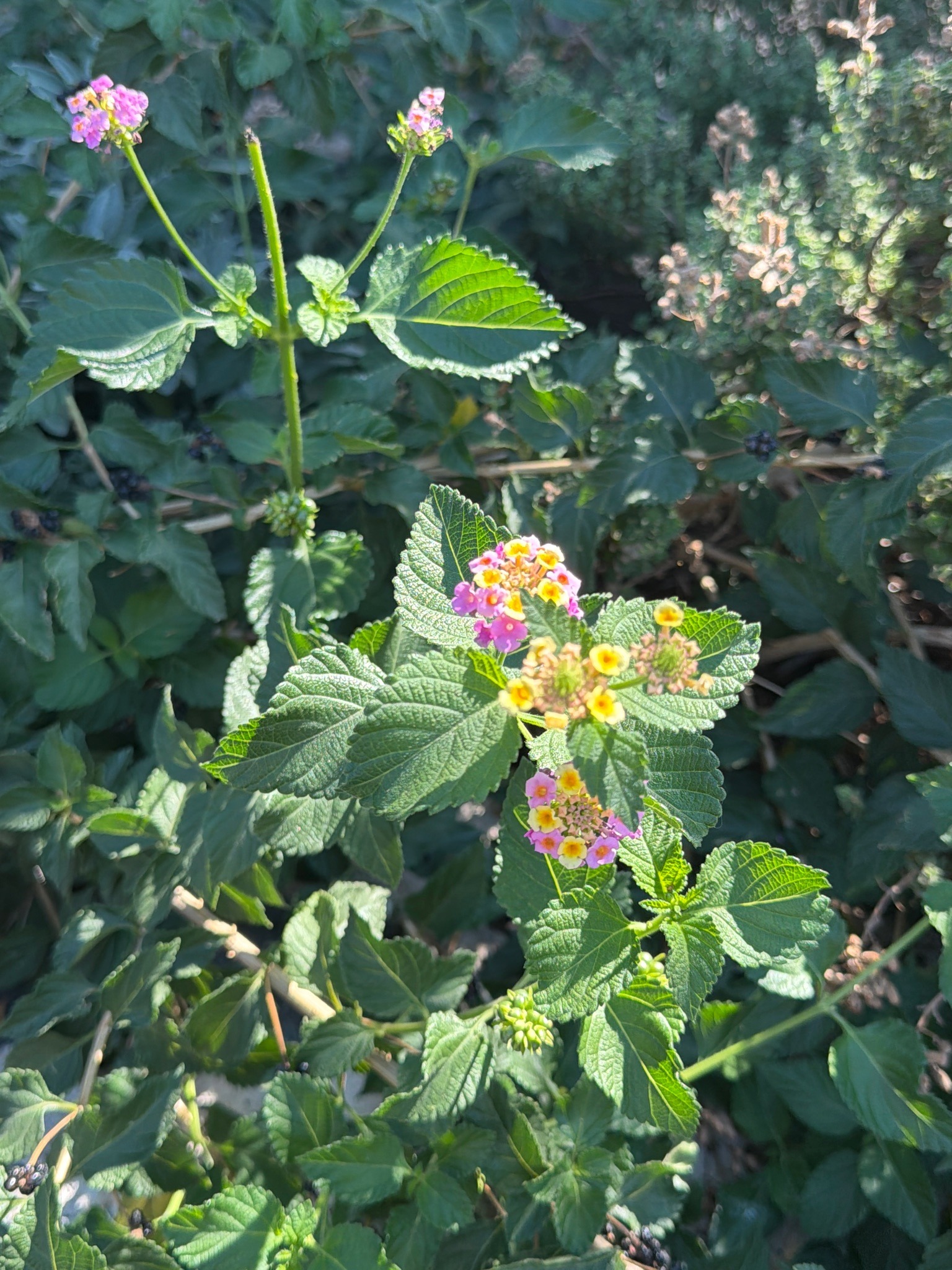
Lantana
Lantana camara
A woody shrub or subshrub featuring rough, strongly aromatic, opposite leaves with serrated margins and dense, rounded flower clusters that typically change color as they age, transitioning from yellow and pink to bright red or purple.
- Light
- Full sun, requiring at least six hours of direct sunlight per day for optimal flowering.
- Water
- Low water requirements once established. Allow the soil to dry out completely between watering sessions. Over-watering can lead to root rot.
- Growth
- Perennial woody subshrub with a spreading, mounding, or sometimes scrambling habit, reaching heights and spreads of 2 to 6 feet with a fast growth rate.
Care instructions
Grow in full sun and well-draining soil. Water deeply when newly planted to establish a strong root system, then reduce watering as mature plants show high drought tolerance. Fertilize sparingly in spring with a balanced, slow-release fertilizer if soil fertility is low.
Growing details
Sunlight
Full sun, requiring at least six hours of direct sunlight per day for optimal flowering.
Watering
Low water requirements once established. Allow the soil to dry out completely between watering sessions. Over-watering can lead to root rot.
Soil
Adaptable to various soil types including clay, loam, and sand, provided there is excellent drainage. Prefers a slightly acidic to neutral pH range of 6.0 to 6.5.
Hardiness zone
USDA Hardiness Zones 9 through 11, behaving as an annual in cooler climates.
Growth habit
Perennial woody subshrub with a spreading, mounding, or sometimes scrambling habit, reaching heights and spreads of 2 to 6 feet with a fast growth rate.
Bloom season
Blooms continuously from late spring through the first autumn frost, featuring small, tubular flowers grouped in flat-topped clusters that display multi-colored variations of yellow, orange, pink, white, and purple.
Propagation
Propagated easily through stem cuttings taken in spring or summer, or grown from seeds collected from mature plants.
Common pests & issues
Generally resilient, but susceptible to whiteflies, mealybugs, and spider mites in dry conditions. Root rot may occur in poorly draining soils.
Similar species
Lantana montevidensis (Trailing Lantana), which has a more trailing, mat-forming growth habit and solid purple or lavender flowers, unlike the upright, multi-colored flower clusters of Lantana camara.