
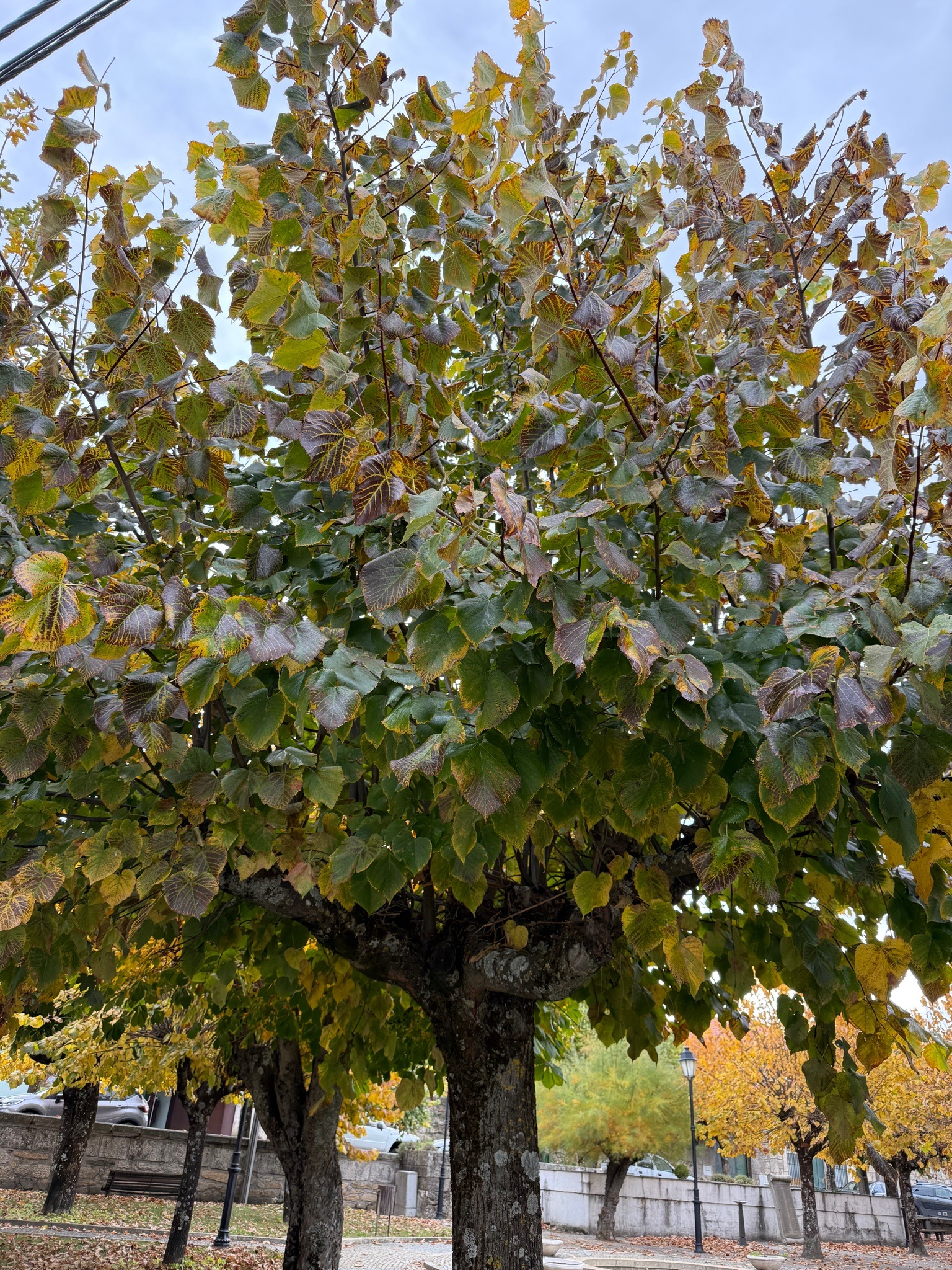
Large-leaved lime
Tilia platyphyllos
A large deciduous tree featuring a dense, rounded crown, smooth grey bark that develops fissures with age, and heart-shaped, serrated green leaves that turn yellow in autumn.
- Light
- Full sun to partial shade, requiring at least 6 hours of direct sunlight daily
- Water
- Moderate watering needs. Water regularly when young to establish a deep root system. Mature trees have moderate drought tolerance but perform best with consistent moisture.
- Growth
- A large perennial deciduous tree with an upright, rounded growth habit, capable of reaching mature heights of 60 to 100 feet with a broad spread of 30 to 50 feet, growing at a medium to fast rate.
Care instructions
Provide full sun to partial shade and plant in deep, fertile, moist, but well-drained soil. Water deeply during prolonged dry spells and apply a balanced fertilizer in spring to support robust canopy growth.
Growing details
Sunlight
Full sun to partial shade, requiring at least 6 hours of direct sunlight daily
Watering
Moderate watering needs. Water regularly when young to establish a deep root system. Mature trees have moderate drought tolerance but perform best with consistent moisture.
Soil
Prefers rich, loamy, well-drained soils with a neutral to alkaline pH range of 6.5 to 7.5, though it adapts well to various clay and sand mixtures.
Hardiness zone
USDA zones 4 through 8, demonstrating strong tolerance to cold winters and moderate summer heat.
Growth habit
A large perennial deciduous tree with an upright, rounded growth habit, capable of reaching mature heights of 60 to 100 feet with a broad spread of 30 to 50 feet, growing at a medium to fast rate.
Bloom season
Flowers in early to mid-summer, producing small, fragrant, yellowish-white drooping clusters of flowers followed by small round nutlets.
Propagation
Typically propagated through hardwood cuttings taken in autumn, layering, or by planting stratified seeds in spring.
Common pests & issues
Generally resilient, but can occasionally be affected by aphids producing sticky honeydew residues, powdery mildew, and leaf spot fungi, which are best managed by maintaining good air circulation.
Similar species
Tilia cordata (Little-leaf linden), which features smaller leaves that are distinctly hairless on the underside except for brown hair tufts, whereas Tilia platyphyllos has softly pubescent lower leaf surfaces and larger leaves.
User notes
Portugal park