
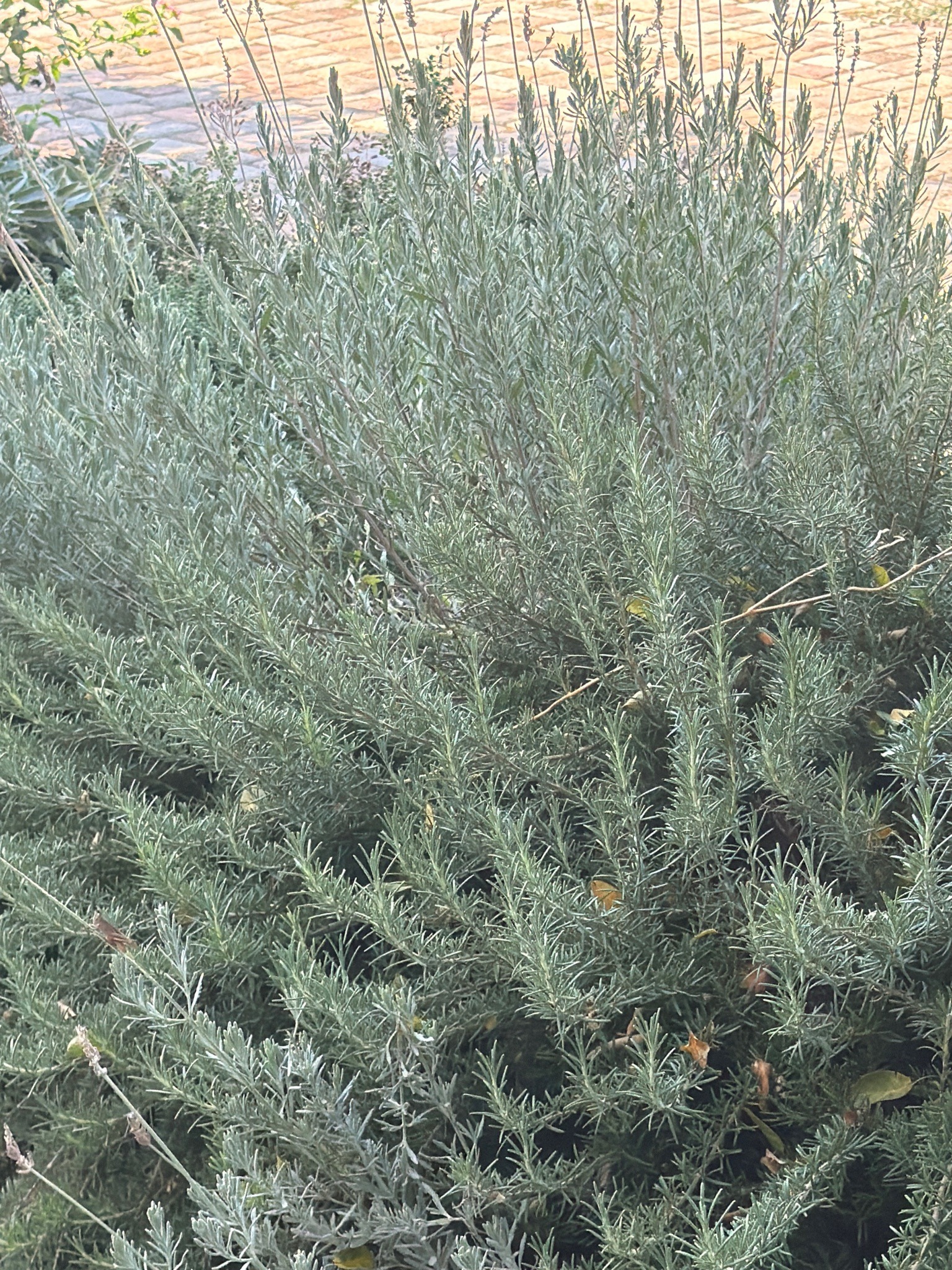
Lavender
Lavandula angustifolia
A bushy, perennial subshrub featuring narrow, linear, grayish-green to silver leaves and upright stems that terminate in fragrant flower spikes.
- Light
- Full sun, requiring at least 6 to 8 hours of direct sunlight daily.
- Water
- Low water requirements. Highly drought-tolerant once established. Water thoroughly only when the soil is completely dry.
- Growth
- Perennial evergreen subshrub forming a dense, rounded mound. Typically grows 1 to 3 feet tall with a similar spread, displaying a moderate growth rate.
Care instructions
Provide full sun exposure and plant in extremely well-draining, lean soil. Water deeply but infrequently, allowing the soil to dry out completely between watering sessions to prevent root rot. Prune lightly after flowering to maintain shape.
Growing details
Sunlight
Full sun, requiring at least 6 to 8 hours of direct sunlight daily.
Watering
Low water requirements. Highly drought-tolerant once established. Water thoroughly only when the soil is completely dry.
Soil
Prefers gritty, sandy, or loamy soils with exceptional drainage. Ideal soil pH ranges from 6.5 to 8.0.
Hardiness zone
USDA zones 5 through 9, depending on the specific cultivar.
Growth habit
Perennial evergreen subshrub forming a dense, rounded mound. Typically grows 1 to 3 feet tall with a similar spread, displaying a moderate growth rate.
Bloom season
Blooms from late spring through mid-summer. Produces small, tubular flowers in shades of purple, violet, or blue, arranged in dense spikes.
Propagation
Propagated primarily through stem cuttings taken in spring or early summer, or by seed, though cultivars are best maintained via cuttings.
Common pests & issues
Prone to root rot and fungal leaf spots if subjected to overly humid conditions or poorly draining, wet soil. Ensure good air circulation around the base.
Similar species
Look-alikes include Lavandula latifolia (Portuguese lavender), which has broader leaves and branching flower spikes, and Russian sage (Salvia yangii), which features more deeply lobed, aromatic foliage and a coarser texture.