
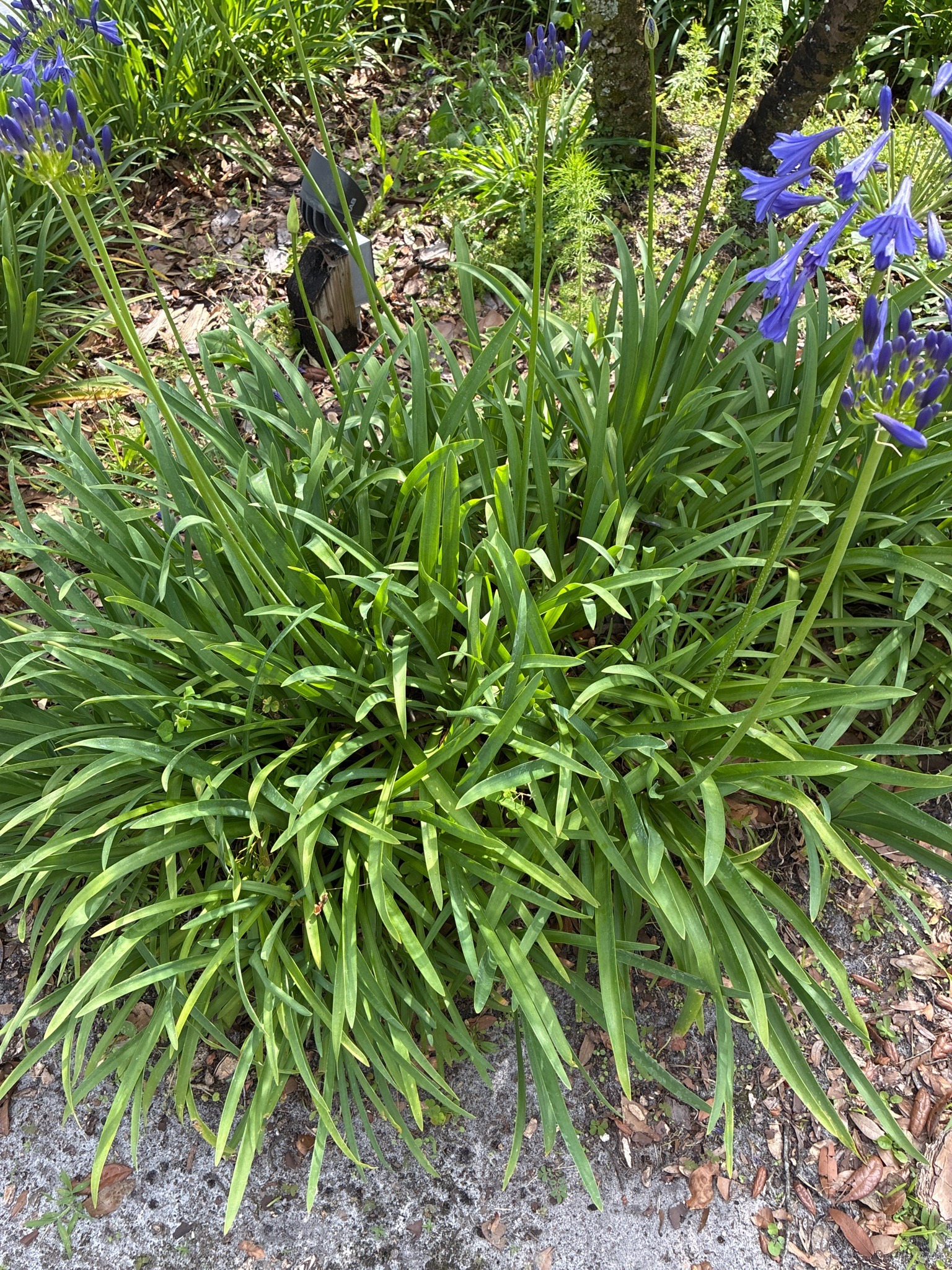
Lily of the Nile
Agapanthus praecox
A clump-forming perennial with deep green, strap-like leaves and tall stalks topped with spherical clusters of trumpet-shaped blue or white flowers.
- Light
- Full sun to partial shade (at least 6 hours of direct sunlight for best blooming).
- Water
- Moderate watering; keep soil moist during spring and summer, and reduce frequency in winter. Relatively drought-tolerant once established.
- Growth
- Herbaceous perennial reaching 2-4 feet tall and wide; clump-forming with a moderate growth rate.
Care instructions
Provide full sun to light shade and well-draining soil. Water regularly during the growing season but avoid waterlogged conditions. Apply a balanced fertilizer in spring and summer.
Growing details
Sunlight
Full sun to partial shade (at least 6 hours of direct sunlight for best blooming).
Watering
Moderate watering; keep soil moist during spring and summer, and reduce frequency in winter. Relatively drought-tolerant once established.
Soil
Rich, fertile, well-draining soil; pH 5.5 to 7.0.
Hardiness zone
8-11 (USDA)
Growth habit
Herbaceous perennial reaching 2-4 feet tall and wide; clump-forming with a moderate growth rate.
Bloom season
Early to late summer; features globose clusters of blue, purple, or white tubular flowers.
Propagation
Commonly by division of clumps in spring or autumn; can also be grown from seed though it takes longer to flower.
Common pests & issues
Prone to snails and slugs; root rot in heavy, wet soils; occasionally spider mites or aphids.
Similar species
Look-alikes include Clivia (shorter stalks, orange flowers) and Blue Dawn Flower (vining), but Agapanthus is distinguished by its unique tall umbels and strap leaves.