
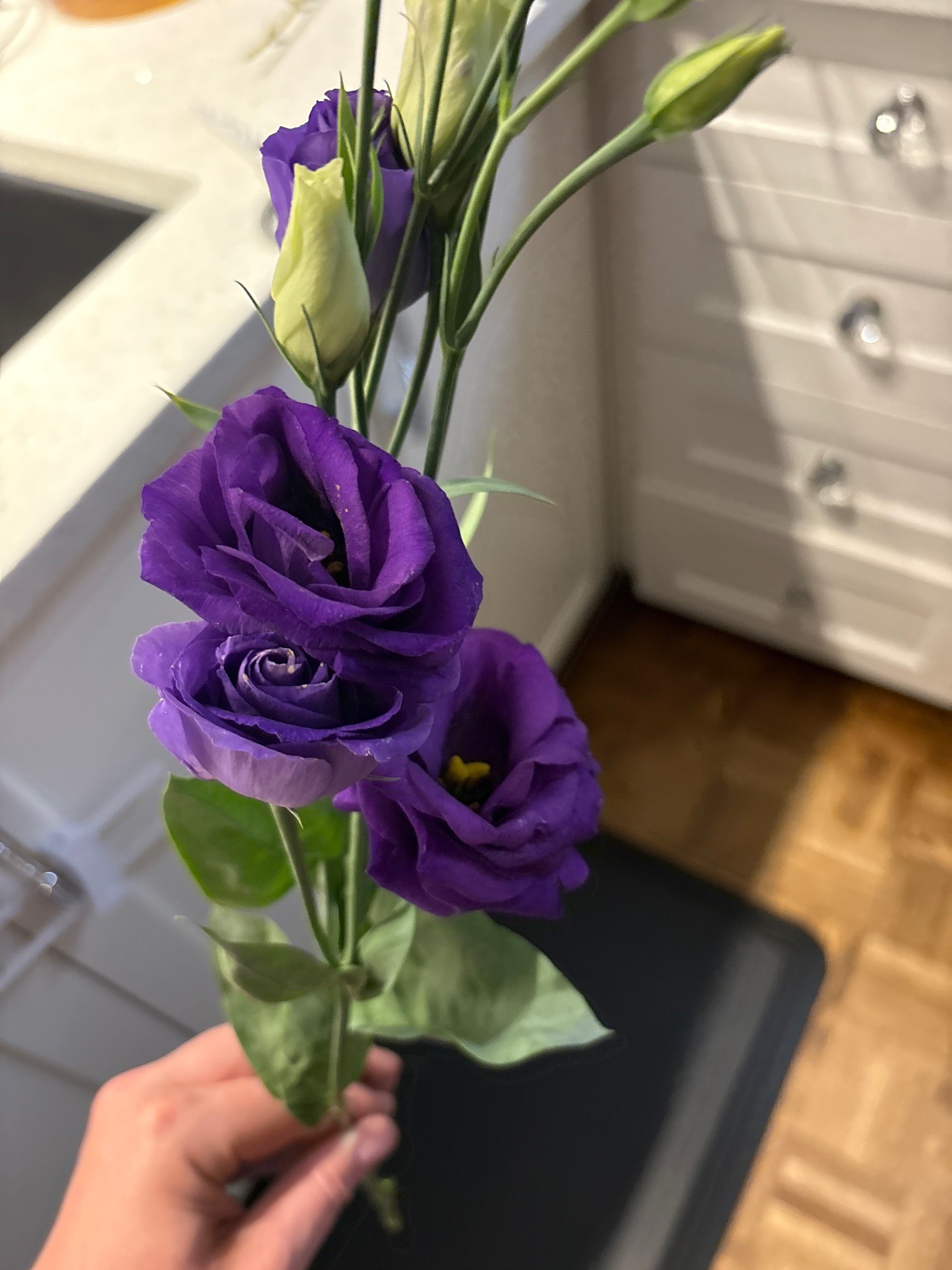
Lisianthus
Eustoma russellianum
An elegant ornamental plant known for its rose-like, ruffled blooms in shades of purple, pink, white, and blue. Features erect stems with grey-green, slightly fleshy, opposing leaves.
- Light
- Full sun to partial light (6 to 8 hours of light daily)
- Water
- Keep soil consistently moist but never soggy. Water around the base to prevent leaf spots and fungal diseases on flowers.
- Growth
- Herbaceous perennial grown typically as an annual; upright habit reaching 1 to 3 feet in height with a spread of 6 to 12 inches
Care instructions
Provide full sun to light shade and plant in rich, well-draining soil. Water when the top inch of soil feels dry, avoiding overhead watering to protect delicate blooms. Feed with a balanced liquid fertilizer every 2-3 weeks during active growth.
Growing details
Sunlight
Full sun to partial light (6 to 8 hours of light daily)
Watering
Keep soil consistently moist but never soggy. Water around the base to prevent leaf spots and fungal diseases on flowers.
Soil
Rich, fertile, organic-rich soil with excellent drainage and a neutral to slightly alkaline pH (6.5–7.2)
Hardiness zone
USDA Zones 8-11 (grown as an annual in cooler climates)
Growth habit
Herbaceous perennial grown typically as an annual; upright habit reaching 1 to 3 feet in height with a spread of 6 to 12 inches
Bloom season
Mid-summer to early autumn; produces single or double rose-like blossoms that last long after being cut
Propagation
Propagated primarily by seed sown indoors early in winter, or through micropropagation and soft tip cuttings in commercial settings
Common pests & issues
Susceptible to thrips, aphids, whiteflies, fungus gnats, stem rot, botrytis, and root rot if soil remains overly wet or airflow is poor
Similar species
Often confused with garden roses (Rosa spp.) or prairie gentian, but distinguished by smooth, spineless stems and blue-grey foliage