
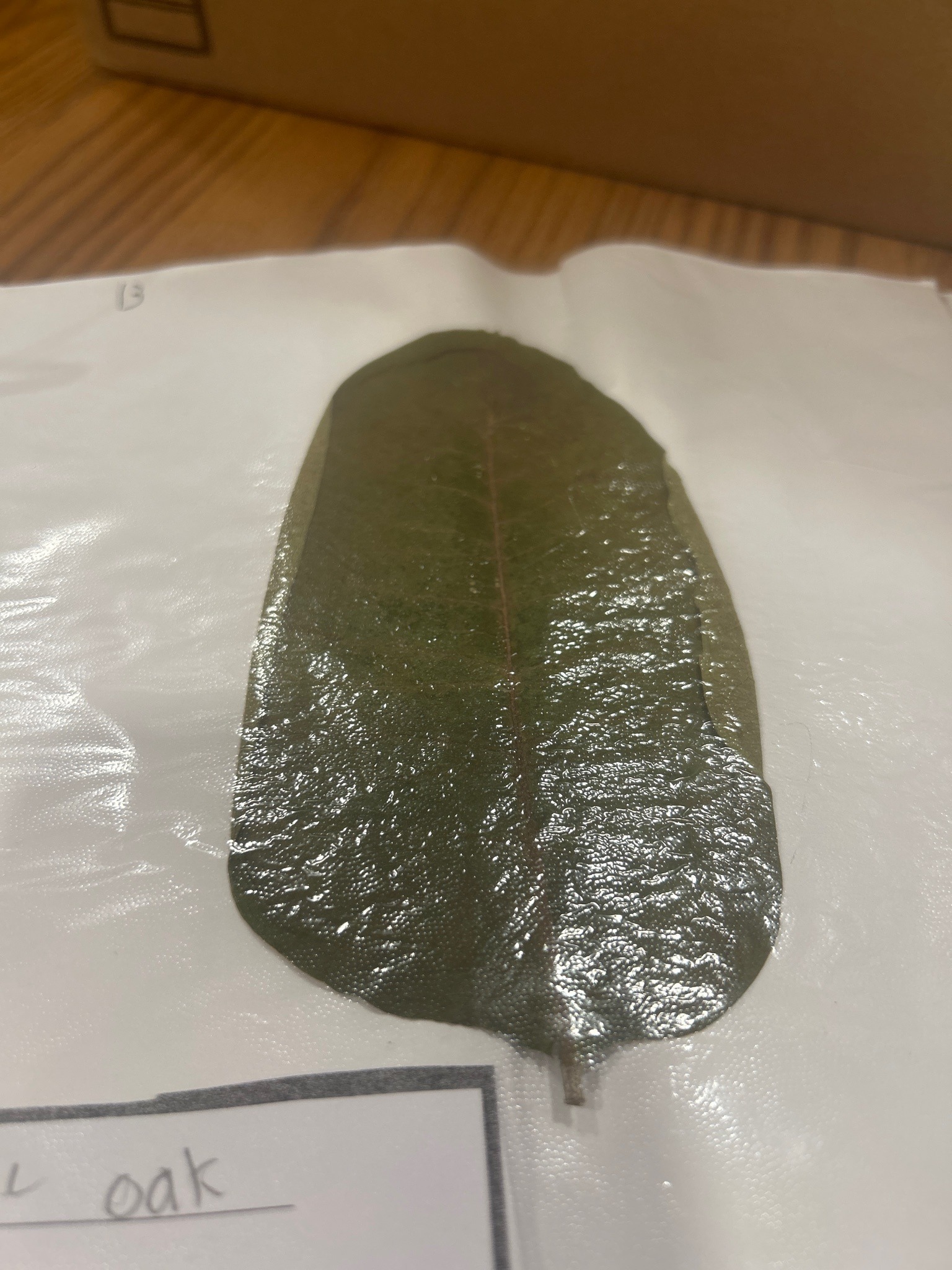
Live Oak
Quercus virginiana
A large, spreading evergreen tree featuring thick, dark green leathery leaves with smooth or slightly revolute margins and a glossy upper surface.
- Light
- Full sun, requiring at least 6 hours of direct sunlight daily
- Water
- Moderate drought tolerance once established; water deeply during prolonged dry spells and allow soil to dry slightly between waterings
- Growth
- Large woody perennial tree growing with a wide-spreading, rounded canopy reaching heights of 40 to 80 feet with an even wider spread
Care instructions
Provide full sun and well-draining soil. Water deeply when newly planted to establish a strong root system, and fertilize with a balanced slow-release formula in early spring if needed.
Growing details
Sunlight
Full sun, requiring at least 6 hours of direct sunlight daily
Watering
Moderate drought tolerance once established; water deeply during prolonged dry spells and allow soil to dry slightly between waterings
Soil
Adaptable to a wide range of well-draining soils including sandy, loamy, and clay compositions, with an optimal pH range between 5.5 and 7.5
Hardiness zone
USDA zones 8 through 10
Growth habit
Large woody perennial tree growing with a wide-spreading, rounded canopy reaching heights of 40 to 80 feet with an even wider spread
Bloom season
Spring, producing inconspicuous yellowish-green catkins
Propagation
Propagated primarily through acorns collected in autumn and planted directly, or via softwood cuttings treated with rooting hormone
Common pests & issues
Susceptible to occasional aphid infestations, oak wilt, and leaf spot fungi, which can be managed with proper sanitation and appropriate arboricultural treatments
Similar species
Laurel oak (Quercus hemisphaerica), which features narrower, more oblong deciduous leaves compared to the broader, evergreen leaves of the live oak