
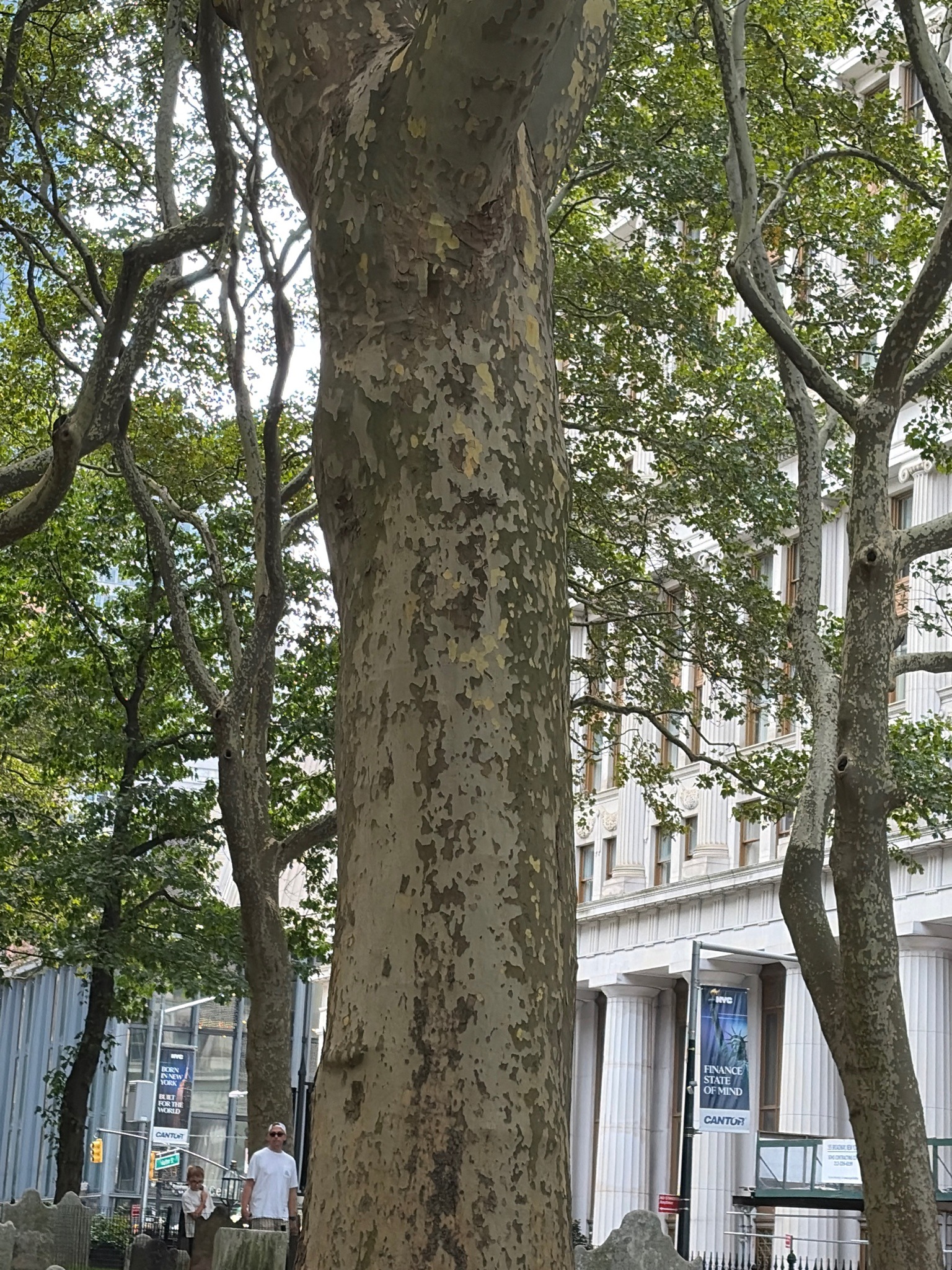
London plane tree
Platanus x acerifolia
A large deciduous tree easily recognized by its distinctive exfoliating bark that peels away in patches, revealing a mottled surface of cream, olive, and gray beneath. It features broad, maple-like lobed leaves and spherical fruit clusters hanging from slender stalks.
- Light
- Full sun, requiring at least 6 to 8 hours of direct sunlight daily.
- Water
- High water needs when young; mature trees tolerate periodic dry spells. Water deeply once a week during extended dry periods to prevent leaf scorch.
- Growth
- Large deciduous perennial tree growing rapidly up to 75 to 100 feet tall with an equally wide, spreading, and rounded canopy.
Care instructions
Provide full sun and deep, regular watering during establishment, transitioning to moderate drought tolerance once mature. Plant in well-draining soil with an adaptable pH range and apply balanced fertilizer in early spring if growth appears slow.
Growing details
Sunlight
Full sun, requiring at least 6 to 8 hours of direct sunlight daily.
Watering
High water needs when young; mature trees tolerate periodic dry spells. Water deeply once a week during extended dry periods to prevent leaf scorch.
Soil
Adaptable to a wide range of soil types including clay, loam, and sand, provided there is adequate drainage. Prefers slightly acidic to neutral pH levels between 5.5 and 7.5.
Hardiness zone
USDA zones 5 through 9, exhibiting strong resilience to cold winters and moderate summer heat.
Growth habit
Large deciduous perennial tree growing rapidly up to 75 to 100 feet tall with an equally wide, spreading, and rounded canopy.
Bloom season
Spring; produces inconspicuous monoecious flowers grouped in small spherical clusters that develop into dangling brown ball-like seed pods.
Propagation
Propagated primarily through hardwood cuttings taken in late winter or by seed stratification, though tissue culture is also utilized in commercial production.
Common pests & issues
Susceptible to anthracnose in cool, wet springs which causes leaf blight and twig dieback. Powdery mildew and lace bugs can also occasionally affect foliage.
Similar species
American sycamore (Platanus occidentalis), which can be distinguished by its single-lobed fruiting balls and more erratic, less exfoliating bark on upper branches.