
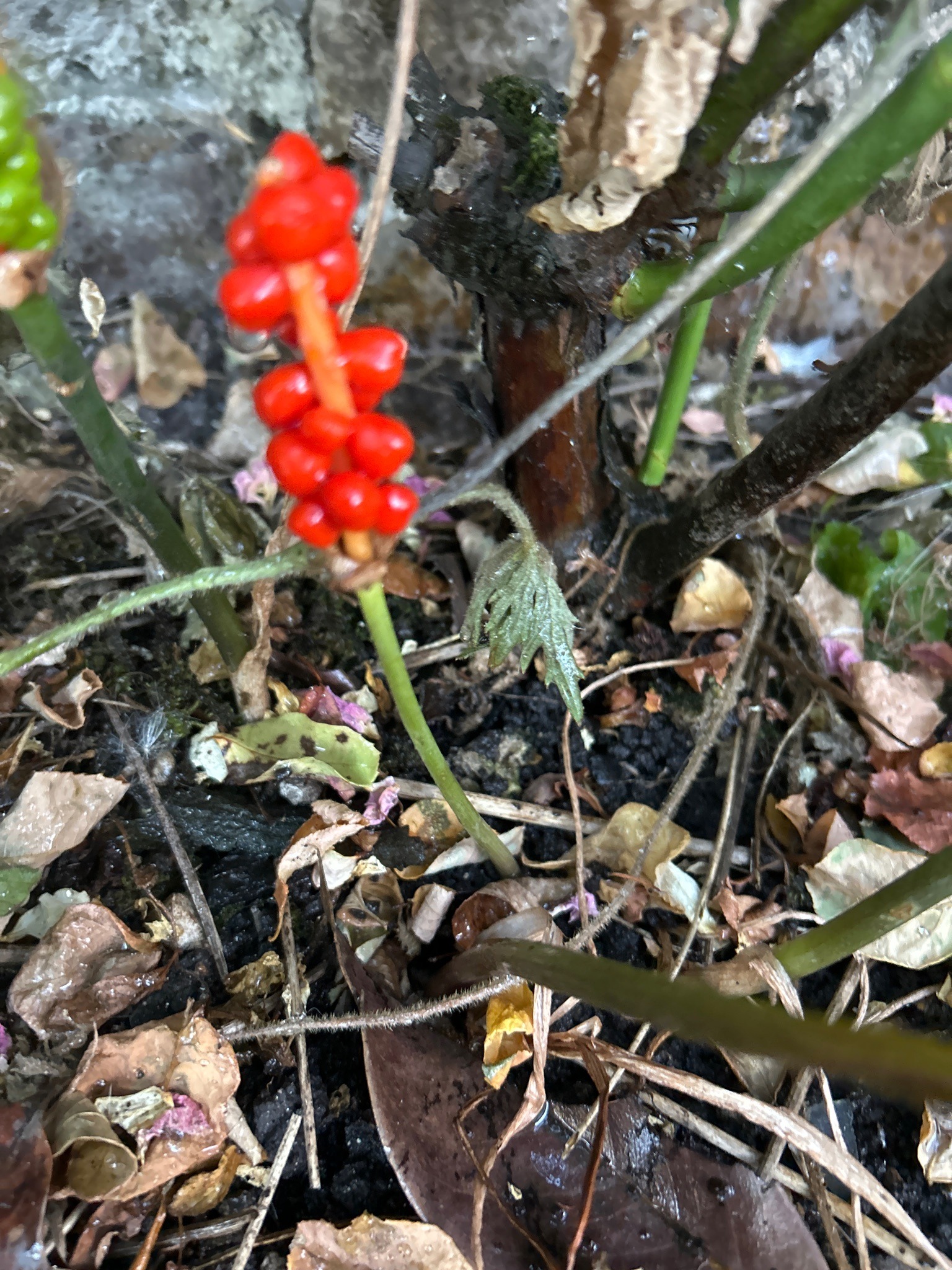
Lords and Ladies
Arum maculatum
A herbaceous perennial plant characterized by arrow-shaped green leaves often marked with dark spots, and a distinctive upright cluster of bright red berries produced on a central stalk after the foliage dies back.
- Light
- Partial shade to full shade, thriving in woodland environments with filtered light.
- Water
- Requires moderate and consistent moisture. Keep the soil evenly moist but not waterlogged, tolerating occasional brief dry periods once established.
- Growth
- Herbaceous perennial forming clump-forming patches. Reaches a mature height of 30 to 45 cm with a similar spread, exhibiting a moderate growth rate from underground tubers.
Care instructions
Grow in moist, well-draining soil with partial to full shade. Water regularly during dry spells in the growing season. Apply a balanced organic fertilizer in spring if desired.
Growing details
Sunlight
Partial shade to full shade, thriving in woodland environments with filtered light.
Watering
Requires moderate and consistent moisture. Keep the soil evenly moist but not waterlogged, tolerating occasional brief dry periods once established.
Soil
Rich, humus-heavy, moist, and well-draining soil with a neutral to slightly alkaline pH range of 6.0 to 7.5.
Hardiness zone
USDA Hardiness Zones 5 through 9
Growth habit
Herbaceous perennial forming clump-forming patches. Reaches a mature height of 30 to 45 cm with a similar spread, exhibiting a moderate growth rate from underground tubers.
Bloom season
Spring (April to May), producing an inconspicuous greenish-spadix enclosed in a pale green spathe, followed by bright red berries in late summer and autumn.
Propagation
Propagated primarily by division of tubers in autumn or by sowing seeds immediately after harvesting when fresh.
Common pests & issues
Generally resilient against major pests, though occasionally susceptible to fungal leaf spot or root rot if soil drainage is poor.
Similar species
Arum italicum (Italian arum), which features more prominent white-veined winter leaves and persists longer into the year.