
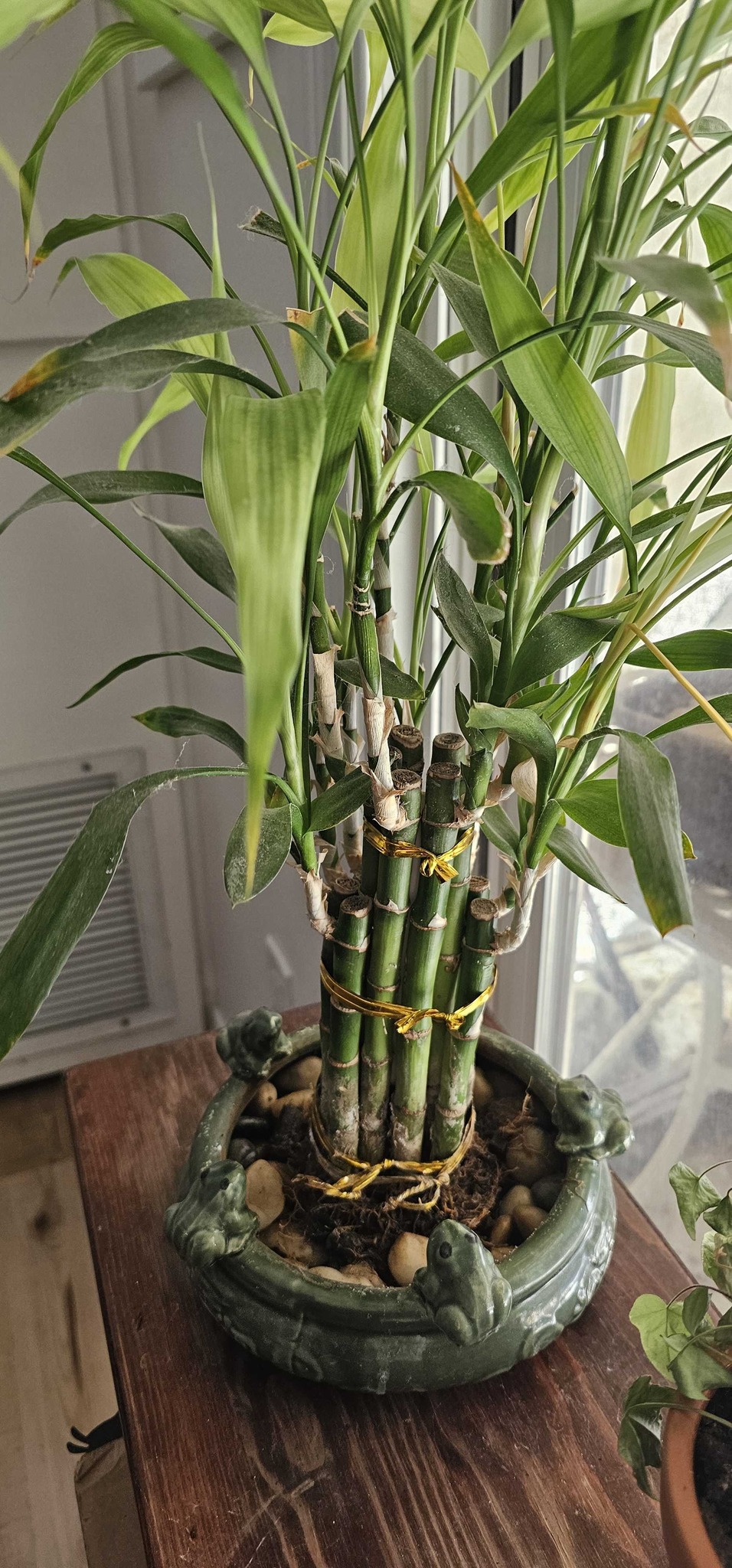
Lucky Bamboo
Dracaena sanderiana
An upright perennial with segmented, bright green stems that resemble true bamboo, topped with clusters of thin, lance-shaped green leaves.
- Light
- Bright, indirect light for 4 to 6 hours daily; avoid direct sun which can scorch the leaves.
- Water
- Water when the top inch of soil feels dry, or change the water weekly if kept in a vase with stones. Prefers filtered or distilled water free of fluoride and chlorine.
- Growth
- Upright herbaceous perennial shrub, typically reaching a mature indoor height of 2 to 3 feet with a slow growth rate.
Care instructions
Provide bright, indirect sunlight and keep the soil consistently moist or maintain a clean water level if grown hydroponically. Fertilize lightly every few months during the growing season with a balanced liquid fertilizer.
Growing details
Sunlight
Bright, indirect light for 4 to 6 hours daily; avoid direct sun which can scorch the leaves.
Watering
Water when the top inch of soil feels dry, or change the water weekly if kept in a vase with stones. Prefers filtered or distilled water free of fluoride and chlorine.
Soil
Well-draining, rich potting mix with an acidic to neutral pH range of 6.0 to 6.5.
Hardiness zone
USDA zones 10 through 11; grown primarily as an indoor houseplant in cooler climates.
Growth habit
Upright herbaceous perennial shrub, typically reaching a mature indoor height of 2 to 3 feet with a slow growth rate.
Bloom season
Rarely blooms indoors; produces small, reddish-brown to white flowers when mature and in optimal conditions outdoors.
Propagation
Easily propagated through stem cuttings taken just below a node, rooted either in water or moist potting soil.
Common pests & issues
Prone to leaf tip browning due to chemical additives in tap water or low humidity. Root rot can occur from overwatering or stagnant water.
Similar species
True bamboo (family Poaceae) features hollow, woody culms and different node structures, whereas Dracaena sanderiana has solid, fleshy stems.