
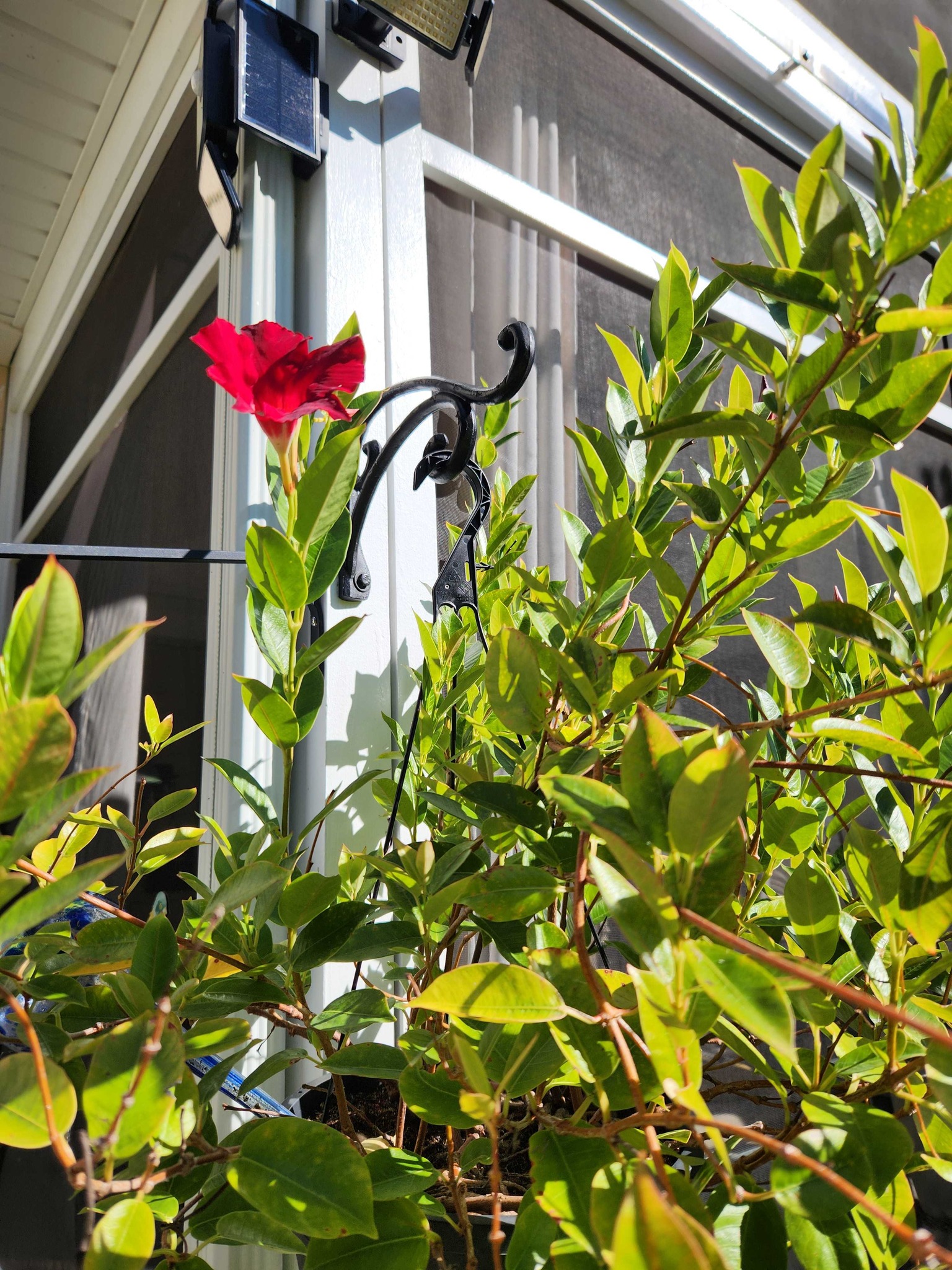
Mandevilla
Mandevilla sanderi
A vigorous tropical vine featuring glossy, dark green leaves and large, striking trumpet-shaped flowers in vibrant shades of red, pink, or white.
- Light
- Full sun to partial shade, approximately 6 to 8 hours of direct sunlight per day for optimal flowering.
- Water
- Moderate watering frequency. Allow the topsoil to dry out slightly between watering sessions. Avoid waterlogged soil to prevent root rot.
- Growth
- A twining woody vine or shrubby climber reaching mature heights of 3 to 10 feet depending on support structures, with a moderate growth rate.
Care instructions
Provide full sun to partial shade with bright, indirect light. Water regularly when the top inch of soil feels dry, allowing the medium to drain thoroughly. Use a well-draining, nutrient-rich potting mix and feed monthly during the active growing season with a balanced, water-soluble fertilizer.
Growing details
Sunlight
Full sun to partial shade, approximately 6 to 8 hours of direct sunlight per day for optimal flowering.
Watering
Moderate watering frequency. Allow the topsoil to dry out slightly between watering sessions. Avoid waterlogged soil to prevent root rot.
Soil
Rich, loamy, and well-draining potting soil with a slightly acidic to neutral pH range of 6.0 to 7.0.
Hardiness zone
USDA zones 9 through 11, typically grown as an annual or container plant in cooler climates.
Growth habit
A twining woody vine or shrubby climber reaching mature heights of 3 to 10 feet depending on support structures, with a moderate growth rate.
Bloom season
Blooms continuously from late spring through autumn, producing large, funnel-shaped flowers typically in vibrant red, pink, or white.
Propagation
Propagated primarily through stem cuttings taken during the spring or early summer, treated with rooting hormone and placed in a warm, humid propagation environment.
Common pests & issues
Susceptible to common pests such as aphids, spider mites, and mealybugs. Overwatering can lead to root rot and fungal leaf spots.
Similar species
Dipladenia, which has a more shrub-like, upright, and bushy growth habit compared to the traditional climbing nature of Mandevilla.