
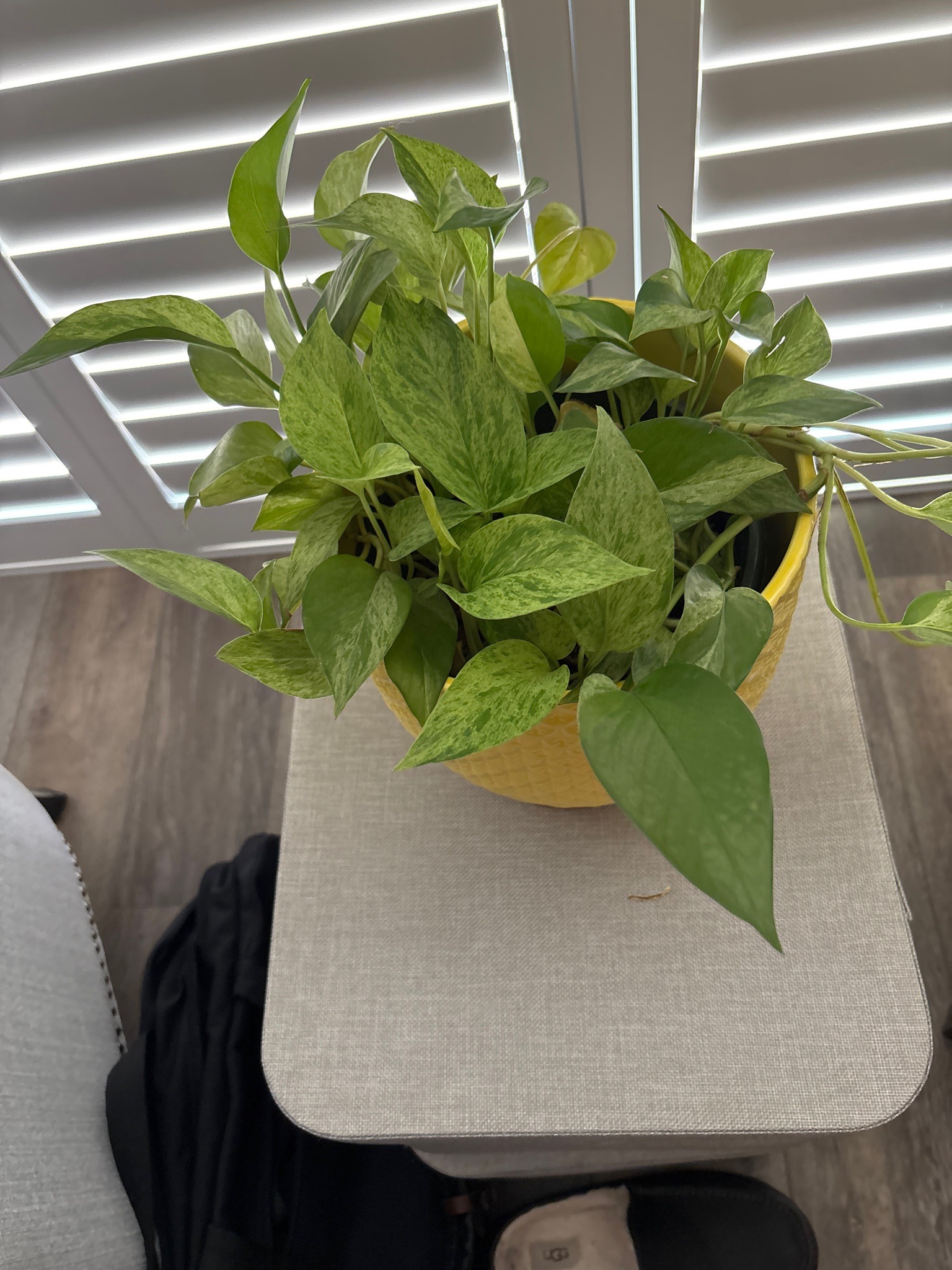
Marble Queen Pothos
Epipremnum aureum 'Marble Queen'
A popular trailing houseplant featuring heart-shaped leaves with distinct, highly variegated creamy-white and green patterns.
- Light
- Bright, indirect light for 6 to 8 hours per day; avoid direct sunlight which can scorch the variegated leaves.
- Water
- Water thoroughly every 1 to 2 weeks, ensuring the top two inches of soil are dry before the next watering. Drought tolerant to a degree, but sensitive to prolonged saturation.
- Growth
- Evergreen perennial vine with a trailing or climbing growth habit, reaching mature indoor lengths of 6 to 10 feet with a moderate growth rate.
Care instructions
Provide bright, indirect sunlight, allow the soil to dry out completely between waterings, use a well-draining potting mix, and feed with a balanced houseplant fertilizer monthly during the active growing season.
Growing details
Sunlight
Bright, indirect light for 6 to 8 hours per day; avoid direct sunlight which can scorch the variegated leaves.
Watering
Water thoroughly every 1 to 2 weeks, ensuring the top two inches of soil are dry before the next watering. Drought tolerant to a degree, but sensitive to prolonged saturation.
Soil
Well-draining, airy potting mix rich in organic matter, with an ideal pH range between 6.1 and 6.5.
Hardiness zone
USDA Hardiness Zones 10 through 12 when grown outdoors; primarily grown indoors in cooler regions.
Growth habit
Evergreen perennial vine with a trailing or climbing growth habit, reaching mature indoor lengths of 6 to 10 feet with a moderate growth rate.
Bloom season
Non-flowering when cultivated indoors as a houseplant.
Propagation
Propagated easily through stem cuttings placed in water or directly into moist potting soil during the spring or summer months.
Common pests & issues
Prone to root rot if overwatered. Common pests include mealybugs and spider mites, which can be managed with insecticidal soap or neem oil.
Similar species
Heartleaf Philodendron (Philodendron hederaceum), which can be distinguished by its thinner leaf texture and different stem node characteristics.