
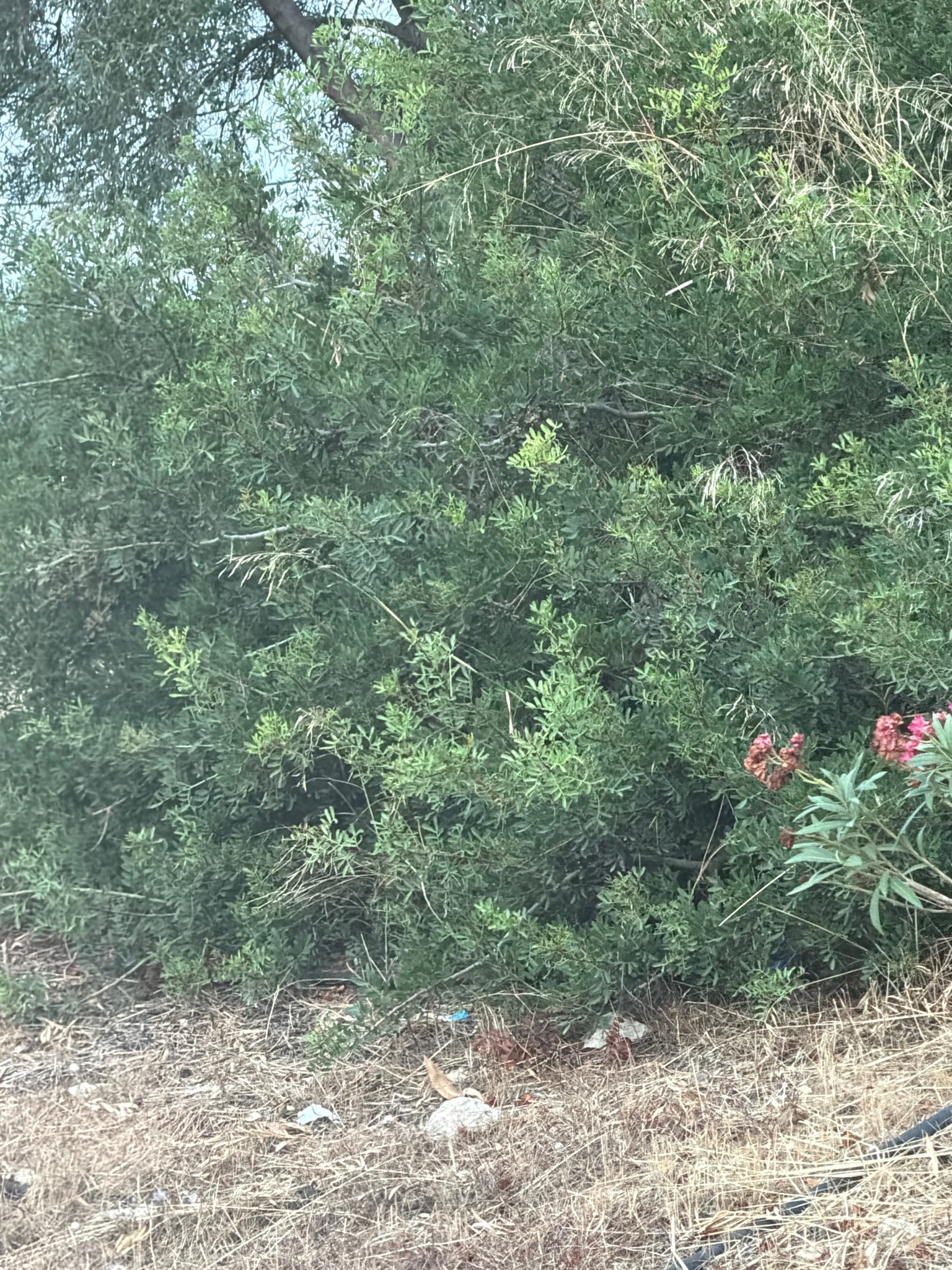
Mastic tree
Pistacia lentiscus
An evergreen shrub or small tree with dense, dark green foliage composed of pinnate leaves, often growing in a rounded, bushy form with multiple stems.
- Light
- Full sun, requiring at least six hours of direct sunlight per day.
- Water
- Low water needs once established. Allow the soil to dry out completely between waterings. Highly drought tolerant; sensitive to root rot in waterlogged soils.
- Growth
- Perennial evergreen shrub or small tree, growing with a dense and spreading form to a mature height and spread of 3 to 4 meters, with a slow to moderate growth rate.
Care instructions
Provide full sun and well-draining soil. Water deeply during the first growing season to establish roots, then reduce watering as it is exceptionally drought tolerant. Apply a balanced, low-nitrogen fertilizer sparingly in spring if growth is sluggish.
Growing details
Sunlight
Full sun, requiring at least six hours of direct sunlight per day.
Watering
Low water needs once established. Allow the soil to dry out completely between waterings. Highly drought tolerant; sensitive to root rot in waterlogged soils.
Soil
Prefers sandy, gravelly, or loamy well-draining soils with a neutral to alkaline pH range of 6.5 to 8.0.
Hardiness zone
USDA zones 9 through 11, tolerating mild frosts but sensitive to prolonged freezing temperatures.
Growth habit
Perennial evergreen shrub or small tree, growing with a dense and spreading form to a mature height and spread of 3 to 4 meters, with a slow to moderate growth rate.
Bloom season
Spring, producing small, inconspicuous greenish-red flowers in clusters without showy petals.
Propagation
Propagated primarily through semi-hardwood cuttings taken in summer or by seeds sown in well-draining medium in spring.
Common pests & issues
Generally resilient, but susceptible to root rot in poorly draining soils. Occasional infestations of scales or aphids can be managed with insecticidal soap.
Similar species
Pistacia atlantica and Pistacia terebinthus, which can be distinguished by larger leaf counts per leaflet and deciduous habits compared to the evergreen nature of Pistacia lentiscus.