
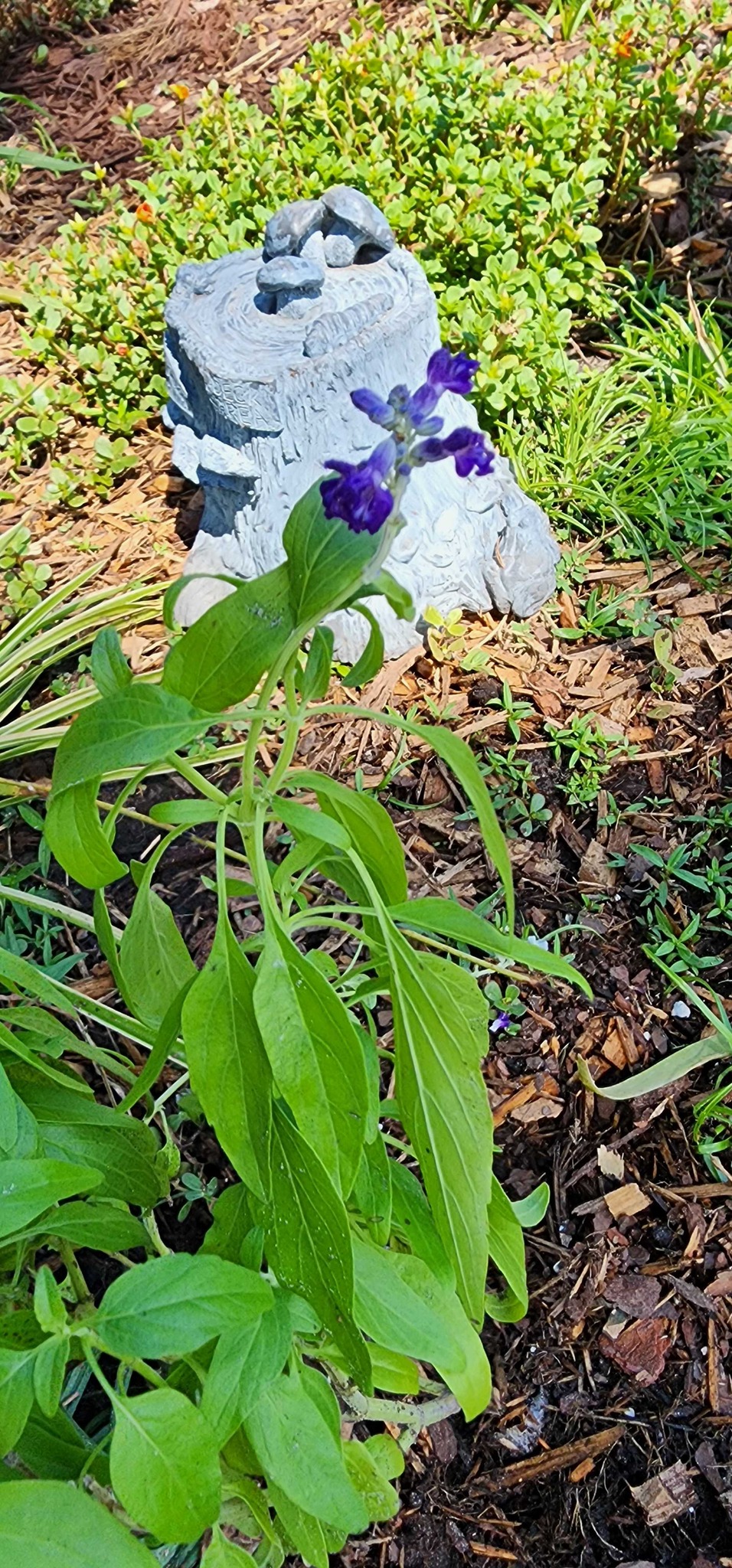
Mealycup Sage
Salvia farinacea
An upright perennial featuring square stems, opposite lance-shaped green leaves with serrated margins, and spikes of vibrant deep blue to purple flowers covered in a fine mealy pubescence.
- Light
- Full sun, requiring six to eight hours of direct sunlight per day.
- Water
- Moderate watering needs. Water deeply when the top two inches of soil are dry. Demonstrates good drought tolerance once established; avoid overwatering to prevent root rot.
- Growth
- Herbaceous perennial forming an upright, bushy clump. Reaches a mature height of 18 to 36 inches with a spread of 12 to 24 inches, exhibiting a moderate growth rate.
Care instructions
Provide full sun exposure for at least six hours daily. Water moderately, allowing the soil to dry slightly between watering sessions. Plant in well-draining soil and apply a balanced, slow-release fertilizer in early spring.
Growing details
Sunlight
Full sun, requiring six to eight hours of direct sunlight per day.
Watering
Moderate watering needs. Water deeply when the top two inches of soil are dry. Demonstrates good drought tolerance once established; avoid overwatering to prevent root rot.
Soil
Prefers loose, well-draining sandy loam or loamy soils with a neutral pH range between 6.0 and 7.5.
Hardiness zone
USDA hardiness zones 8 through 10, often grown as an annual in cooler climates.
Growth habit
Herbaceous perennial forming an upright, bushy clump. Reaches a mature height of 18 to 36 inches with a spread of 12 to 24 inches, exhibiting a moderate growth rate.
Bloom season
Blooms from late spring continuously through the first autumn frosts, producing tubular purple-blue flowers arranged in dense terminal spikes.
Propagation
Propagated easily from stem cuttings taken in spring or summer, or by sowing seeds indoors six to eight weeks before the final spring frost.
Common pests & issues
Susceptible to powdery mildew and root rot in poorly draining soils. Pests such as aphids and whiteflies may occasionally appear and can be managed with insecticidal soap.
Similar species
Salvia coccinea (Scarlet Sage), which features red flowers, and Salvia splendens (Tropical Sage), which has broader flower bracts and a more compact habit.