
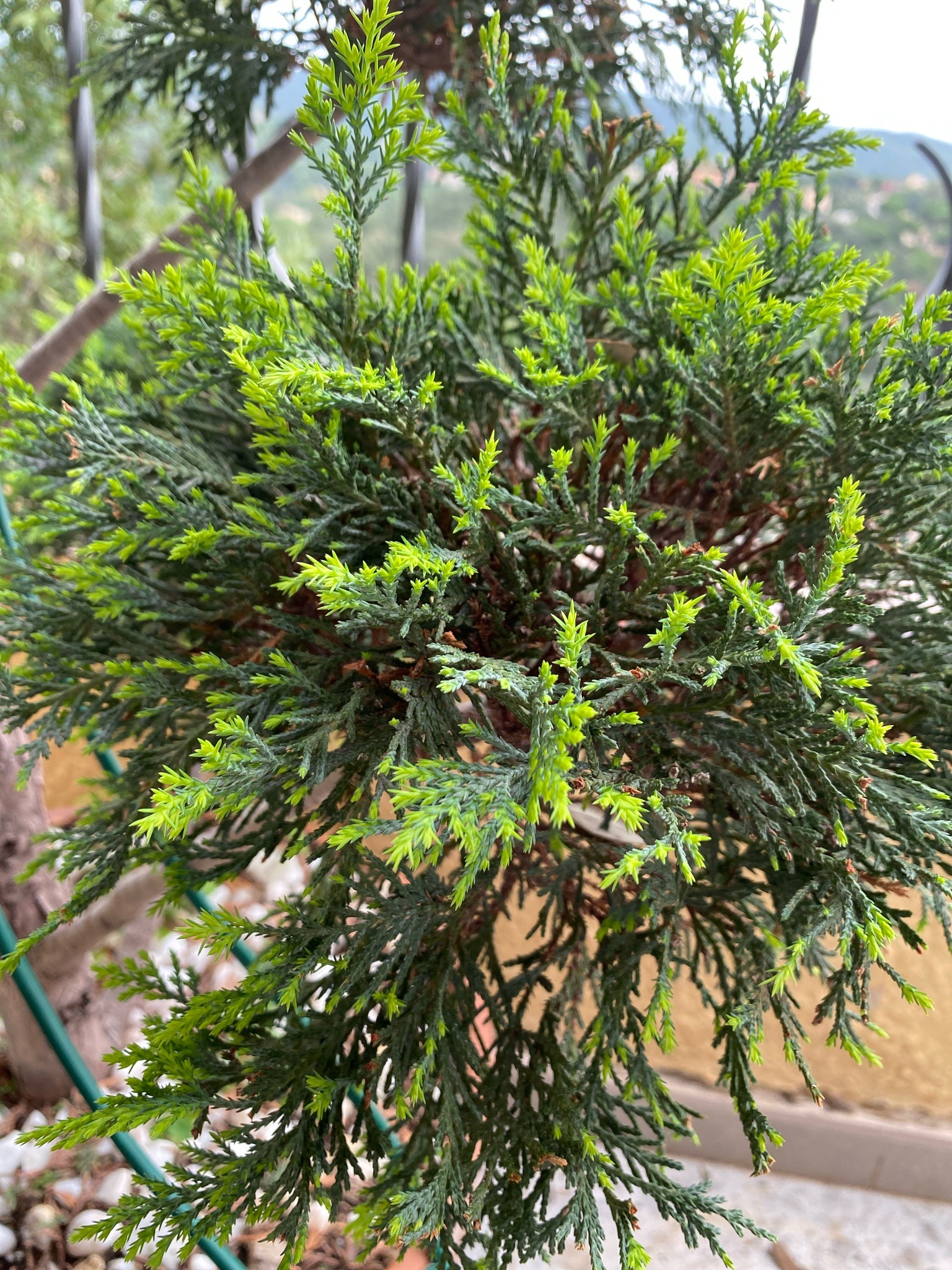
Mediterranean Cypress
Cupressus sempervirens
An evergreen conifer featuring dense, dark green scale-like leaves closely appressed to branchlets and bright green new tip growth, often forming a columnar or spreading habit.
- Light
- Full sun, requiring at least 6 to 8 hours of direct sunlight per day.
- Water
- Low to moderate watering needs once established; allow the top few inches of soil to dry out completely between waterings to prevent root rot.
- Growth
- Evergreen tree with a perennial lifecycle, typically exhibiting a dense, upright columnar or spreading conical form, reaching mature heights of 40 to 60 feet with a moderate growth rate.
Care instructions
Provide full sun with at least six hours of direct sunlight daily. Water deeply when newly planted, then allow soil to dry between waterings as it possesses strong drought tolerance once established. Grow in well-draining soil and apply a balanced, slow-release fertilizer in spring.
Growing details
Sunlight
Full sun, requiring at least 6 to 8 hours of direct sunlight per day.
Watering
Low to moderate watering needs once established; allow the top few inches of soil to dry out completely between waterings to prevent root rot.
Soil
Thrives in sandy, loamy, or chalky well-draining soils with a neutral to slightly alkaline pH range of 6.0 to 8.0.
Hardiness zone
USDA Hardiness Zones 7 through 10, showing good heat and drought tolerance.
Growth habit
Evergreen tree with a perennial lifecycle, typically exhibiting a dense, upright columnar or spreading conical form, reaching mature heights of 40 to 60 feet with a moderate growth rate.
Bloom season
Non-flowering
Propagation
Propagated primarily through semi-hardwood cuttings taken in late summer or autumn, or from seeds sown after a period of cold stratification.
Common pests & issues
Susceptible to root rot in poorly draining soils, and occasional issues with twig blight, spider mites, or aphids, which can be managed with proper watering and horticultural oils.
Similar species
Hinoki Cypress and Italian Cypress; can be distinguished by specific branching patterns, juvenile foliage shapes, and cone characteristics.