
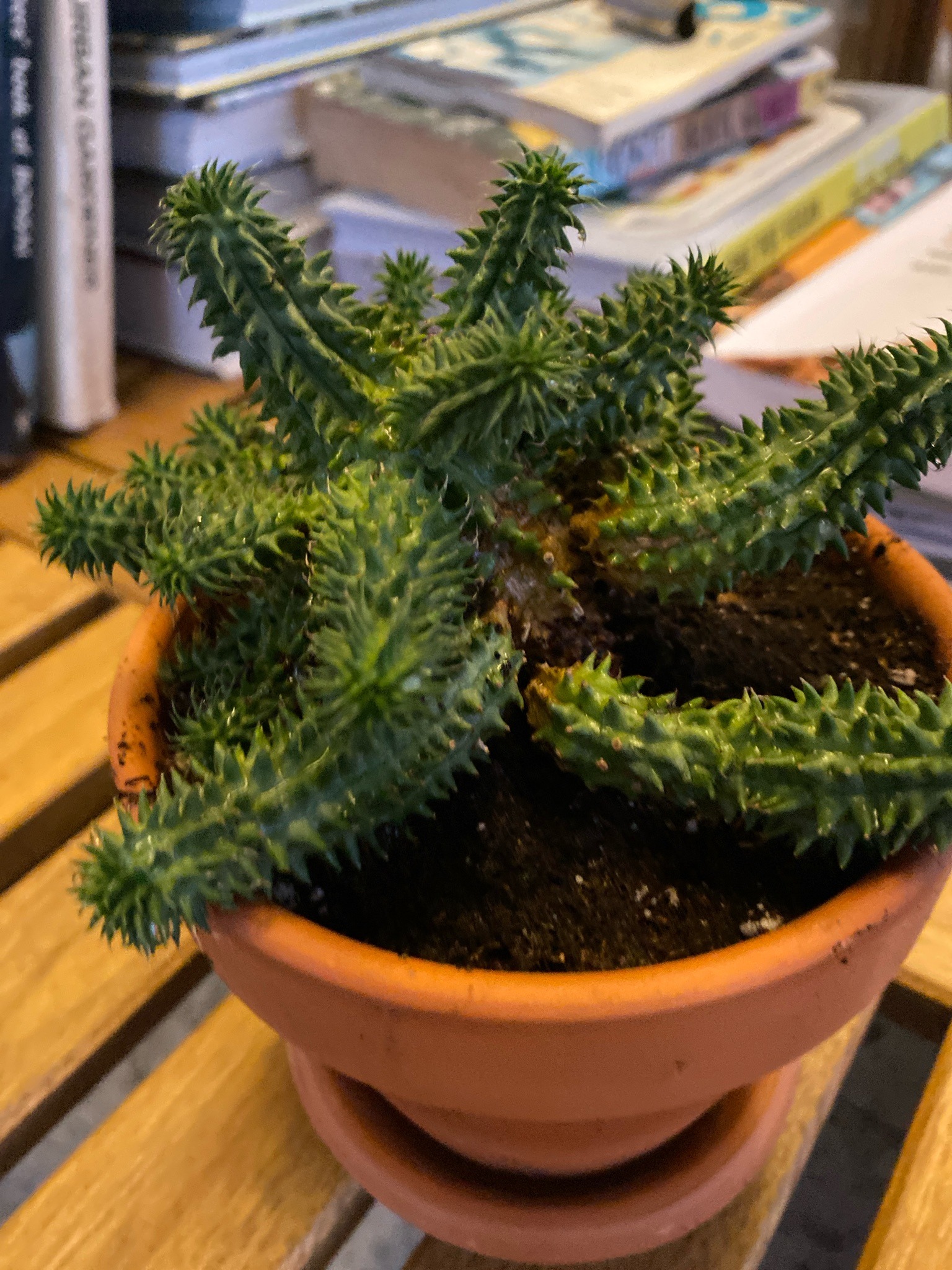
Medusa Euphorbia
Euphorbia caput-medusae
A low-growing succulent plant characterized by a central, thick caudex from which many long, snake-like, green cylindrical branches radiate outward, covered in small, tooth-like tubercles.
- Light
- Full sun to bright indirect light, requiring at least 6 hours of sunlight daily when grown indoors or outdoors.
- Water
- Water deeply but infrequently, allowing the soil to dry out completely between waterings. Reduce watering significantly during the winter dormancy period. Signs of overwatering include yellowing and mushy stems.
- Growth
- Perennial succulent forming a low, sprawling clump with a central tuberous stem and spreading branches that can reach 1 to 2 feet in spread and up to 10 inches in height.
Care instructions
Provide bright, direct light for several hours daily. Water thoroughly only when the soil is completely dry. Use a well-draining cactus and succulent potting mix. Fertilize lightly during the active growing season with a balanced, diluted liquid fertilizer.
Growing details
Sunlight
Full sun to bright indirect light, requiring at least 6 hours of sunlight daily when grown indoors or outdoors.
Watering
Water deeply but infrequently, allowing the soil to dry out completely between waterings. Reduce watering significantly during the winter dormancy period. Signs of overwatering include yellowing and mushy stems.
Soil
Fast-draining sandy or gravelly soil specifically formulated for cacti and succulents, with a neutral to slightly acidic pH range of 6.0 to 7.0.
Hardiness zone
USDA Hardiness Zones 9 to 11. It is sensitive to frost and freezing temperatures.
Growth habit
Perennial succulent forming a low, sprawling clump with a central tuberous stem and spreading branches that can reach 1 to 2 feet in spread and up to 10 inches in height.
Bloom season
Blooms in spring and summer, producing small, inconspicuous whitish-yellow cyathia (flowers) clustered near the tips of the branches.
Propagation
Propagated primarily through stem cuttings or by planting seeds. Allow cuttings to callus over for several days before placing them in dry, sandy soil.
Common pests & issues
Prone to root rot if overwatered or planted in poorly draining soil. Common pests include mealybugs and spider mites, which can be treated with insecticidal soap or rubbing alcohol.
Similar species
Often confused with Euphorbia flanaganii, which features flatter, more distinctly segmented terminal appendages, or Euphorbia gorgonis, which has a flatter, sunken central caudex.