
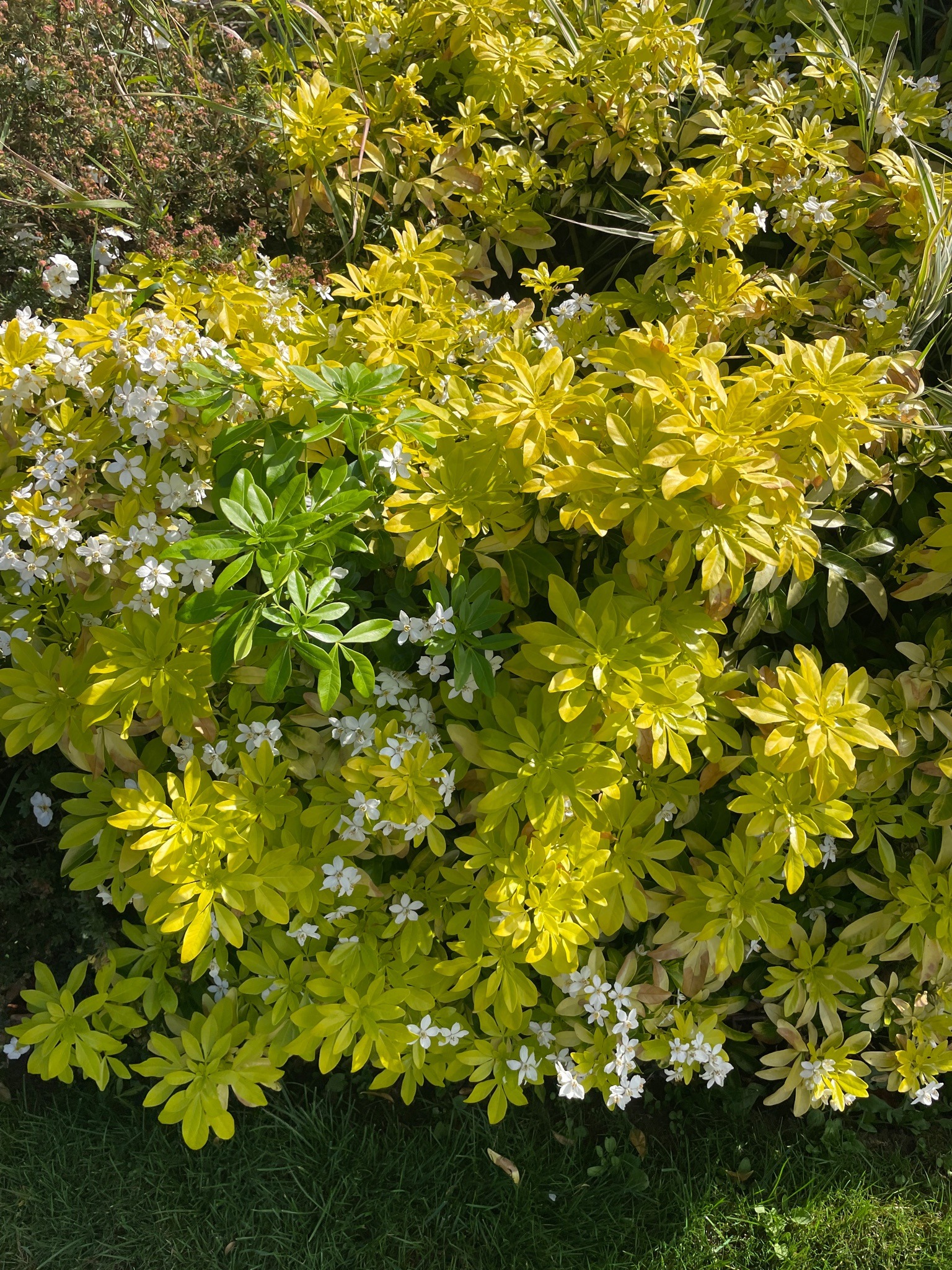
Mexican Orange Blossom
Choisya ternata 'Sundance'
An evergreen shrub characterized by glossy, aromatic, palmately compound leaves and vibrant golden-yellow foliage, particularly bright in sunny exposures. It produces clusters of star-shaped white flowers.
- Light
- Partial shade to full sun, approximately 4 to 6 hours of direct sunlight per day.
- Water
- Moderate watering requirements. Allow the top couple of inches of soil to dry out between waterings. Drought tolerant once fully established.
- Growth
- Perennial evergreen shrub with a rounded, bushy growth habit. Reaches a mature height and spread of 5 to 8 feet with a moderate growth rate.
Care instructions
Plant in partial shade to full sun with well-draining soil. Water regularly during establishment and periods of prolonged dryness. Apply a balanced, slow-release fertilizer in early spring.
Growing details
Sunlight
Partial shade to full sun, approximately 4 to 6 hours of direct sunlight per day.
Watering
Moderate watering requirements. Allow the top couple of inches of soil to dry out between waterings. Drought tolerant once fully established.
Soil
Prefers rich, loamy, well-draining soil with a neutral to slightly acidic pH range of 6.0 to 7.0.
Hardiness zone
USDA Hardiness Zones 8 to 10.
Growth habit
Perennial evergreen shrub with a rounded, bushy growth habit. Reaches a mature height and spread of 5 to 8 feet with a moderate growth rate.
Bloom season
Blooms in mid-spring, with potential for a lighter rebloom in late summer or autumn. Flowers are small, white, star-shaped, and sweetly scented.
Propagation
Propagated primarily through semi-hardwood cuttings taken in late summer, treated with rooting hormone, and placed in a warm, humid propagation environment.
Common pests & issues
Generally resilient, but vulnerable to root rot in poorly draining soils. Can occasionally be affected by scale insects and aphids.
Similar species
Choisya 'Aztec Pearl', which features much narrower, finger-like leaflets compared to the broader leaflets of Choisya ternata.