
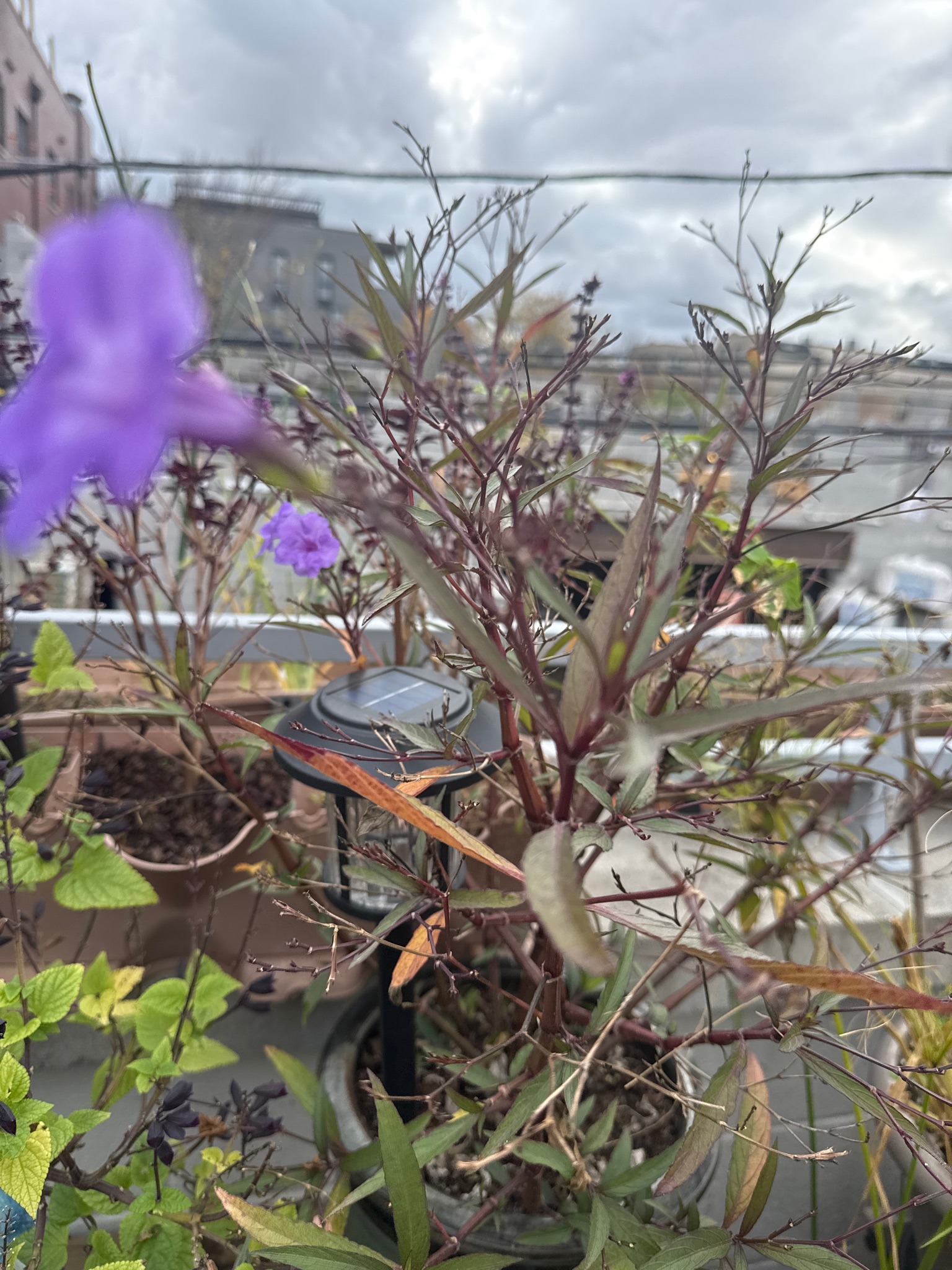
Mexican Petunia
Ruellia simplex
An upright, bushy perennial featuring narrow, lance-shaped dark green to bronze leaves on purplish stems, topped with trumpet-shaped vibrant purple flowers.
- Light
- Full sun to partial shade, requiring at least 6 hours of direct sunlight daily for optimal flowering.
- Water
- Requires regular watering to keep the soil consistently moist, though it can tolerate occasional short dry periods once established.
- Growth
- An herbaceous perennial with an upright, clumping growth habit, reaching mature heights of 1 to 3 feet with a similar spread, growing at a moderate to fast rate.
Care instructions
Provide full sun to partial shade, maintain consistently moist soil, and apply a balanced liquid fertilizer monthly during the active growing season.
Growing details
Sunlight
Full sun to partial shade, requiring at least 6 hours of direct sunlight daily for optimal flowering.
Watering
Requires regular watering to keep the soil consistently moist, though it can tolerate occasional short dry periods once established.
Soil
Adaptable to various soil types including clay, loam, and sand, provided they have decent drainage and a neutral pH between 6.0 and 7.5.
Hardiness zone
USDA Hardiness Zones 8 through 11, acting as an annual in cooler climates.
Growth habit
An herbaceous perennial with an upright, clumping growth habit, reaching mature heights of 1 to 3 feet with a similar spread, growing at a moderate to fast rate.
Bloom season
Blooms continuously from late spring through the first frost, producing trumpet-shaped violet-blue or purple flowers that last for a single day.
Propagation
Easily propagated through stem cuttings rooted in water or soil, division of established clumps in spring, or by gathering and sowing seeds.
Common pests & issues
Generally resilient, though it can occasionally be affected by spider mites or fungal leaf spots under overly humid or poorly ventilated conditions.
Similar species
Ruellia brittoniana, which is often considered a synonym or closely related dwarf variety, distinguished primarily by slightly different leaf widths and growth densities.