
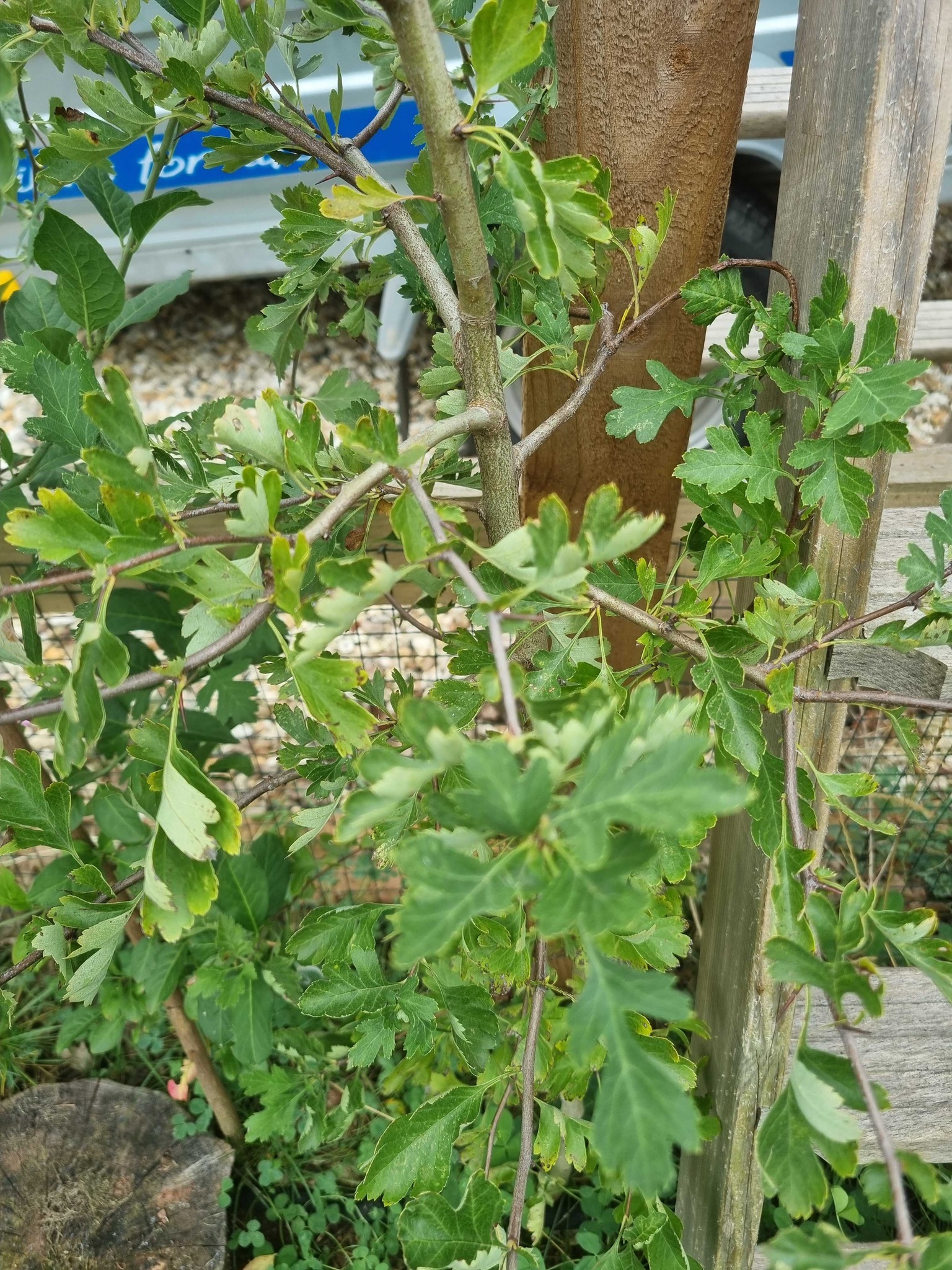
Midland Hawthorn
Crataegus laevigata
A deciduous shrub or small tree featuring distinctive lobed, glossy green leaves, zigzagging branchlets, and sharp thorns along the stems.
- Light
- Full sun to partial shade, typically requiring at least 4 to 6 hours of direct sunlight daily
- Water
- Moderate watering when young; mature specimens develop good drought tolerance. Water deeply when the top few inches of soil feel dry, avoiding waterlogged conditions.
- Growth
- Deciduous shrub or small tree with a dense, spreading canopy, reaching heights of 5 to 8 meters with a similar spread and a moderate growth rate
Care instructions
Provide full sun to partial shade with well-draining soil. Water regularly when newly established to encourage a strong root system, and apply a balanced fertilizer in early spring.
Growing details
Sunlight
Full sun to partial shade, typically requiring at least 4 to 6 hours of direct sunlight daily
Watering
Moderate watering when young; mature specimens develop good drought tolerance. Water deeply when the top few inches of soil feel dry, avoiding waterlogged conditions.
Soil
Adaptable to most well-drained soils including clay, loam, or sand, with a neutral to slightly alkaline pH preference
Hardiness zone
USDA Hardiness Zones 5 through 8
Growth habit
Deciduous shrub or small tree with a dense, spreading canopy, reaching heights of 5 to 8 meters with a similar spread and a moderate growth rate
Bloom season
Spring, producing clusters of small, white or pinkish saucer-shaped flowers
Propagation
Propagated typically through hardwood cuttings or by sowing stratified seeds in autumn
Common pests & issues
Susceptible to occasional fungal blights and aphid infestations; ensure proper air circulation and avoid overhead watering to prevent fungal issues
Similar species
Common Hawthorn (Crataegus monogyna), which can be distinguished by its deeply divided leaf lobes and single-seeded fruits compared to the shallower lobes and multiple seeds of Crataegus laevigata