
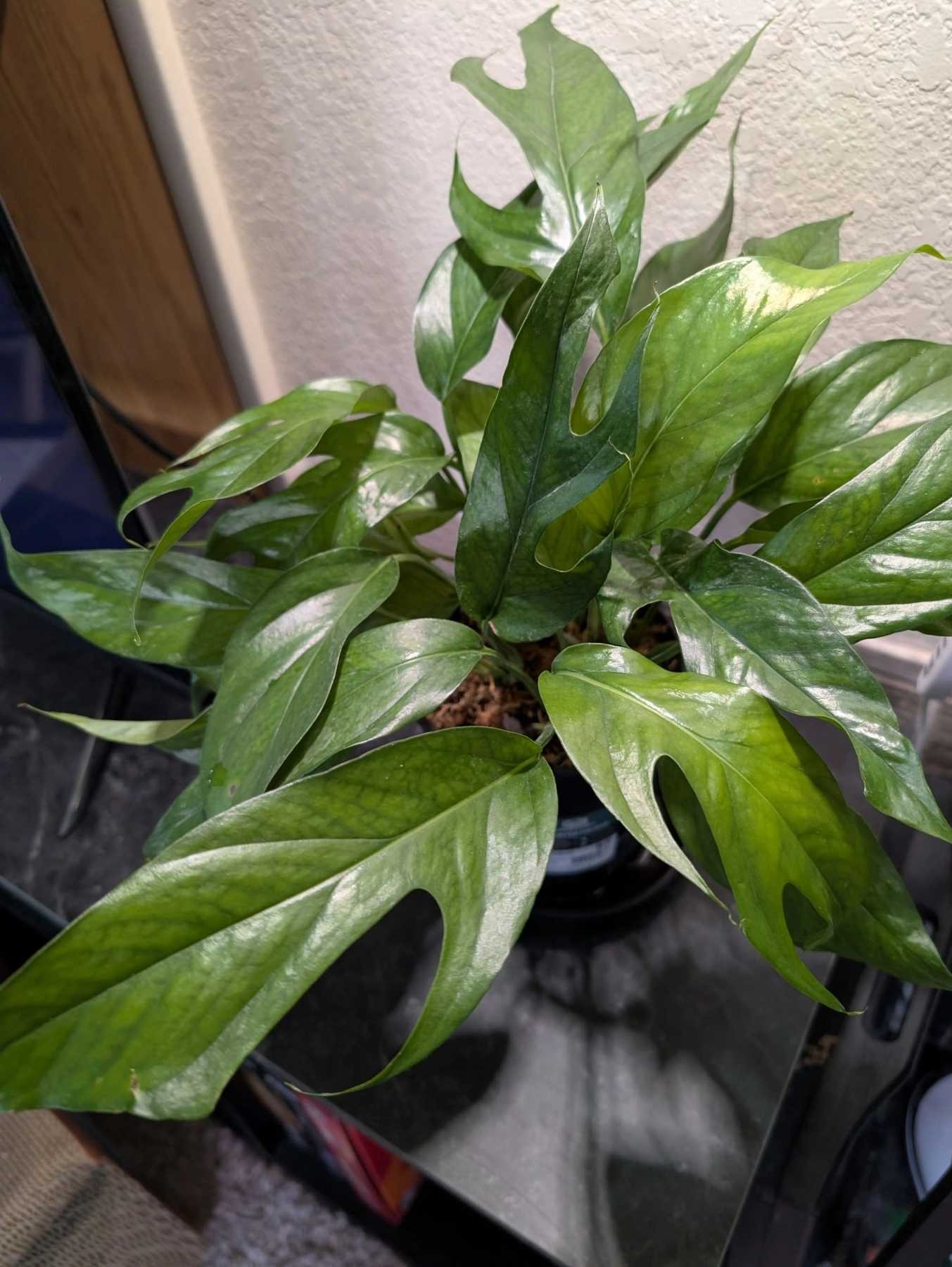
Mini Monstera, Dragon Tail Plant
Rhaphidophora tetrasperma
A climbing epiphyte featuring vibrant green, glossy leaves that develop distinctive pinnate splits and fenestrations as the plant matures. It has a vine-like growth habit with aerial roots.
- Light
- Bright, indirect light for 6 to 8 hours daily; avoid harsh, direct sunlight which can scorch the leaves.
- Water
- Water deeply when the topsoil becomes dry to the touch. Reduce watering frequency during the winter months. Avoid letting the pot sit in standing water to prevent root rot.
- Growth
- Perennial evergreen vine with an aggressive climbing growth habit, reaching mature indoor heights of 4 to 6 feet or significantly longer outdoors.
Care instructions
Provide bright, indirect sunlight for optimal fenestration. Water thoroughly when the top two to three inches of soil dry out. Use a chunky, well-draining soil mix rich in organic matter, and support the stems with a moss pole or trellis to encourage upward climbing.
Growing details
Sunlight
Bright, indirect light for 6 to 8 hours daily; avoid harsh, direct sunlight which can scorch the leaves.
Watering
Water deeply when the topsoil becomes dry to the touch. Reduce watering frequency during the winter months. Avoid letting the pot sit in standing water to prevent root rot.
Soil
Well-draining, aerated soil mix combining peat, perlite, and orchid bark, with an ideal pH range between 5.5 and 6.5.
Hardiness zone
USDA zones 10 to 11, typically grown indoors in cooler temperate regions as it is sensitive to frost.
Growth habit
Perennial evergreen vine with an aggressive climbing growth habit, reaching mature indoor heights of 4 to 6 feet or significantly longer outdoors.
Bloom season
Rarely blooms indoors; when mature in tropical habitats, it produces a spadix enclosed by a spathe, typically greenish-white.
Propagation
Easily propagated through stem cuttings taken just below a node, rooted either in water or directly in a moist, lightweight propagation medium.
Common pests & issues
Susceptible to common sap-sucking pests such as mealybugs, spider mites, and scale. Overwatering can lead to fungal root rot, manifested by yellowing lower leaves.
Similar species
Monstera deliciosa, which features much larger leaves with double fenestrations, and Epipremnum pinnatum, which has darker, more elongated foliage with splits occurring later in maturity.