
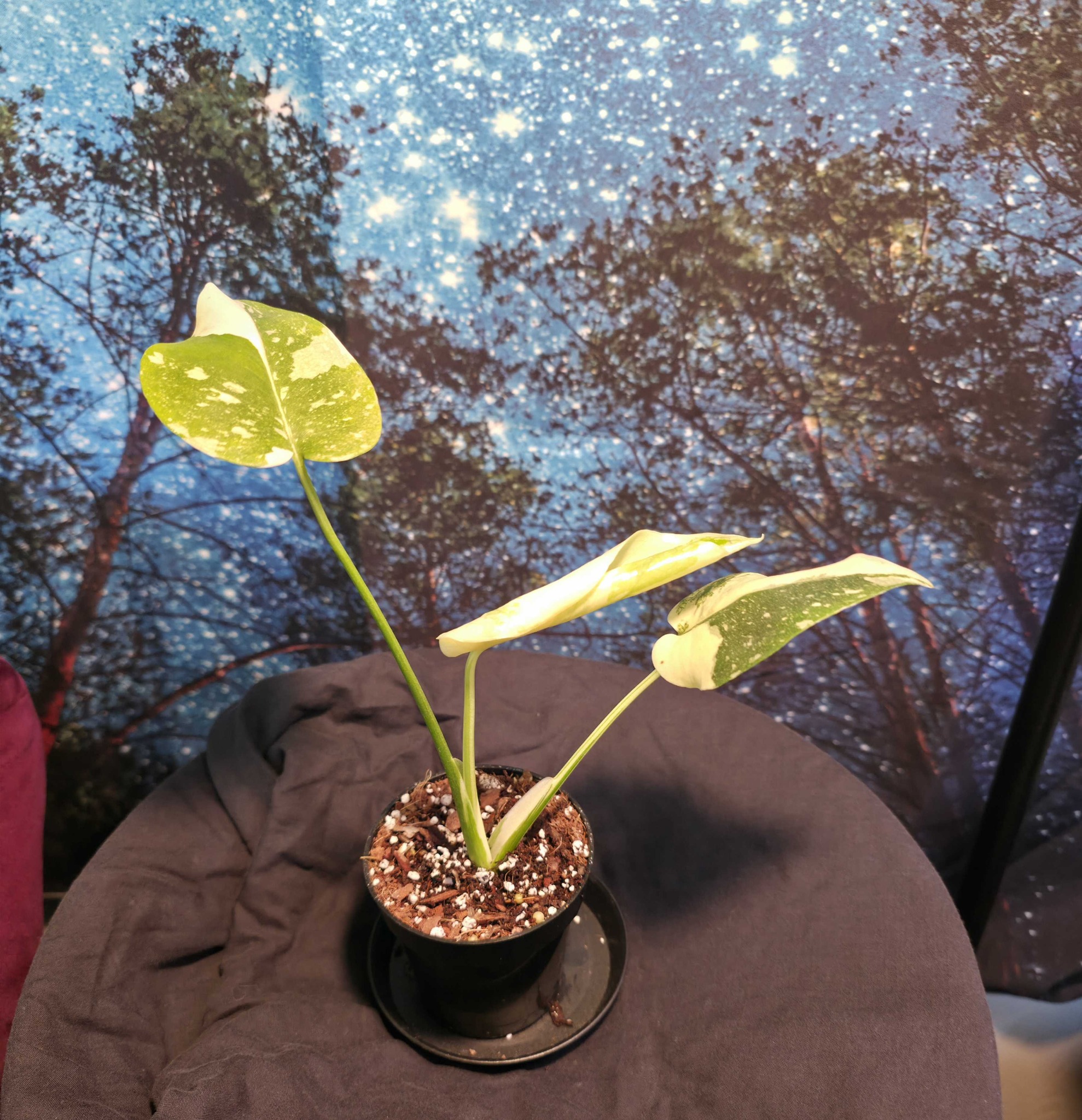
Monstera Albo Variegata
Monstera deliciosa 'Albo Variegata'
An evergreen climbing epiphyte featuring large, glossy leaves with striking white or cream-colored sectoral and speckled variegation, along with prominent green stems.
- Light
- Bright, indirect light for 6 to 8 hours daily. Avoid direct harsh sunlight which can scorch the white portions of the leaves.
- Water
- Water deeply every 1 to 2 weeks, allowing excess water to drain completely. Reduce watering frequency during cooler winter months.
- Growth
- Climbing perennial epiphyte that produces aerial roots. Mature plants can reach heights of 10 to 15 feet indoors when supported by a moss pole, with a moderate growth rate.
Care instructions
Provide bright, indirect light to maintain variegation. Water thoroughly when the top two to three inches of soil dry out. Use a chunky, well-aerated potting mix and apply a balanced liquid fertilizer monthly during the active growing season.
Growing details
Sunlight
Bright, indirect light for 6 to 8 hours daily. Avoid direct harsh sunlight which can scorch the white portions of the leaves.
Watering
Water deeply every 1 to 2 weeks, allowing excess water to drain completely. Reduce watering frequency during cooler winter months.
Soil
Well-draining, chunky soil mix containing peat, perlite, orchid bark, and charcoal, with a slightly acidic to neutral pH range of 5.5 to 7.0.
Hardiness zone
USDA zones 10 through 12. Grown primarily as an indoor plant in cooler climates, as it cannot tolerate freezing temperatures.
Growth habit
Climbing perennial epiphyte that produces aerial roots. Mature plants can reach heights of 10 to 15 feet indoors when supported by a moss pole, with a moderate growth rate.
Bloom season
Rarely blooms when grown indoors; produces a specialized inflorescence consisting of a cream-colored spadix surrounded by a spathe when mature in tropical conditions.
Propagation
Propagated primarily through stem cuttings taken just below a node, ensuring at least one aerial root or node is present, rooted in water, sphagnum moss, or soil.
Common pests & issues
Susceptible to root rot if overwatered or kept in dense soil. Common pests include mealybugs, thrips, and spider mites, which can be managed with insecticidal soap or neem oil.
Similar species
Monstera Thai Constellation, which features speckled cream variegation that is genetically stable, whereas Albo Variegata features unstable sectoral variegation.