
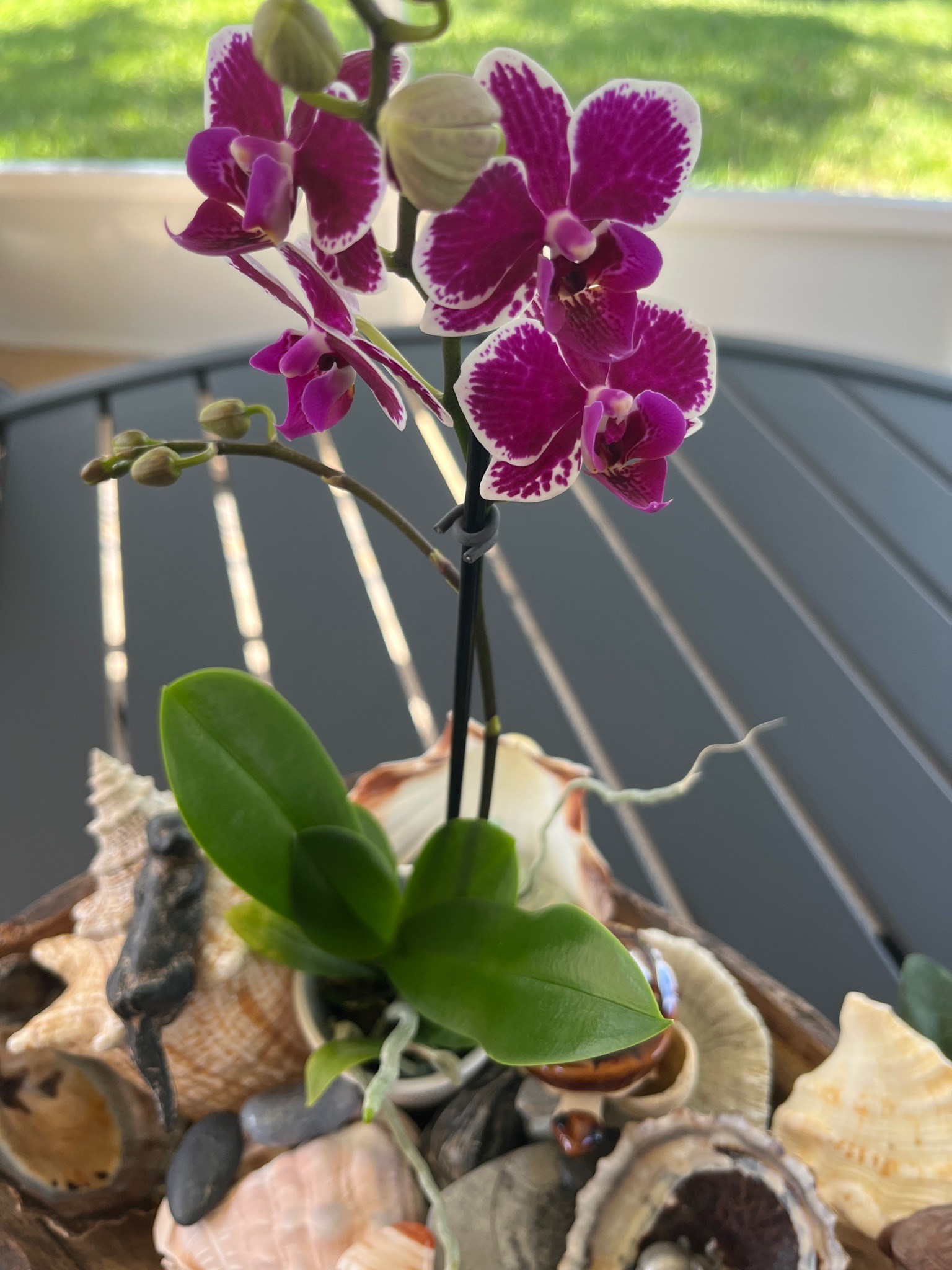
Moth Orchid
Phalaenopsis
An epiphyte featuring thick, fleshy green leaves arranged in a monopodial rosette and tall, arching flower spikes bearing long-lasting, symmetrical blooms with distinctive borders.
- Light
- Bright, indirect sunlight for 6 to 8 hours daily, avoiding direct harsh rays that can burn the leaves.
- Water
- Water thoroughly once the potting medium dries out, typically every 7 to 10 days, allowing excess water to drain completely.
- Growth
- Perennial epiphyte with a monopodial growth form, typically reaching heights of 1 to 3 feet including the floral spike.
Care instructions
Provide bright, indirect sunlight, water thoroughly when the potting medium dries out completely, and maintain high humidity with good air circulation.
Growing details
Sunlight
Bright, indirect sunlight for 6 to 8 hours daily, avoiding direct harsh rays that can burn the leaves.
Watering
Water thoroughly once the potting medium dries out, typically every 7 to 10 days, allowing excess water to drain completely.
Soil
Coarse, well-aerated orchid bark mix with excellent drainage and a neutral to slightly acidic pH range of 5.5 to 6.5.
Hardiness zone
USDA zones 10 through 12; grown indoors in cooler temperate regions.
Growth habit
Perennial epiphyte with a monopodial growth form, typically reaching heights of 1 to 3 feet including the floral spike.
Bloom season
Blooms primarily in winter and spring, producing long-lasting flowers in shades of pink, purple, white, and yellow.
Propagation
Propagated primarily through the development of plantlets, known as keikis, which grow on the flower spikes and can be separated once roots form.
Common pests & issues
Susceptible to root rot from overwatering, as well as mealybugs and scale insects; prevent by ensuring proper airflow and letting the medium dry.
Similar species
Vanda and Cattleya orchids, which can be distinguished by different growth habits, leaf shapes, and root structures.