
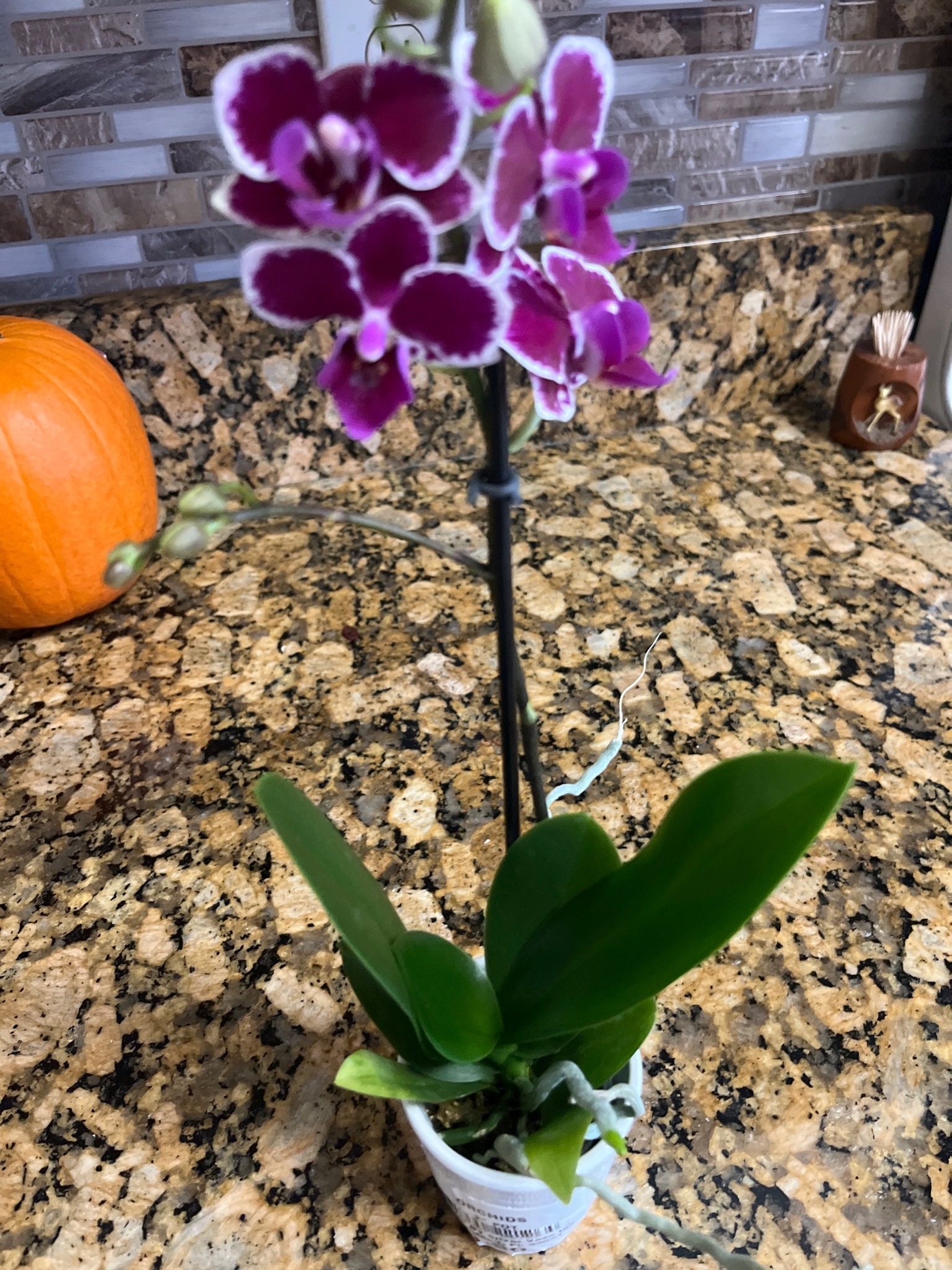
Moth Orchid
Phalaenopsis
An epiphyte with thick, fleshy green leaves arranged in a basal rosette, producing a tall arching spike of showy flowers with distinctive rounded petals and a contrasting lip.
- Light
- Bright indirect light, about 6 to 8 hours daily, avoiding direct sun which can scorch the leaves.
- Water
- Water thoroughly every 7 to 10 days, allowing excess to drain completely. Do not let the roots sit in standing water. Silver-gray roots indicate a need for moisture, while plump green roots indicate adequate hydration.
- Growth
- Monopodial epiphyte growing upward from a single central stem with a slow growth rate, typically reaching 1 to 3 feet in height with a similar spread.
Care instructions
Provide bright indirect light, water thoroughly only when the potting medium becomes dry, plant in coarse bark for maximum aeration, and apply a balanced orchid fertilizer weakly during the active growing season.
Growing details
Sunlight
Bright indirect light, about 6 to 8 hours daily, avoiding direct sun which can scorch the leaves.
Watering
Water thoroughly every 7 to 10 days, allowing excess to drain completely. Do not let the roots sit in standing water. Silver-gray roots indicate a need for moisture, while plump green roots indicate adequate hydration.
Soil
Coarse, highly porous orchid mix composed primarily of fir bark, perlite, and sphagnum moss with a slightly acidic pH between 5.5 and 6.5.
Hardiness zone
USDA Hardiness Zones 10 through 12; grown as an indoor houseplant in cooler climates.
Growth habit
Monopodial epiphyte growing upward from a single central stem with a slow growth rate, typically reaching 1 to 3 feet in height with a similar spread.
Bloom season
Typically blooms in late winter to spring, producing long-lasting flowers in shades of purple, pink, white, yellow, or striped patterns.
Propagation
Propagated commercially through tissue culture or by separating keikis (plantlets) that occasionally form along the flowering stem after they develop a robust root system.
Common pests & issues
Prone to root rot from overwatering or poorly draining medium. Pests such as mealybugs and scale can occasionally affect leaves and flower spikes, treatable with horticultural oils or insecticidal soaps.
Similar species
Vanda and Cattleya orchids, distinguished from Phalaenopsis by their different growth habits, differing root structures, and distinct floral morphology.