
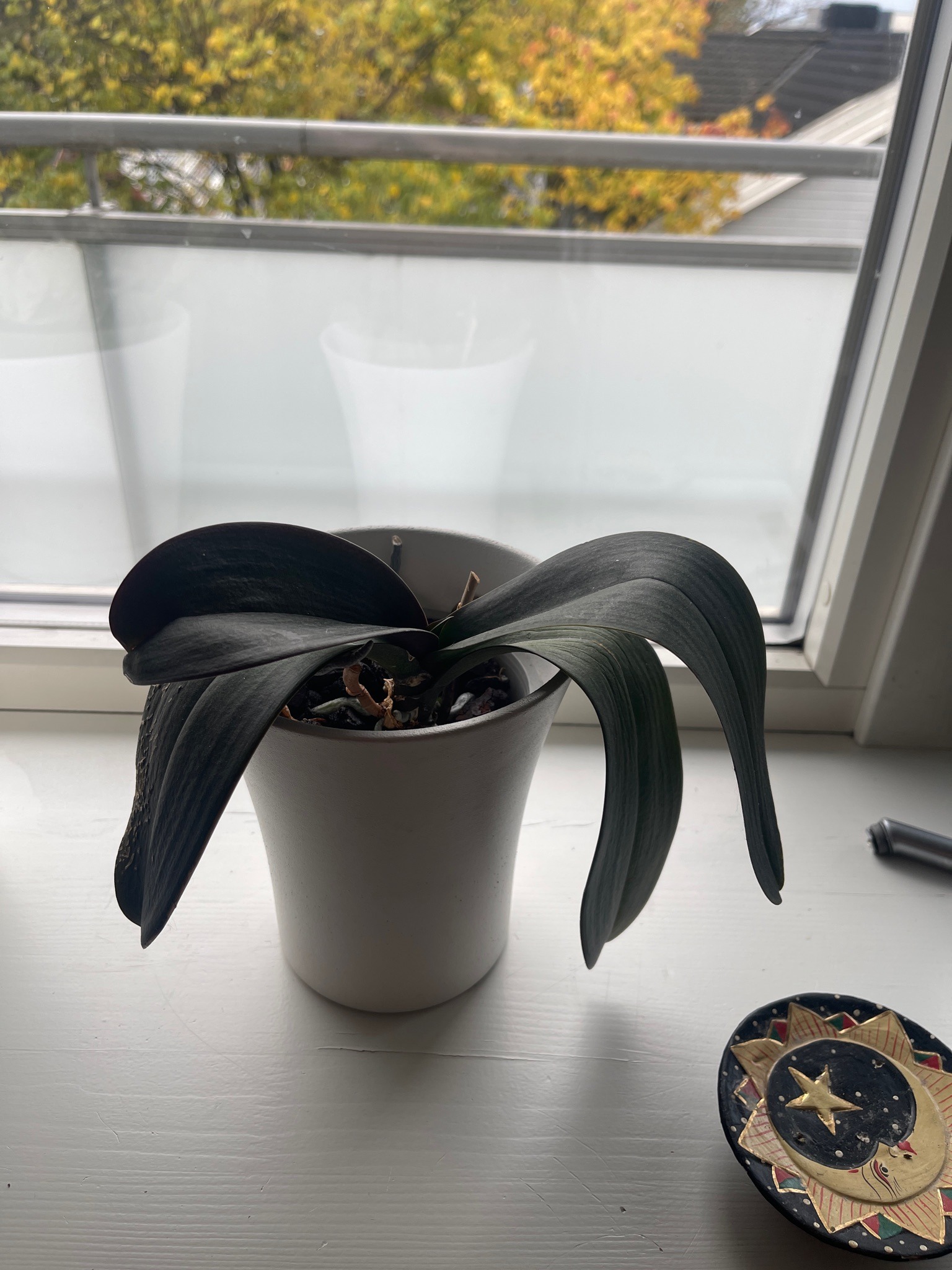
Moth Orchid
Phalaenopsis spp.
An epiphyte with thick, leathery, dark green leaves arranged in a monopodial growth habit. It features silvery-grey aerial roots that absorb moisture from the air.
- Light
- Bright, indirect light for 6 to 8 hours per day, avoiding direct sun which can scorch the leaves.
- Water
- Water every 7 to 10 days by soaking the medium and allowing it to drain completely. Roots should turn silvery when dry and bright green when moist.
- Growth
- Perennial epiphyte with a slow to moderate growth rate, reaching a mature height of 12 to 36 inches and a spread of 12 to 24 inches.
Care instructions
Provide bright, indirect light and water thoroughly only when the potting medium becomes dry. Ensure high humidity and use a specialized orchid bark mix for optimal drainage. Fertilize monthly during the active growing season with a diluted orchid fertilizer.
Growing details
Sunlight
Bright, indirect light for 6 to 8 hours per day, avoiding direct sun which can scorch the leaves.
Watering
Water every 7 to 10 days by soaking the medium and allowing it to drain completely. Roots should turn silvery when dry and bright green when moist.
Soil
Coarse, well-aerated orchid bark mix or sphagnum moss with a neutral to slightly acidic pH range of 5.5 to 6.5.
Hardiness zone
USDA hardiness zones 10 to 12, typically grown indoors in most temperate regions.
Growth habit
Perennial epiphyte with a slow to moderate growth rate, reaching a mature height of 12 to 36 inches and a spread of 12 to 24 inches.
Bloom season
Blooms primarily in late winter to spring, producing long arching spikes of large, flat, moth-like flowers in various colors.
Propagation
Propagated through the production of plantlets known as keikis, which grow on the flower spikes and can be separated once they develop a robust root system.
Common pests & issues
Susceptible to root rot from overwatering and fungal leaf spots caused by poor air circulation. Scale insects and mealybugs can also occasionally affect the foliage.
Similar species
Vanda orchids have narrower leaves and long trailing roots, while Cattleya orchids possess pseudobulbs, distinguishing them from the monopodial Phalaenopsis.