
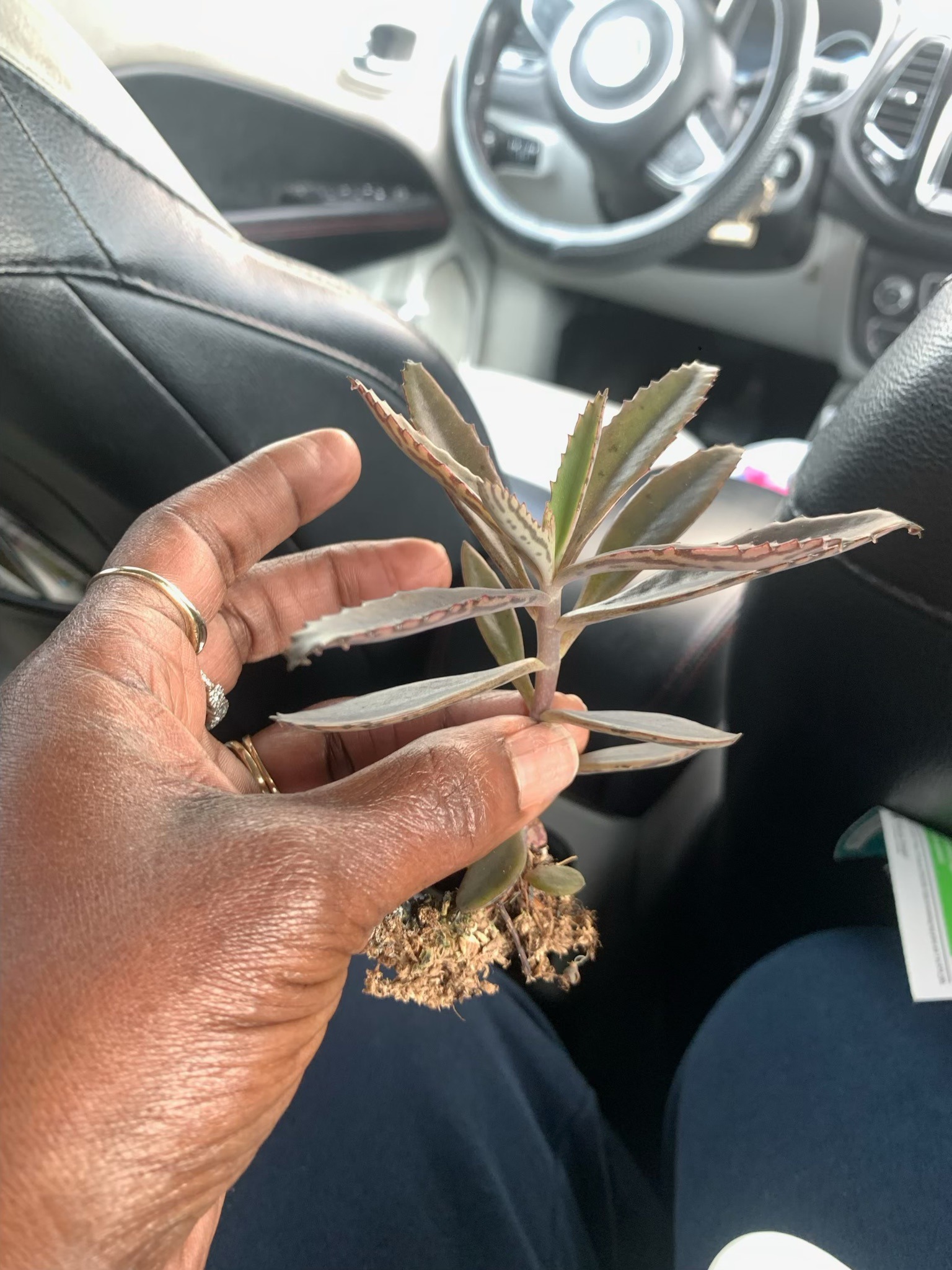
Mother of Thousands
Kalanchoe daigremontiana
A succulent perennial featuring upright fleshy gray-green leaves with distinctive purplish spots on the underside and prominent tiny plantlets growing along the serrated leaf margins.
- Light
- Full sun to bright indirect light, requiring about 6 hours of sunlight daily when grown indoors or outdoors.
- Water
- Water deeply only when the potting mix is completely dry. Drought tolerant. Avoid overwatering to prevent root rot.
- Growth
- Upright, unbranched succulent stem growing up to 3 feet tall with a moderate growth rate.
Care instructions
Provide bright indirect to direct sunlight, allow the soil to dry out completely between thorough waterings, use fast-draining succulent or cactus soil, and fertilize sparingly during the active spring and summer growing season.
Growing details
Sunlight
Full sun to bright indirect light, requiring about 6 hours of sunlight daily when grown indoors or outdoors.
Watering
Water deeply only when the potting mix is completely dry. Drought tolerant. Avoid overwatering to prevent root rot.
Soil
Fast-draining sandy or cactus potting mix with a neutral to slightly acidic pH range of 6.0 to 7.0.
Hardiness zone
USDA Hardiness Zones 10 through 12. Grown as an indoor houseplant in cooler climates.
Growth habit
Upright, unbranched succulent stem growing up to 3 feet tall with a moderate growth rate.
Bloom season
Rarely blooms indoors; produces umbrella-like clusters of pinkish-gray bell-shaped flowers during the winter months under ideal daylight conditions.
Propagation
Easily propagates by collecting and planting the natural plantlets that form along the leaf margins, or through stem cuttings.
Common pests & issues
Susceptible to mealybugs and scale insects. Prone to fungal root rot if exposed to excessive moisture and poorly draining soil.
Similar species
Kalanchoe delagoensis (Mother of Millions), which features narrower, tubular leaves rather than broad flat leaves.