
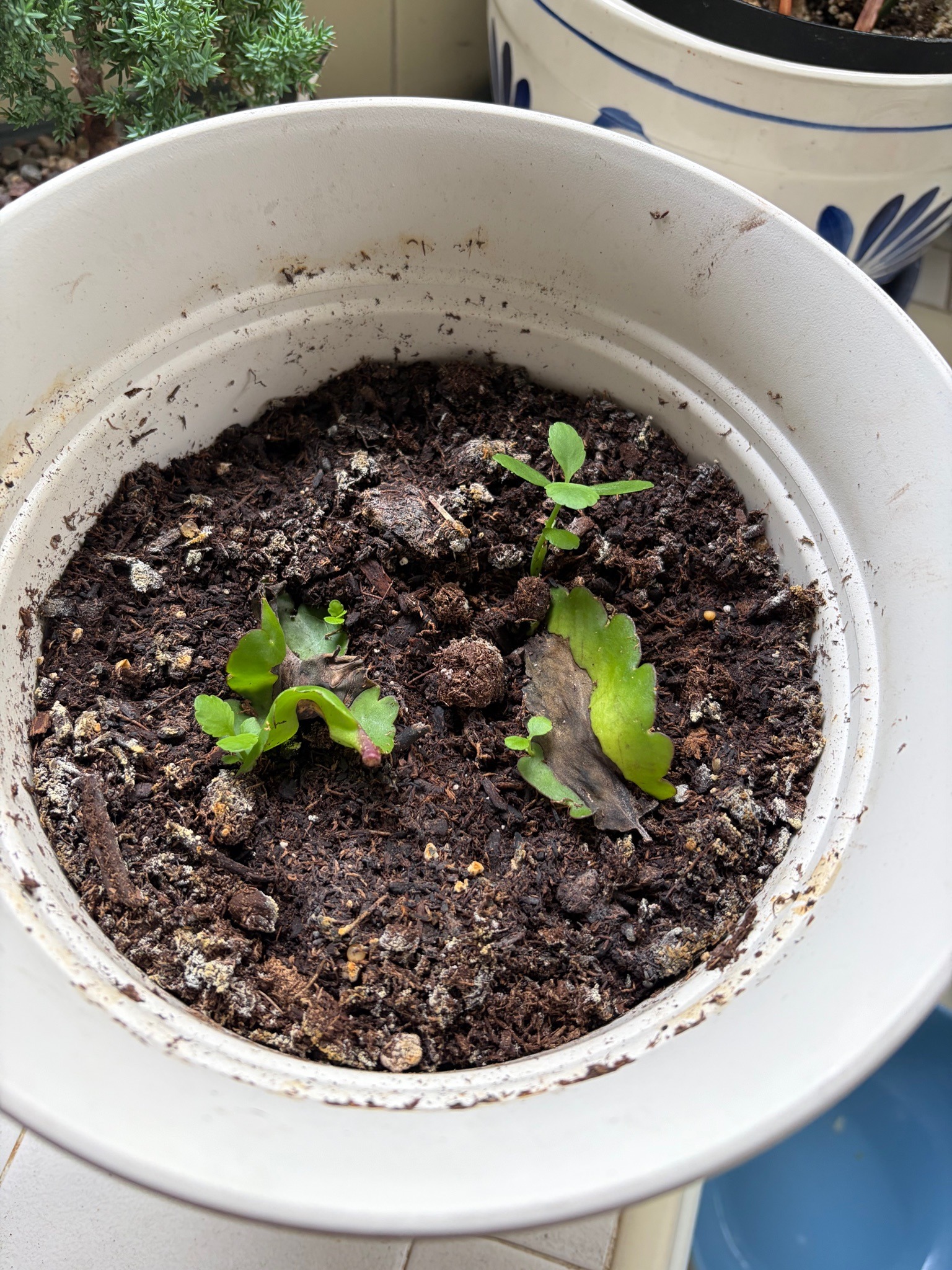
Mother of Thousands
Kalanchoe daigremontiana
A succulent perennial featuring upright, unbranched stems and fleshy, oblong-lanceolate leaves with distinctive serrated margins that produce numerous tiny plantlets.
- Light
- Full sun to bright indirect light, around 6 to 8 hours daily.
- Water
- Water deeply but infrequently, allowing the potting medium to dry out thoroughly between waterings to prevent root rot.
- Growth
- Upright succulent perennial reaching mature heights of 1 to 3 feet with a slow to moderate growth rate.
Care instructions
Provide bright indirect to direct sunlight for several hours a day. Allow the soil to dry out completely between waterings. Use a well-draining succulent potting mix and fertilize sparingly during the active growing season with a balanced liquid fertilizer diluted to half strength.
Growing details
Sunlight
Full sun to bright indirect light, around 6 to 8 hours daily.
Watering
Water deeply but infrequently, allowing the potting medium to dry out thoroughly between waterings to prevent root rot.
Soil
Fast-draining sandy or cactus potting mix with a neutral to slightly acidic pH range of 6.0 to 7.0.
Hardiness zone
USDA zones 10 to 12; typically grown indoors in cooler temperate regions.
Growth habit
Upright succulent perennial reaching mature heights of 1 to 3 feet with a slow to moderate growth rate.
Bloom season
Winter to early spring; produces clusters of tubular, bell-shaped pinkish-gray or purplish flowers on tall terminal stalks.
Propagation
Readily propagates through the natural plantlets that form along the leaf margins, which can be detached and placed on top of moist soil.
Common pests & issues
Prone to root rot if overwatered. May occasionally attract mealybugs or aphids, which can be treated with insecticidal soap.
Similar species
Kalanchoe delagoensis (Mother of Millions), which has narrower, cylindrical leaves rather than broad, flat leaves.
User notes
air plant