
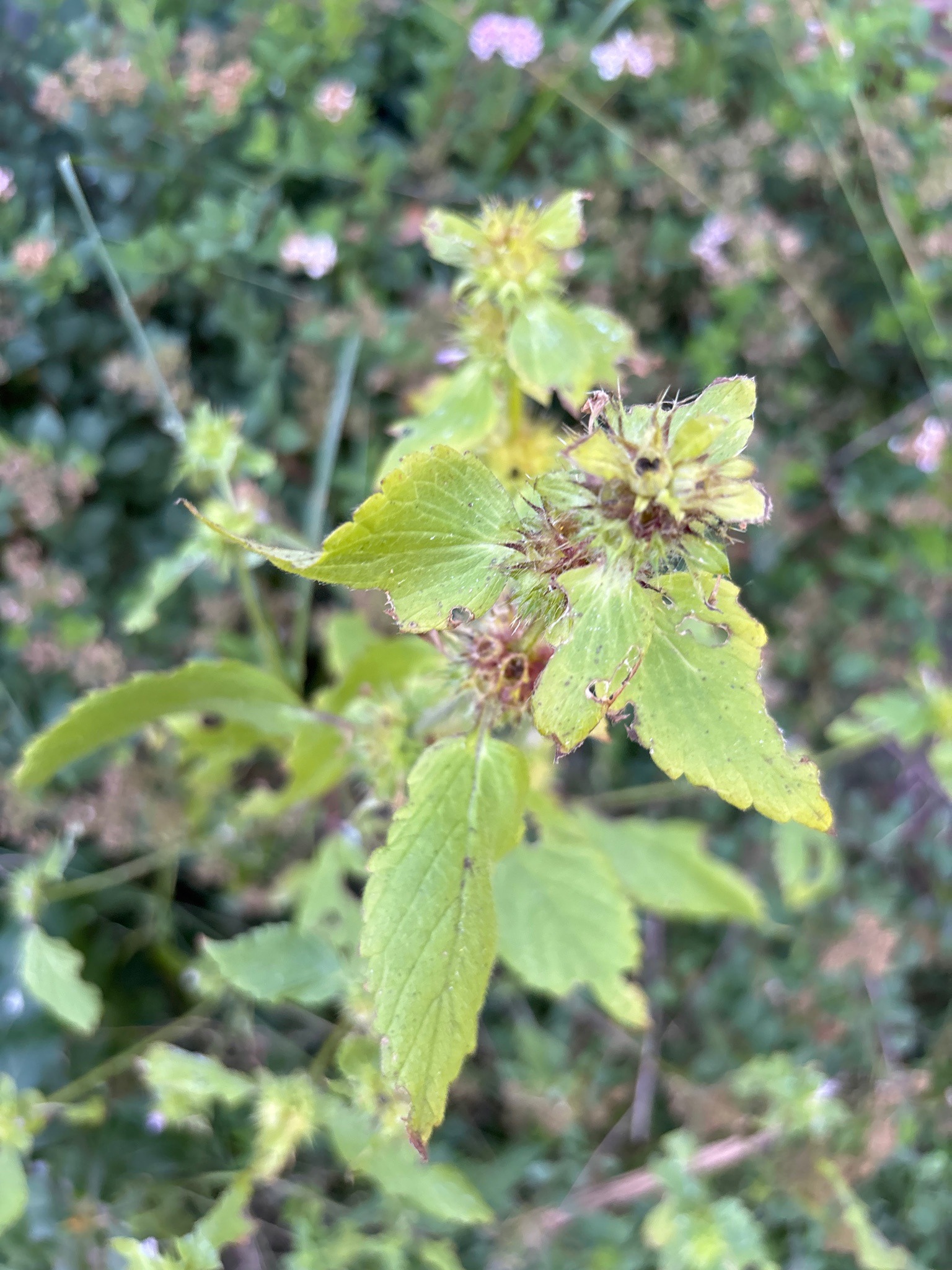
Motherwort
Leonurus cardiaca
Motherwort is an erect, herbaceous perennial featuring square stems, opposite lobed leaves, and dense clusters of small, pinkish-purple, two-lipped flowers arranged in whorls along the upper stems. The calyces feature sharp, spiny lobes.
- Light
- Full sun to partial shade, requiring at least 6 hours of direct sunlight daily for optimal growth.
- Water
- Moderate water needs. Water when the top inch of soil feels dry. Drought tolerant once established, but avoid prolonged dry spells.
- Growth
- Herbaceous perennial with an upright, branching growth habit. Reaches a mature height of 2 to 5 feet and a spread of 1 to 2 feet, with a moderate growth rate.
Care instructions
Grow in full sun to partial shade with well-draining soil. Water moderately during establishment, allowing the soil to dry out between waterings. Apply a balanced, slow-release fertilizer in spring if soil fertility is low.
Growing details
Sunlight
Full sun to partial shade, requiring at least 6 hours of direct sunlight daily for optimal growth.
Watering
Moderate water needs. Water when the top inch of soil feels dry. Drought tolerant once established, but avoid prolonged dry spells.
Soil
Prefers well-draining loamy or sandy soils with a neutral to slightly alkaline pH range of 6.0 to 7.5.
Hardiness zone
USDA Hardiness Zones 3 through 8, demonstrating strong cold tolerance.
Growth habit
Herbaceous perennial with an upright, branching growth habit. Reaches a mature height of 2 to 5 feet and a spread of 1 to 2 feet, with a moderate growth rate.
Bloom season
Blooms from mid-summer to early autumn. Flowers are small, tubular, pink to purple with hairy upper lips, arranged in axillary whorls.
Propagation
Easily propagated by sowing seeds directly in spring after the last frost or by dividing established clumps in early spring or autumn.
Common pests & issues
Generally resilient against major pests and diseases. Occasionally susceptible to powdery mildew or root rot if grown in poorly draining, waterlogged soils.
Similar species
Can be confused with other members of the Lamiaceae family such as Horehound (Marrubium vulgare), but distinguished by its deeply lobed leaves and more prominent spiny calyx teeth surrounding the flower whorls.