
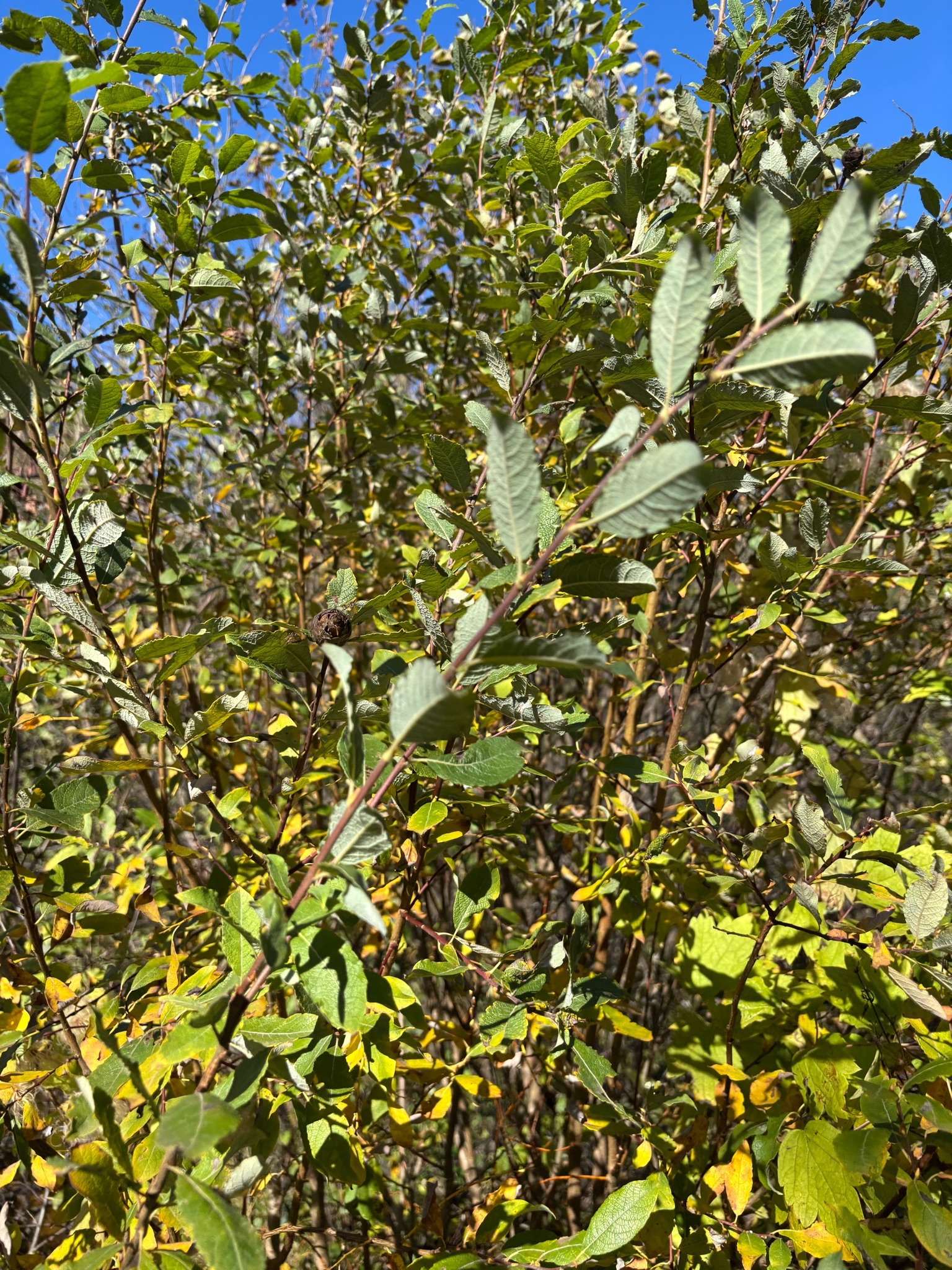
Mountain Alder
Alnus incana subsp. tenuifolia
A deciduous shrub or small tree featuring multi-stemmed growth, grayish-brown bark, and oval-to-elliptic leaves with serrated margins. Woody, cone-like strobiles persist on the branches.
- Light
- Full sun to partial shade, typically requiring at least 6 hours of direct sunlight daily for optimal vigor.
- Water
- High water requirements; thrives in consistently moist soils and tolerates periodic flooding, but requires supplemental irrigation during extended dry spells.
- Growth
- A large deciduous shrub or small multi-stemmed tree growing to a mature height of 15 to 30 feet with a comparable spread, exhibiting a moderate to fast growth rate.
Care instructions
Plant in moist, well-draining soil with full sun to partial shade exposure. Regular watering is important as this species prefers naturally damp habitats along streams and riverbanks.
Growing details
Sunlight
Full sun to partial shade, typically requiring at least 6 hours of direct sunlight daily for optimal vigor.
Watering
High water requirements; thrives in consistently moist soils and tolerates periodic flooding, but requires supplemental irrigation during extended dry spells.
Soil
Prefers rich, loamy or sandy soils with good moisture retention, adapting well to slightly acidic to neutral pH ranges between 6.0 and 7.0.
Hardiness zone
USDA Hardiness Zones 2 through 7
Growth habit
A large deciduous shrub or small multi-stemmed tree growing to a mature height of 15 to 30 feet with a comparable spread, exhibiting a moderate to fast growth rate.
Bloom season
Spring; produces inconspicuous catkins before or alongside the emergence of new leaves.
Propagation
Propagated primarily through hardwood or softwood cuttings taken during the growing season, or by sowing stratified seeds in a cold frame.
Common pests & issues
Generally resilient, though susceptible to cankers, rusts, and defoliating insects such as tent caterpillars under stressed environmental conditions.
Similar species
Distinguished from other alder species by its thinner, double-toothed leaves and more shrubby, multi-stemmed habit rather than a single dominant trunk.