
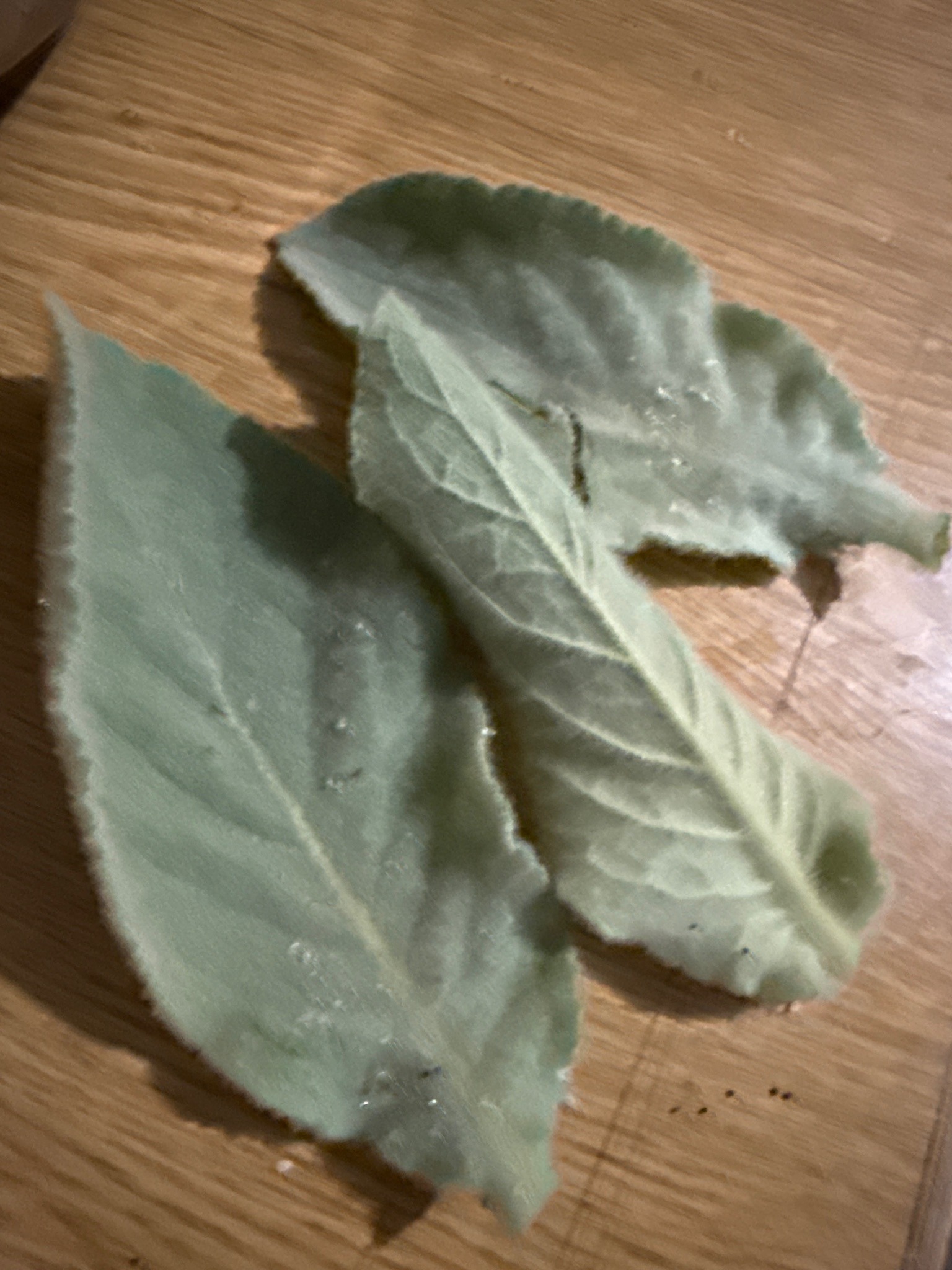
Mullein
Verbascum thapsus
Features large, thick, velvety, grayish-green leaves covered in dense hairs, forming a prominent basal rosette in its first year.
- Light
- Full sun, requiring at least six hours of direct sunlight daily
- Water
- Low watering needs; allow soil to dry out completely between waterings. Highly drought tolerant once roots are established.
- Growth
- Biennial plant forming a low rosette of leaves in the first year, followed by a tall, single flowering stalk up to six to eight feet in the second year.
Care instructions
Provide full sun and well-drained, sandy or gravelly soil. Water sparingly once established, as it is highly drought-tolerant. Avoid overwatering or wet conditions.
Growing details
Sunlight
Full sun, requiring at least six hours of direct sunlight daily
Watering
Low watering needs; allow soil to dry out completely between waterings. Highly drought tolerant once roots are established.
Soil
Prefers poor, dry, sandy, or rocky soils with neutral to alkaline pH, ensuring excellent drainage.
Hardiness zone
USDA hardiness zones 3 to 9
Growth habit
Biennial plant forming a low rosette of leaves in the first year, followed by a tall, single flowering stalk up to six to eight feet in the second year.
Bloom season
Summer of the second year, producing dense spikes of yellow, five-petaled flowers
Propagation
Propagated easily from seeds sown directly on the soil surface in spring or autumn, requiring light for germination.
Common pests & issues
Generally trouble-free, though occasionally susceptible to powdery mildew or leaf spot in overly humid or poorly drained conditions.
Similar species
Foxglove (Digitalis purpurea), which can be distinguished by its glabrous or softly hairy leaves rather than the extremely woolly, thick texture of mullein leaves.