
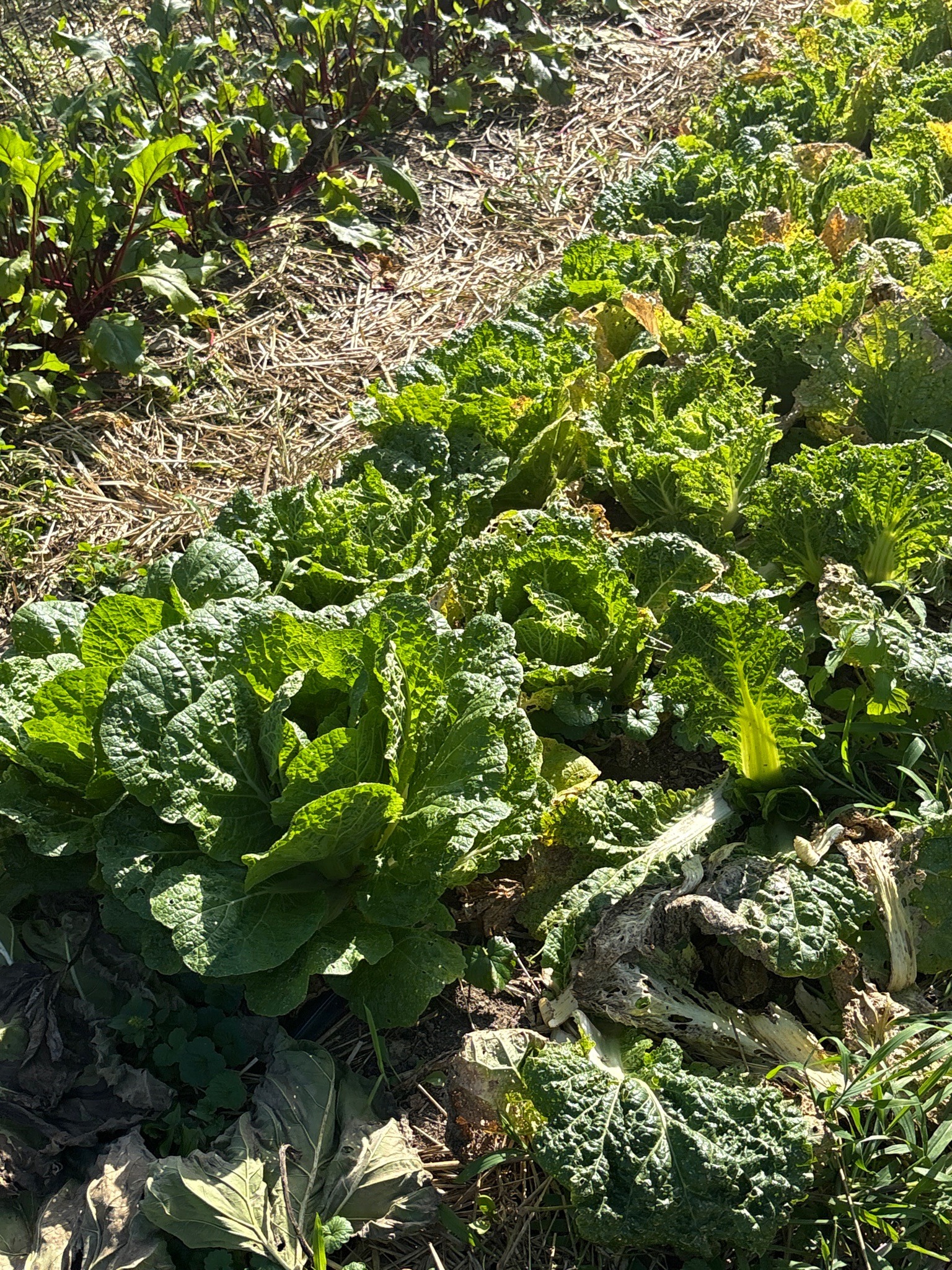
Napa Cabbage
Brassica rapa subsp. pekinensis
A leafy green vegetable forming elongated, tightly folded heads with crinkled, bright green outer leaves and white ribs.
- Light
- Full sun, requiring at least 6 hours of direct sunlight per day.
- Water
- Requires consistent and regular moisture, about 1 inch of water per week. Drought stress can cause premature bolting. Avoid overhead watering to prevent fungal issues.
- Growth
- Herbaceous annual with an upright, barrel-shaped or elongated head formation, reaching heights and spreads of 12 to 18 inches.
Care instructions
Provide full sun, consistent moisture, and rich, well-draining soil with a neutral pH. Apply balanced organic fertilizer during early growth.
Growing details
Sunlight
Full sun, requiring at least 6 hours of direct sunlight per day.
Watering
Requires consistent and regular moisture, about 1 inch of water per week. Drought stress can cause premature bolting. Avoid overhead watering to prevent fungal issues.
Soil
Rich, fertile, well-draining loamy soil with high organic matter. Optimal pH range is between 6.0 and 7.5.
Hardiness zone
Hardy in USDA Zones 2 through 11, typically grown as an annual cool-season crop.
Growth habit
Herbaceous annual with an upright, barrel-shaped or elongated head formation, reaching heights and spreads of 12 to 18 inches.
Bloom season
Spring or Summer, producing small, 4-petaled yellow flowers on tall spikes if allowed to bolt.
Propagation
Propagated strictly via seeds, usually sown directly in the garden or started indoors 3-4 weeks before the final frost.
Common pests & issues
Susceptible to flea beetles, aphids, cabbage loopers, and root clubroot disease. Use row covers for insect protection and practice crop rotation.
Similar species
Bok Choy (Brassica rapa subsp. chinensis), which grows with loose stalks rather than a tightly wrapped head.