
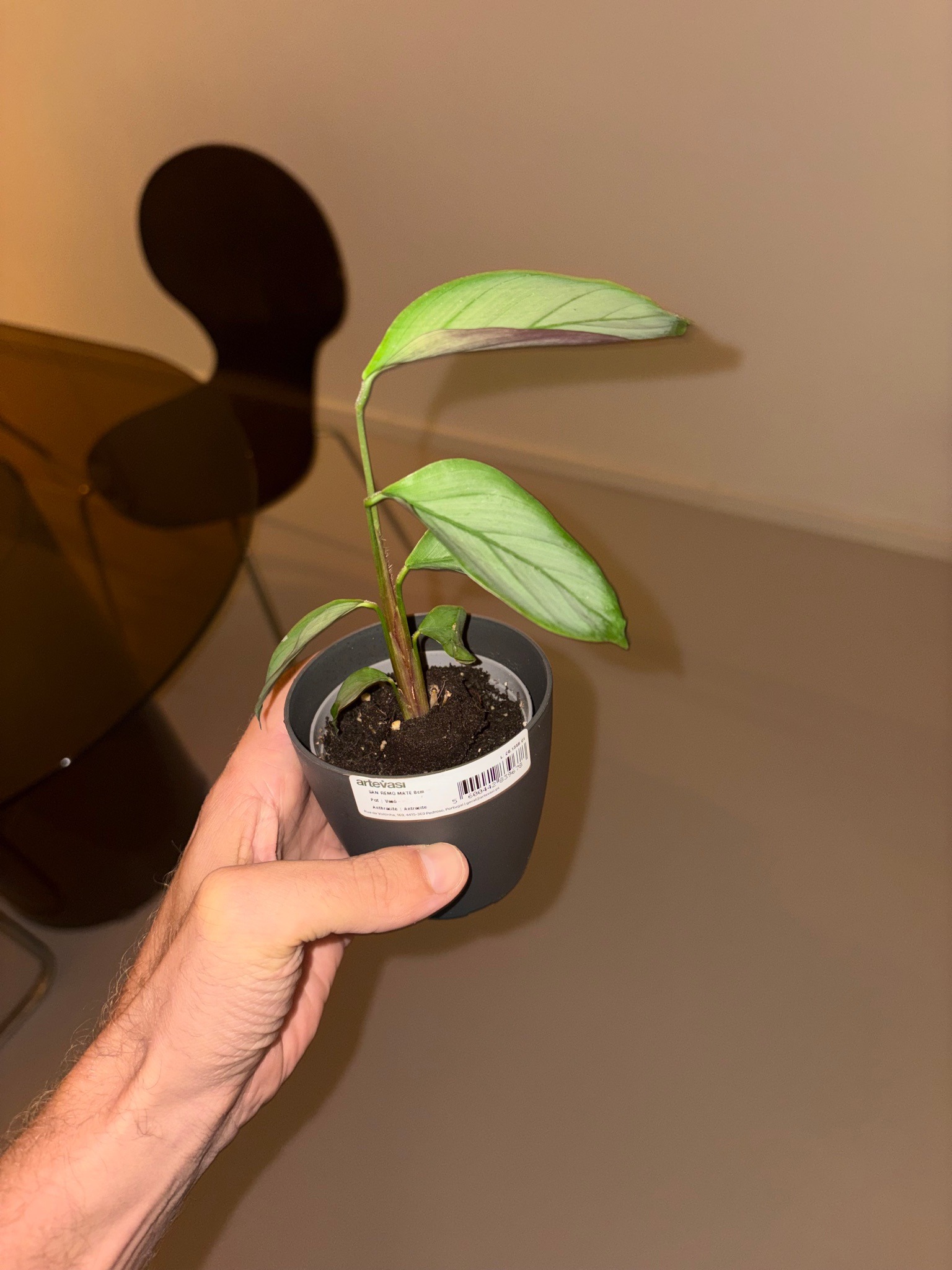
NeverNever Plant
Ctenanthe setosa
An evergreen perennial houseplant featuring slender, upright stems and elongated, lance-shaped leaves. The leaves display distinct silvery-green patterns on the upper surface with deep purple undersides.
- Light
- Bright, indirect light for 6 to 8 hours daily. Avoid direct sunlight, which can scorch the delicate foliage.
- Water
- Water when the top inch of soil feels dry. Maintain consistent moisture without allowing the roots to sit in standing water. Prefers filtered or distilled water.
- Growth
- Clumping perennial with an upright growth form, reaching a mature height of 2 to 3 feet and a spread of 1 to 2 feet with a moderate growth rate.
Care instructions
Provide bright, indirect sunlight and maintain consistently moist, well-draining soil. High humidity is essential, along with regular feeding during the active growing season.
Growing details
Sunlight
Bright, indirect light for 6 to 8 hours daily. Avoid direct sunlight, which can scorch the delicate foliage.
Watering
Water when the top inch of soil feels dry. Maintain consistent moisture without allowing the roots to sit in standing water. Prefers filtered or distilled water.
Soil
Rich, organic, well-draining potting mix with a slightly acidic to neutral pH range of 5.5 to 6.5.
Hardiness zone
USDA hardiness zones 10 to 12. Grown primarily as an indoor plant in cooler temperate climates.
Growth habit
Clumping perennial with an upright growth form, reaching a mature height of 2 to 3 feet and a spread of 1 to 2 feet with a moderate growth rate.
Bloom season
Rarely blooms indoors. When grown outdoors in optimal tropical conditions, it produces small, insignificant white or purple flowers.
Propagation
Propagated primarily through root division during repotting in the spring, ensuring each section has healthy roots and multiple stems.
Common pests & issues
Prone to spider mites and mealybugs in dry indoor environments. Brown leaf tips can occur from low humidity, underwatering, or chemical sensitivities in tap water.
Similar species
Often confused with Calathea species, but distinguished by its taller, more slender growth habit and the specific silvery patterns and purple undersides of the Ctenanthe setosa foliage.