
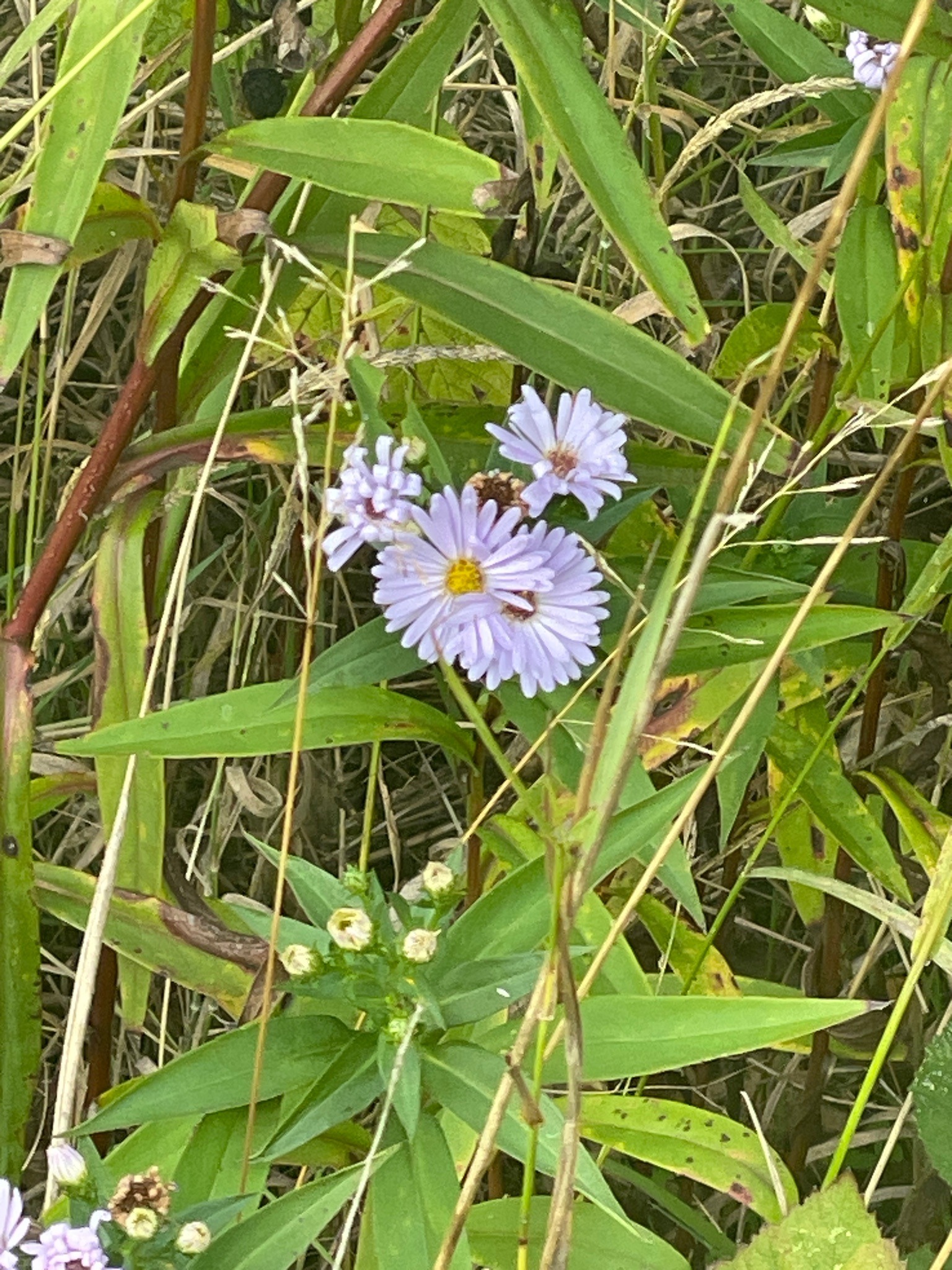
New England Aster
Symphyotrichum novae-angliae
A robust herbaceous perennial featuring lance-shaped, clasping green leaves and clusters of showy, daisy-like flower heads with pale purple to violet ray florets and bright yellow central discs.
- Light
- Full sun, requiring at least 6 hours of direct sunlight daily
- Water
- Moderate and regular watering; keep the soil evenly moist but not waterlogged. Avoid letting the soil dry out completely.
- Growth
- Herbaceous perennial growing in upright clumps, reaching 3 to 6 feet in height with a spread of 2 to 3 feet, exhibiting a moderate to fast growth rate.
Care instructions
Provide full sun and consistently moist, well-draining soil rich in organic matter. Water regularly during dry spells and fertilize lightly in spring if needed. Pinch back stems in early summer to encourage bushier growth and prevent leggy stems.
Growing details
Sunlight
Full sun, requiring at least 6 hours of direct sunlight daily
Watering
Moderate and regular watering; keep the soil evenly moist but not waterlogged. Avoid letting the soil dry out completely.
Soil
Prefers fertile, loamy, or clay-loam soils with good drainage and a neutral to slightly acidic pH range of 6.0 to 6.8.
Hardiness zone
USDA zones 4 through 8
Growth habit
Herbaceous perennial growing in upright clumps, reaching 3 to 6 feet in height with a spread of 2 to 3 feet, exhibiting a moderate to fast growth rate.
Bloom season
Late summer through mid-autumn, producing numerous purple or violet daisy-like flower heads with golden-yellow centers.
Propagation
Easily propagated via division of established clumps in early spring or through stem cuttings taken in late spring. Seeds can also be sown after a period of cold stratification.
Common pests & issues
Susceptible to powdery mildew in humid conditions with poor air circulation. Can also be affected by rust or attacked by aphids and lace bugs.
Similar species
Smooth Blue Aster (Symphyotrichum laeve) and Panicled Aster (Symphyotrichum lanceolatum). New England Aster is distinguished by its hairy stems, leaves that clasp the stem tightly, and deeply colored purple flower heads.