
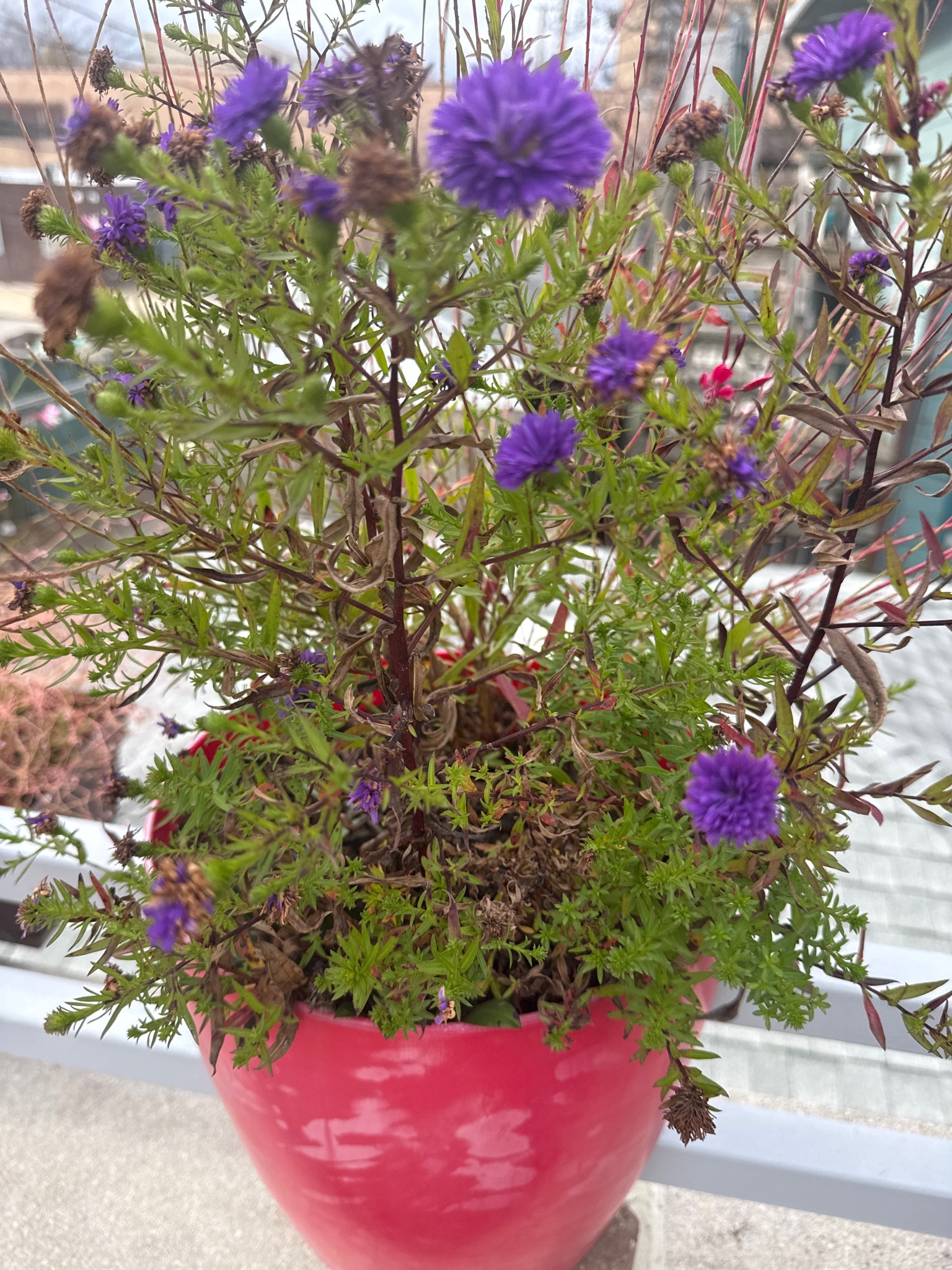
New York Aster
Symphyotrichum novi-belgii
An herbaceous perennial featuring branching stems, narrow green leaves, and vibrant purple to blue daisy-like flowers with yellow centers.
- Light
- Full sun to partial shade, requiring at least 6 hours of direct sunlight daily.
- Water
- Water deeply and regularly, allowing the top inch of soil to dry out between waterings. Drought tolerance is low.
- Growth
- Herbaceous perennial growing in an upright, bushy clump, reaching mature heights of 1 to 3 feet with a similar spread, exhibiting a moderate growth rate.
Care instructions
Provide full sun to partial shade with consistently moist, well-draining soil. Water regularly at the base to maintain moisture without waterlogging. Feed with a balanced, slow-release fertilizer in early spring.
Growing details
Sunlight
Full sun to partial shade, requiring at least 6 hours of direct sunlight daily.
Watering
Water deeply and regularly, allowing the top inch of soil to dry out between waterings. Drought tolerance is low.
Soil
Prefers rich, loamy, well-draining soil with a neutral pH range between 6.0 and 7.0.
Hardiness zone
USDA Hardiness Zones 4 through 8.
Growth habit
Herbaceous perennial growing in an upright, bushy clump, reaching mature heights of 1 to 3 feet with a similar spread, exhibiting a moderate growth rate.
Bloom season
Late summer through autumn, producing vibrant purple, blue, pink, or white ray flowers with central yellow discs.
Propagation
Propagated easily by division of established clumps in spring or through stem cuttings taken in early summer.
Common pests & issues
Prone to powdery mildew and rust in humid conditions; can be affected by aphids and spider mites. Prevent by ensuring good air circulation and adequate spacing.
Similar species
New England Aster (Symphyotrichum novae-angliae), which can be distinguished by its hairy, sticky stems and clasping leaves compared to the smoother foliage of the New York Aster.