
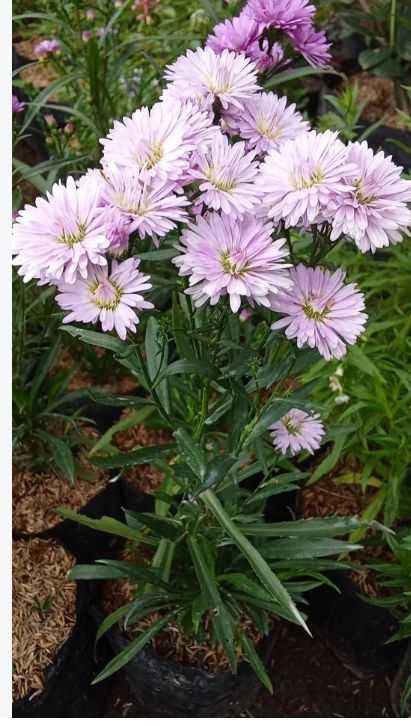
New York Aster
Symphyotrichum novi-belgii
An upright herbaceous perennial featuring slender green leaves and numerous daisy-like flower heads with light purple, pink, or lavender ray florets surrounding a yellow central disk.
- Light
- Full sun to partial shade, requiring at least 6 hours of direct sunlight daily.
- Water
- Moderate watering needs. Water deeply whenever the top inch of soil feels dry. Drought tolerance is low, and the plant benefits from consistent moisture.
- Growth
- Herbaceous perennial with an upright, branching growth habit. Typically grows to a mature height of 1 to 3 feet with a similar spread, exhibiting a moderate growth rate.
Care instructions
Provide full sun to partial shade in well-draining soil. Water regularly to keep the soil consistently moist but not waterlogged. Apply a balanced fertilizer in spring to support healthy foliage and abundant flowering.
Growing details
Sunlight
Full sun to partial shade, requiring at least 6 hours of direct sunlight daily.
Watering
Moderate watering needs. Water deeply whenever the top inch of soil feels dry. Drought tolerance is low, and the plant benefits from consistent moisture.
Soil
Prefers rich, loamy, well-draining soil with a neutral pH range of 6.0 to 7.0.
Hardiness zone
USDA zones 4 to 8, demonstrating good cold tolerance during winter months.
Growth habit
Herbaceous perennial with an upright, branching growth habit. Typically grows to a mature height of 1 to 3 feet with a similar spread, exhibiting a moderate growth rate.
Bloom season
Blooms from late summer through autumn, producing clusters of daisy-like flowers in shades of pink, purple, and lavender.
Propagation
Easily propagated through division of established clumps in early spring or by taking stem cuttings in late spring or early summer.
Common pests & issues
Prone to powdery mildew in humid conditions with poor air circulation. Can be affected by aphids and spider mites. Prevent issues by ensuring proper spacing and adequate sunlight.
Similar species
Similar to New England Aster (Symphyotrichum novae-angliae), but can be distinguished by its smoother, hairless leaves and slightly glossier foliage texture compared to the rougher, hairy leaves of the New England species.