
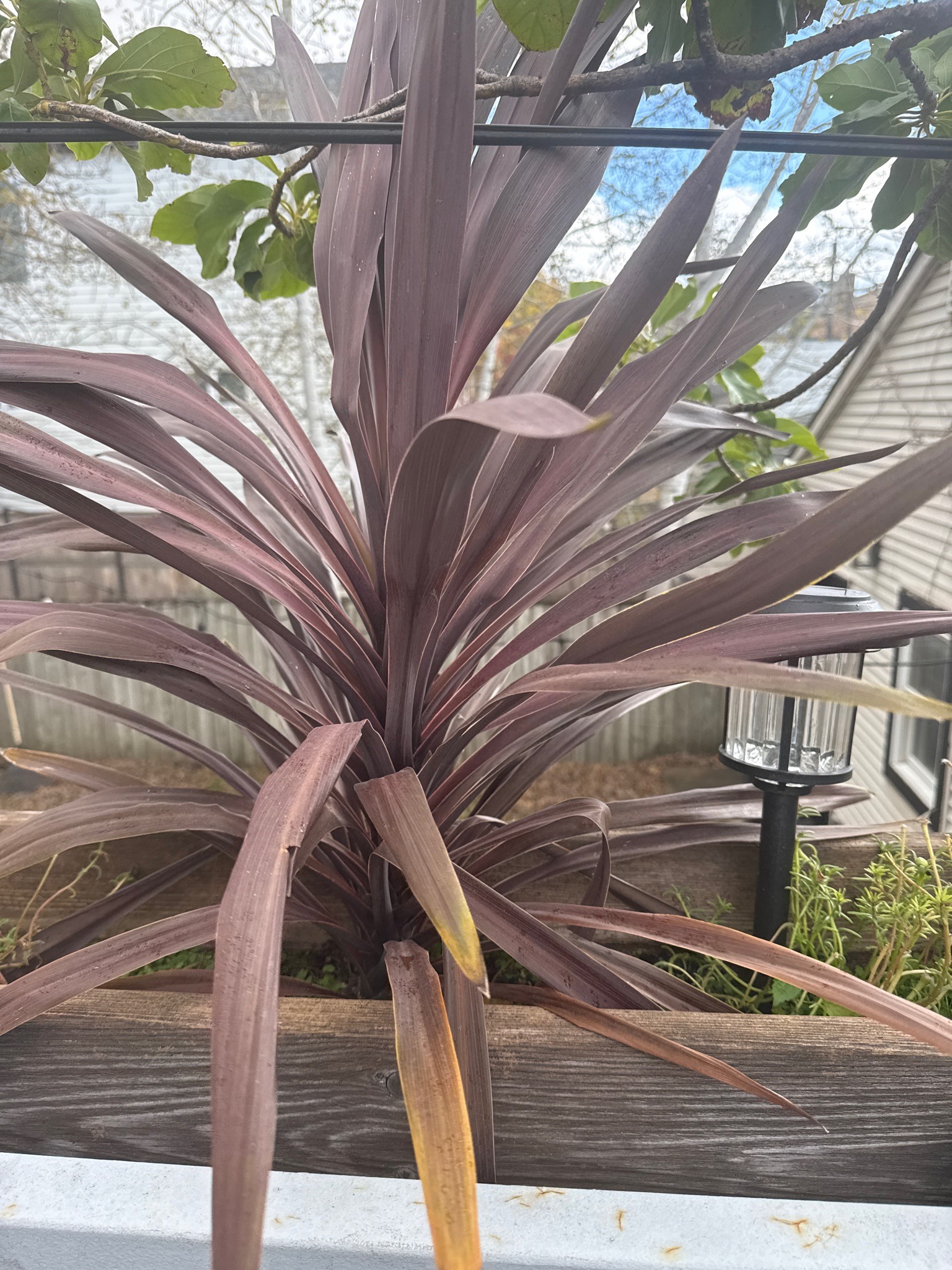
New Zealand Flax
Phormium tenax
An evergreen perennial featuring long, sword-shaped leaves radiating outward in a fan-like cluster, with rich dark purple or bronze coloration in cultivated ornamental varieties.
- Light
- Full sun to partial shade, ideally six or more hours of direct sunlight per day.
- Water
- Moderate water needs once established. Prefers regular moisture but has good drought tolerance; avoid waterlogged soils to prevent root rot.
- Growth
- Clump-forming evergreen perennial with an upright, architectural growth habit. Reaches mature heights of 3 to 10 feet with a similar spread depending on the specific cultivar.
Care instructions
Provide full sun to partial shade and plant in well-draining soil. Water deeply during establishment and maintain consistent moisture, allowing soil to dry out moderately between waterings. Apply a balanced, slow-release fertilizer in spring.
Growing details
Sunlight
Full sun to partial shade, ideally six or more hours of direct sunlight per day.
Watering
Moderate water needs once established. Prefers regular moisture but has good drought tolerance; avoid waterlogged soils to prevent root rot.
Soil
Adaptable to a variety of soil types including loam, sand, or clay, provided the drainage is excellent. Prefers a slightly acidic to neutral pH range of 6.0 to 7.5.
Hardiness zone
USDA zones 9 through 11; requires winter protection or cultivation as a container plant in colder frost-prone climates.
Growth habit
Clump-forming evergreen perennial with an upright, architectural growth habit. Reaches mature heights of 3 to 10 feet with a similar spread depending on the specific cultivar.
Bloom season
Spring to summer; produces tall, upright flowering spikes bearing tubular, reddish or yellowish flowers. Frequently grown strictly for its ornamental foliage rather than blooms.
Propagation
Propagated primarily through division of established root clumps in spring, or via seeds sown in spring.
Common pests & issues
Generally resistant to pests and diseases, but can occasionally be affected by mealybugs, scale insects, or root rot if soil drainage is poor.
Similar species
Cordyline species (such as C. australis) share a similar sword-like leaf appearance, but Cordyline typically develops a distinct woody trunk over time whereas Phormium grows directly from a basal rhizome cluster.