
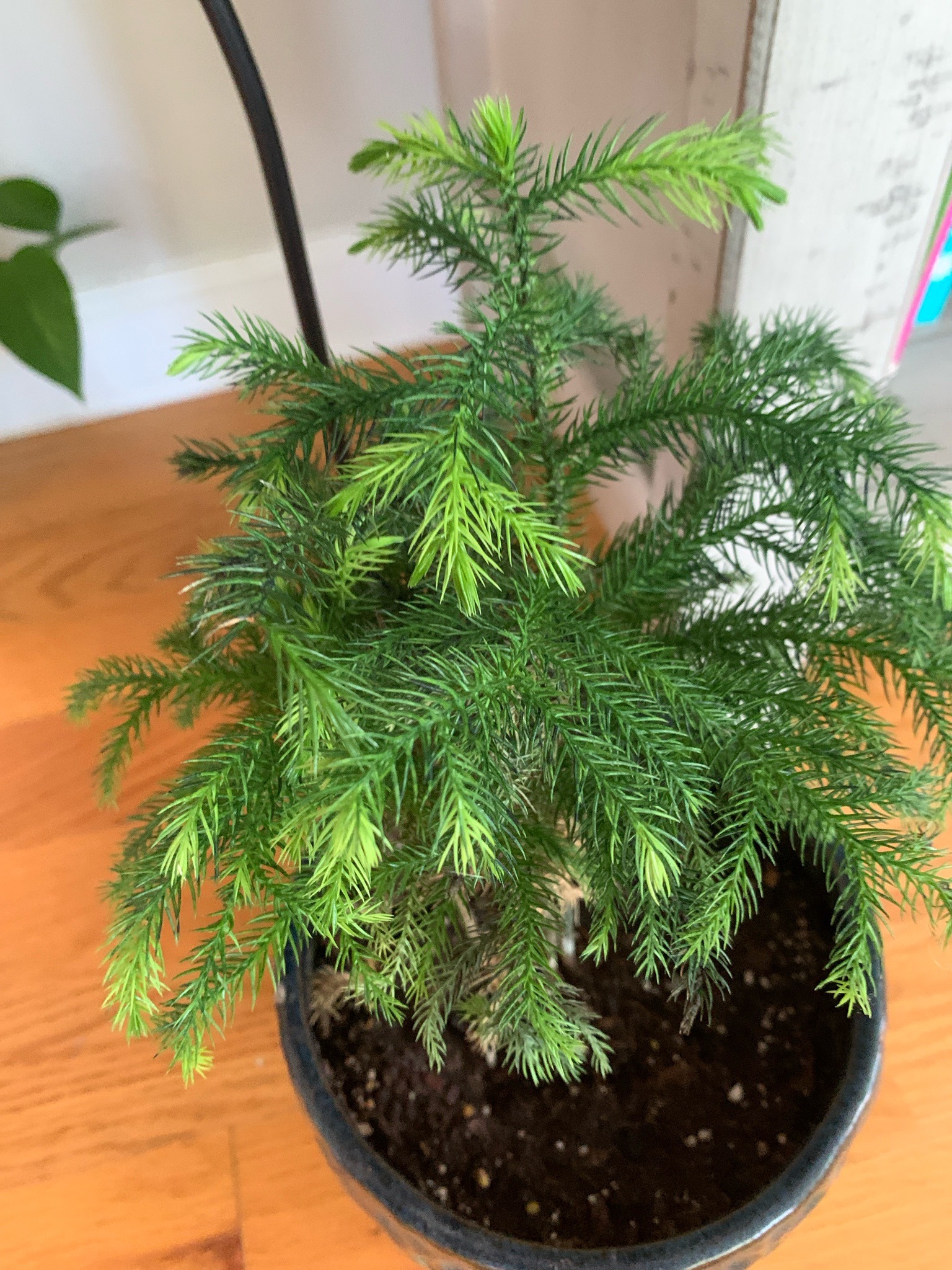
Norfolk Island Pine
Araucaria heterophylla
A symmetrical evergreen conifer featuring layered, tier-like horizontal branches adorned with soft, bright green awl-shaped needles.
- Light
- Prefers bright, indirect light for 4 to 6 hours daily; tolerates some direct morning sun, but low light causes weak, sparse growth.
- Water
- Water when the top inch of soil feels dry to the touch. Ensure proper drainage to avoid root rot. Lower needles will turn brown and drop if underwatered or overwatered.
- Growth
- Perennial evergreen tree that grows up to 100-200 feet tall in its native habitat, but typically stays between 3 to 8 feet as an indoor potted plant.
Care instructions
Provide bright indirect light and turn occasionally for even growth. Keep soil consistently moist but never waterlogged. Maintain high humidity around the plant and fertilize with a balanced houseplant fertilizer monthly during spring and summer.
Growing details
Sunlight
Prefers bright, indirect light for 4 to 6 hours daily; tolerates some direct morning sun, but low light causes weak, sparse growth.
Watering
Water when the top inch of soil feels dry to the touch. Ensure proper drainage to avoid root rot. Lower needles will turn brown and drop if underwatered or overwatered.
Soil
Rich, acidic to neutral, light, and well-draining potting mixture, such as peat-based potting soil mixed with perlite or sand.
Hardiness zone
USDA Hardiness Zones 10 to 11 (outdoors); grown strictly as an indoor houseplant in cooler climates.
Growth habit
Perennial evergreen tree that grows up to 100-200 feet tall in its native habitat, but typically stays between 3 to 8 feet as an indoor potted plant.
Bloom season
Non-flowering (gymnosperm); produces seed cones on mature specimens in natural environments.
Propagation
Propagated by seeds or terminal stem tip cuttings. Cuttings must be taken from the central leader stem to retain upright tree-like symmetry.
Common pests & issues
Susceptible to mealybugs, scale insects, and spider mites. Needle drop occurs due to low humidity, sudden temperature shifts, overwatering, or insufficient light.
Similar species
Cook Pine (Araucaria columnaris), which has a more slender silhouette and tends to lean toward the equator, and Monkey Puzzle Tree (Araucaria araucana), which features much sharper, broader, spiky leaves.